


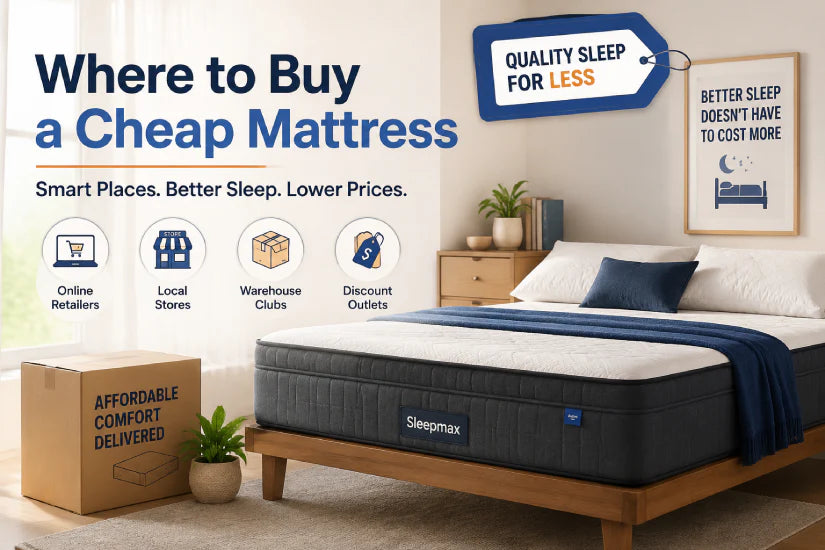
Mattresses are a relatively expensive purchase (especially in brick-and-mortar stores), and it is a challenge if you’re on a tight budget, particularly if you’re an American struggling with cash flow. You’re in urgent need of an affordable mattress. Mattress prices range from $200 to $4,000. What exactly is the difference between mattresses that vary in price by a factor of 10?
I’ve spent countless hours researching retailers, testing affordable mattresses, and consulting with sleep experts. The bottom line is that you don’t have to break the bank to find a mattress that both supports your back and helps you sleep soundly. You just need to know where to look.
In this guide, I’ll walk you through the best places to buy an affordable mattress, key factors to consider, common pitfalls to avoid, and how to time your purchase to save the most money.
What Counts as a "Cheap" Mattress?
First, let’s clarify what “affordable” means. There’s a difference between an affordable mattress and a poorly made one. The former is a good value, while the latter is junk. You want the former.
Generally speaking, a queen-size affordable mattress costs between $250 and $1,000. If the price is below $250, what you’re likely getting is just a camping pad or a futon—not a real mattress suitable for sleeping on every night. For most consumers, the optimal price range is between $400 and $700. At this price point, you can find solid-quality memory foam and hybrid mattresses that offer genuine comfort and durability.
Here’s a brief breakdown of mattress types and their approximate price ranges:
|
Mattress Type |
Typical Price Range (Queen) |
What to Expect |
|
Memory Foam |
$300 - $800 |
Best value option. Contours to your body, isolates motion well. Can sleep warm. |
|
Innerspring |
$200 - $700 |
Traditional bounce and support. Simple construction. May lack pressure relief. |
|
Hybrid |
$600 - $1,200 |
Foam + coils combo. Harder to find under $500, but sales help. |
|
Latex |
$1,000+ |
Durable and eco-friendly. Tough to find on a budget unless heavily discounted. |
If you’re on a very tight budget, memory foam is the best choice. It’s the most affordable type of mattress because it doesn’t require metal springs, and a high-density foam mattress from quality brands can last 5 to 7 years. If your budget allows for a little more flexibility, a hybrid mattress is a good option, as it combines the pressure-relieving properties of foam with the support and breathability of springs.
Where to Buy a Cheap Mattress: Your Best Options
Where exactly should you go to buy an affordable mattress? The answer to this question depends on what matters most to you. Are you looking for the lowest price? The best return and exchange policy? Or the option to try it out before you buy? Let’s take a closer look at the main options.
1. Direct-to-Consumer Mattress Brands (Online)
This is where I'd start. Brands like Sleepmax, Bear, Brooklyn Bedding, Siena, and Leesa sell directly through their own websites, cutting out the middleman. That means lower prices and, honestly, better customer service because you're dealing with the manufacturer.
The biggest advantage here is the trial period. Most DTC brands offer anywhere from 100 to 365 nights to try the mattress at home. If you hate it, they'll pick it up and refund you, usually for free. Try doing that at a big-box store.
Some standout budget picks from DTC brands include the Siena Memory Foam (around $379 for a Queen on sale), the Bear Original (about $649 with current promotions), and the Sleepmax Omnifit (roughly $499 with discount codes).
2. Amazon
If your budget is under $400, Amazon is a good option. You’ll find options like the Linenspa 6-inch mattress (under $50 for a twin size) and the Zinus Green Tea Memory Foam Mattress (usually under $300 for a king size), as well as many other mattress in a box brands—all of which offer free shipping to Prime members.
What do these low prices mean? Amazon mattresses often use low-density foam, which may have a shorter lifespan. Return policies vary by seller, so be sure to read the fine print carefully. But for guest rooms, children’s rooms, or temporary accommodations, mattresses on Amazon are virtually unbeatable in terms of price.
3. IKEA
IKEA mattresses range in price from $159 to $899 and come with a surprising 25-year limited warranty. The product lineup includes innerspring, memory foam, and hybrid mattresses. There is one small catch, though: IKEA mattresses tend to be on the firmer side, which is great for back and stomach sleepers, but may not be ideal if you’re used to sleeping on your side.
IKEA’s biggest advantage is that you can visit a store in person to test out the mattresses before buying. Plus, you can pick them up the same day—no need to wait for delivery.
4. Costco and Warehouse Clubs
Costco is a sleeper hit for mattress shopping (pun intended). They carry brand-name mattresses at warehouse prices, and their return policy is legendary. If you're already a member, it's worth checking both in-store and online. Costco often runs manufacturer promotions that stack with their already discounted pricing.
5. Local Furniture Stores and Mattress Warehouses
Don’t overlook local retailers. Independent furniture stores and mattress specialty shops sometimes run aggressive promotions to compete with online brands. You might find last year’s models or clearance items at prices that online retailers simply can’t match. However, the downside is that their return and exchange policies are often stricter, and salespeople may try to steer you toward products with higher profit margins.
Note: DTC websites and Amazon aren’t the only places to buy mattresses online; Walmart and IKEA also sell mattresses on their official websites, at prices similar to those on Amazon.
Here's a quick comparison of your main buying options:
|
Where to Buy |
Best For |
Price Range |
Key Advantage |
|
DTC Brand Websites |
Best overall value |
$379 - $865 |
Long trials, free returns, direct from maker |
|
Amazon |
Rock-bottom prices |
$50 - $400 |
Fast shipping, huge selection, easy returns |
|
IKEA |
In-store browsing |
$159 - $899 |
25-year warranty, same-day pickup |
|
Costco |
Brand-name deals |
$300 - $800 |
Generous return policy, member pricing |
|
Local Stores |
Try before buying |
$200 - $1,000 |
Hands-on testing, negotiation possible |
Online vs. In-Store: Which Saves You More?
This is one of the questions I’m asked most often. To be honest: online shopping almost always offers better prices, but brick-and-mortar stores still have their value.
Online shopping eliminates the operating costs of showrooms and sales commissions. Brands pass these savings on to you. In addition, online purchases typically come with longer trial periods—usually 100 nights or more—while brick-and-mortar stores usually offer only a 30-day trial period. Plus, comparing ten mattresses on your laptop is far less of a hassle than driving to three showrooms.
However, brick-and-mortar stores can serve as a place to test out mattresses before you buy. First, visit a local store to try out different mattresses and figure out what you like, then buy the same model online at a lower price.
Timing Your Purchase: When to Buy for the Best Deals
Here's a secret that mattress retailers don't advertise: you should never pay full price. The mattress industry runs on sales cycles, and if you time your purchase right, you can save 30 to 50 percent off retail.
The biggest sales happen around major holidays. Here's when to shop:
|
Sale Period |
Typical Discount |
What to Expect |
|
Presidents' Day (February) |
20% - 40% off |
Great for memory foam deals, early-year clearance |
|
Memorial Day (May) |
25% - 40% off |
One of the biggest mattress sales events of the year |
|
Fourth of July (July) |
30% - 50% off |
Mid-year promotions, coupon codes widely available |
|
Labor Day (September) |
25% - 40% off |
Strong sales as brands clear summer inventory |
|
Black Friday / Cyber Monday |
30% - 60% off |
The biggest discounts of the year, free accessories included |
If you can wait, Black Friday and Cyber Monday offer the deepest discounts. Brands often throw in free pillows, sheets, or mattress protectors on top of already reduced prices. But if you need a mattress sooner, Presidents' Day in February and Memorial Day in May are nearly as good.
One more tip: sign up for email lists from brands you're interested in. Many offer a first-time buyer bonus of 10 to 15 percent off.
What to Look For in a Budget Mattress
Price is important, but it shouldn't be the only thing you consider. A $300 mattress that falls apart in two years isn't a bargain. Here's what actually matters when you're shopping for an affordable mattress.
Safety Certifications
Look for mattresses with CertiPUR-US certified foam. This ensures the foam is made without ozone depleters, heavy metals, and dangerous flame retardants. It also means low VOC emissions, so your bedroom won't smell like a chemical factory. Other certifications worth noting include OEKO-TEX for textiles and GREENGUARD Gold for air quality.
Here's a red flag: some ultra-cheap mattresses use fiberglass as a fire barrier. If the cover gets damaged, fiberglass particles can get everywhere and cause serious irritation. Always check the materials list before buying.
Trial Period and Return Policy
This is non-negotiable for online purchases. You want at least 100 nights to try the mattress. Some brands like Nectar offer a full year. Make sure returns are actually free, not just "available." Some budget brands charge $50 to $100 for return shipping.
Warranty
Aim for at least a 10-year warranty. Many DTC brands now offer lifetime warranties, which sounds great but usually covers only specific defects. Read the actual warranty terms rather than just the headline.
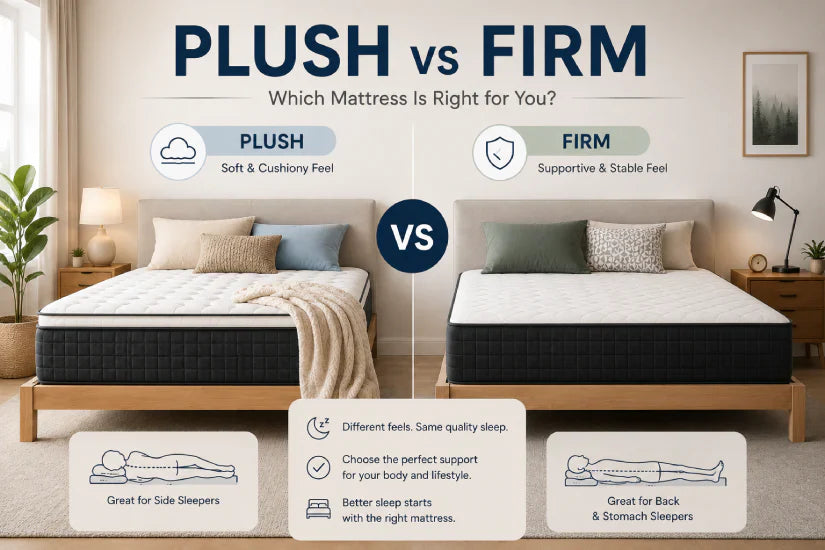
Firmness Based on Your Sleep Position
This is where a lot of people go wrong. The right firmness depends on how you sleep:
|
Sleep Position |
Recommended Firmness |
Why |
|
Side sleeper |
Soft to medium (3-6/10) |
Allows shoulders and hips to sink in, reducing pressure points |
|
Back sleeper |
Medium to medium-firm (6-7/10) |
Supports spinal alignment while cushioning the lower back |
|
Stomach sleeper |
Firm (7-9/10) |
Prevents hips from sinking too far, which strains the lower back |
|
Combination sleeper |
Medium (5-7/10) |
Versatile enough for shifting positions through the night |
Most budget mattresses come in one firmness option, usually medium-firm. That works fine for back and combination sleepers, but if you're a dedicated side sleeper, look for a softer model with more foam layers.
Common Mistakes That Cost You Money
I've seen people make the same mistakes over and over when shopping for a cheap mattress. Here's how to avoid them.
Mistake 1: Buying Based on Price Alone
The cheapest mattress isn't always the best deal. A $200 mattress that develops permanent dips after eight months will cost you more when you have to replace it. Look at foam density, warranty length, and customer reviews, not just the price tag.
Mistake 2: Ignoring the Return Policy
Some sellers advertise "free returns" but bury restocking fees in the fine print. Before buying, find out exactly what happens if you want to return the mattress. A 100-night trial means nothing if returning it costs $150.
Mistake 3: Not Giving the Mattress Time to Break In
Memory foam needs time to fully expand and soften. The first few nights might feel firmer than expected. Give it at least 30 nights before deciding it's not right for you.
Mistake 4: Overlooking Edge Support
Budget mattresses often cut corners on edge support, meaning the perimeter compresses when you sit on it. If you sit on the edge of your bed or share a bed and sleep near the edge, weak edge support is annoying and makes the mattress feel smaller.
Mistake 5: Falling for Marketing Hype
Mattress ads are full of buzzwords: "cooling gel infusion," "space-age materials," "orthopedic grade." Most are marketing fluff. Focus on the actual construction (foam density, coil count, layer thickness) rather than the ad copy.
Quick Tips for Getting the Best Deal
Stack your discounts. Use a holiday sale price plus a coupon code plus a cashback portal. Some brands let you combine offers.
Check for price matching. A few online retailers will match a competitor's price if you ask. It never hurts to email customer service.
Look for bundle deals. During sales events, brands often throw in free pillows, a mattress protector, or a sheet set. These add-ons can be worth $100 or more.
Consider last year's model. Brands frequently refresh their product lines, and older models get steep discounts. The differences are often cosmetic.
Buy a mattress topper instead. If your current mattress is sagging but still structurally sound, a $100 to $200 memory foam topper might buy you another year or two.
Don't forget about shipping and taxes. A $399 mattress can become $450 after taxes and shipping. Factor those in when comparing prices.
Budget Mattress Brands Worth Considering
To save you some research time, here are a few brands that consistently deliver good value in the sub-$1,000 range:
|
Brand |
Starting Price (Queen) |
Standout Feature |
|
Siena |
$379 (on sale) |
Best ultra-budget memory foam, 180-night trial |
|
Bear Original |
$649 (with code) |
Celliant cover for recovery, 120-night trial |
|
Sleepmax |
$499 (on sale) |
365-night trial, lifetime warranty, strong motion isolation |
|
Leesa Studio |
$559 (on sale) |
Good pressure relief for side sleepers, 100-night trial |
|
Zinus (Amazon) |
$250 - $350 |
Best rock-bottom price, widely available, Prime shipping |
The Bottom Line
Finding where to buy a cheap mattress doesn't have to be complicated. Start with direct-to-consumer brand websites for the best combination of price, trial period, and customer service. Check Amazon if you need something under $400. Visit IKEA or Costco if you prefer to shop in person. And whatever you do, time your purchase around a holiday sale.
Remember: cheap doesn't mean bad. Some of the best mattresses I've tested cost under $700. The key is knowing what to look for (CertiPUR-US foam, at least a 100-night trial, a 10-year warranty) and what to ignore (flashy marketing claims, unnecessary add-ons).
Take your time, compare a few options, use those discount codes, and don't settle for a mattress that doesn't feel right. Your back and your wallet will thank you.
Frequently Asked Questions
How much should I spend on a cheap mattress?
For a Queen size, aim for $400 to $700. This range gets you quality memory foam or a budget hybrid with real certifications, a trial period, and a solid warranty. Anything under $300 is a gamble on durability.
Is it safe to buy a cheap mattress online?
Yes, as long as you buy from a reputable brand with a clear return policy. Look for at least a 100-night trial with free returns, and check that the foam is CertiPUR-US certified.
Can a cheap mattress last?
A well-made budget mattress typically lasts 5 to 7 years. Rotating it every few months and using a proper foundation can extend its lifespan.
What's the cheapest way to get a good mattress?
Buy directly from a DTC brand during a holiday sale and stack a coupon code on top. This can bring an $800 mattress down to $400 or less.
Are bed-in-a-box mattresses any good?
Many are. The bed-in-a-box model made quality mattresses more affordable by eliminating showroom costs. Just be aware that some ultra-cheap boxed mattresses use low-density foam that compresses quickly. Stick with established brands that have substantial customer reviews.

Leave a comment
This site is protected by hCaptcha and the hCaptcha Privacy Policy and Terms of Service apply.