




Fiberglass is made from very fine glass fibers and is commonly used in insulation, construction materials, automotive parts, and other products that require heat resistance or reinforcement. In mattresses, fiberglass may be used as part of a fire barrier to meet federal flammability standards designed to reduce the risk and spread of mattress fires.
So, does your mattress contain fiberglass? That can be harder to determine than you might expect. The California Department of Public Health (CDPH) has found cases where fiberglass was present even though it wasn't listed on the mattress label. In this article, we'll introduce 7 methods for checking whether you have a fiberglass-free mattress. Let's jump in right now!
Table of Contents
- How to Know If Your Mattress Has Fiberglass
- Can You Tell If a Mattress Has Fiberglass Just by Looking at It?
- What Does "Do Not Remove Cover" Mean on a Mattress?
- Does CertiPUR-US Mean a Mattress Is Fiberglass-Free?
- Why Do Some Mattresses Use Fiberglass?
- Is Fiberglass in a Mattress Dangerous?
- What Should You Do If Fiberglass Is Coming Out of Your Mattress?
- How to Choose a Fiberglass-Free Mattress
- Introducing Sleepmax Fiberglass-Free Hybrid Mattress
- The Bottom Line
- FAQ
How to Know If Your Mattress Has Fiberglass
1. Check the Mattress Label
Look for the label or other sewn-in tags, usually located along the side or bottom edge of the mattress. Check the material information for terms such as:
- Fiberglass
- Glass fiber
- Glass wool

"Glass fiber" is particularly important because fiberglass may be described using that term rather than the word "fiberglass." CDPH specifically recommends checking mattress labels for these terms. (California Department of Public Health)
However, there's an important catch: a label that doesn't mention fiberglass does not necessarily prove that the mattress is fiberglass-free.
In an investigation published by CDPH, fiberglass was found inside mattresses even though it was not disclosed on the label of one of the tested products. A peer-reviewed study led by researchers from CDPH similarly found fiberglass in two of four mattress covers tested, including one mattress where the fiberglass was not disclosed on the label.
Labels should be the first source of information you need to check rather than the last one.
2. Look for a "Do Not Remove Cover" Warning
Next, check the mattress cover.
Some mattresses have a zipper around the outer cover, which can tempt some people to unzip the cover and take a look inside. Don't.
If the cover says "Do Not Remove," leave it closed. Poison Control advises consumers not to unzip a mattress cover when it carries this warning, and CDPH recommends keeping mattress covers sealed.
A "Do Not Remove Cover" warning does not mean that the mattress contains fiberglass. It simply tells you that the cover is not intended to be opened.
In the aforementioned peer-reviewed study, researchers also found that some fiberglass had migrated into adjacent fabric layers, creating a potential exposure route if the outer cover were opened.
In other words, opening the mattress may turn a question into a problem.
3. Check the Manufacturer's Website
If the label doesn't give you a clear answer, go to the manufacturer's website.
Look for the exact mattress model and check pages such as materials, fiber barrier, faq, product specifications, and care instructions.
You can also search Google using the brand and model name: [Brand] [Model] fiberglass or [Brand] [Model] fire barrier
Try to find information about the specific model rather than relying on a general statement about the brand because a company may have changed its fire-barrier material over time. That means a statement about a current mattress may not apply to an older version of the same product.
4. Check Reputable Third-Party Mattress Reviews
If the manufacturer doesn't provide a clear answer, third-party mattress testing and review sites can be another useful source.
One example is NapLab, which maintains a dedicated database of mattresses and identifies whether individual models are confirmed fiberglass-free, contain fiberglass, or remain unclear. As of its August 18, 2026 update, NapLab had analyzed 419 mattresses, including 31 listed as containing fiberglass and 11 where the status was unclear.
To find whether a specific model contains fiberglass, you can search [Brand] [Model] fiberglass review in Google.
But mattress construction can change. For example, NapLab notes that Leesa stopped using fiberglass in 2023. So ask yourself: "Is my exact mattress model, from the year it was manufactured, fiberglass-free?"
5. Ask the Manufacturer Directly
If you still can't find a definite answer, contact the manufacturer and ask: "Does this exact mattress model contain fiberglass, glass fiber, or glass wool anywhere in the mattress, including the fire barrier or inner cover?" or "What material is used as the fire barrier in this model?"
And if you're buying a new mattress, consider getting the answer before purchasing rather than trying to investigate the mattress after it arrives.
Can You Tell If a Mattress Has Fiberglass Just by Looking at It?
Fiberglass consists of very fine glass fibers, and it may not be visible from the outside of an intact mattress.

If you see tiny, shiny, or white fibers around a damaged mattress cover, that may be a reason to stop handling the mattress and seek professional or manufacturer guidance. But appearance alone isn't enough to confirm that the fibers are fiberglass. On the other hand, not seeing any fibers doesn't prove that the mattress is fiberglass-free.
Since researchers found fiberglass inside mattress covers even though no fiberglass was observed on the outer surfaces of the brand-new mattresses they tested, visual inspection shouldn't be your primary testing method.
What Does "Do Not Remove Cover" Mean on a Mattress?
"Do Not Remove Cover" means the outer mattress cover should remain in place, and it's not another word for fiberglass. If you see this warning, don't unzip the cover simply to inspect the fire barrier. Both CDPH and Poison Control advise keeping these mattress covers sealed. If you're concerned about the materials inside, contact the manufacturer instead.
Does CertiPUR-US Mean a Mattress Is Fiberglass-Free?
No. This is a common misunderstanding. CertiPUR-US certification applies to the foam used in a mattress. It does not certify every material used in the mattress cover or fire barrier.
CDPH specifically warns that CertiPUR-US certifies the foam inside a mattress, but not the other materials inside the mattress. The peer-reviewed study reached a similar conclusion after finding fiberglass in the covers of mattresses whose foam was marketed as CertiPUR-US certified. If fiberglass is important to you, look for an explicit statement about the mattress as a whole.
Why Do Some Mattresses Use Fiberglass?
The U.S. Consumer Product Safety Commission (CPSC) regulates mattress flammability under two main standards:
- 16 CFR Part 1632: Standard for the Flammability of Mattresses and Mattress Pads (focusing on resistance to smoldering ignition from cigarettes).
- 16 CFR Part 1633: Standard for the Flammability (Open Flame) of Mattress Sets (focusing on resistance to open-flame ignition and heat release rate).
Fiberglass is one material that manufacturers may use as part of a fire barrier because of its heat-resistant properties. Other mattress constructions may use different materials.
Is Fiberglass in a Mattress Dangerous?
Fiberglass can irritate the skin and eyes, and inhalation can also be a concern. Poison Control notes that exposure can occur when mattress covers containing fiberglass are unzipped or removed.
The peer-reviewed investigation by CDPH also found that fiberglass fragments in two tested mattress covers could potentially become airborne if the material was disturbed.
However, the presence of fiberglass inside a properly enclosed mattress is not the same thing as direct exposure to loose fiberglass fibers.
What Should You Do If Fiberglass Is Coming Out of Your Mattress?
If you think fiberglass is escaping from your mattress, follow the instructions provided by CDPH:
- Preparation & PPE: Wear eye protection, a nose/mouth mask, and loose, full-coverage clothing to protect your skin before starting.
- Mattress Disposal: Enclose and seal the compromised mattress before moving it to prevent airborne fibers from spreading, then dispose of it.
- Cleaning Technique: Use a HEPA-filter vacuum exclusively; avoid sweeping to prevent fibers from becoming airborne. Wipe all hard surfaces down with a damp cloth.
- Laundry Care: Wash affected bedding and clothing separately (or individually) from normal laundry, and run a full rinse cycle in the washing machine after every load. Discard items if fibers persist.
- Inspection & Reporting: Use a flashlight at night to spot shimmering glass fibers missed during cleaning, and report incident details to the Consumer Product Safety Commission at SaferProducts.gov.
How to Choose a Fiberglass-Free Mattress
If you are shopping for a new mattress and want to avoid fiberglass, look for clear, model-specific information. Here's a checklist, for example:
- An explicit "fiberglass-free" statement
- A clearly identified fire-barrier material
- Detailed material information for the entire mattress
- A manufacturer willing to answer specific questions
- Consistent information from reputable third-party sources
- Information that applies to the current version of the mattress
Introducing Sleepmax Fiberglass-Free Hybrid Mattress
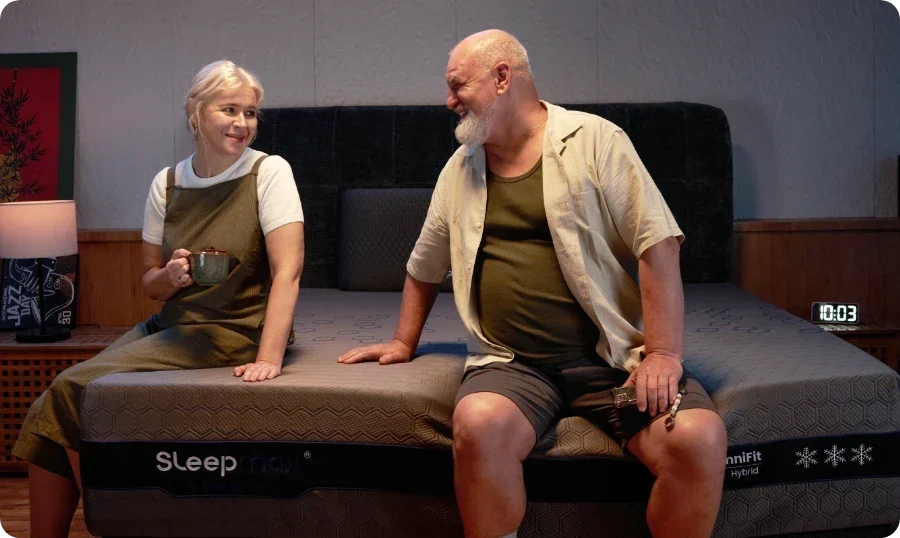
The hybrid mattresses produced by Sleepmax, including the cooling hybrid mattress Podium and the pressure relief mattress Omnifit, are all designed fiberglass-free for comfortable and safe sleep, which is supported by independent third-party reviews from NapLab.
Beyond these features, Sleepmax provides a comfortable, refreshing, and well-supported mattress that contains various cooling materials and honeycomb-inspired pocketed coils. With the 365-night trial, you can experience their hybrid mattress at home for four seasons and take it home easily with the mattress-in-a-box design.
The Bottom Line
There isn't always a foolproof way to identify fiberglass from the outside of a mattress. The safest approach to find whether a mattress contains fiberglass is to combine several sources of information, including the mattress label, manufacturer's materials, and third-party reviews. Most importantly, don't unzip or cut open your mattress just to find out what's inside.
FAQ
What Does Fiberglass Look Like?

Fiberglass is made of very thin glass fibers that can be woven into a fabric-like material. When individual fibers escape from a mattress, they may look like tiny white, translucent, or shiny strands and can sometimes shimmer under light. However, you should not rely on appearance alone to determine whether your mattress contains fiberglass.
Do Memory Foam Mattresses Have Fiberglass?
Some do. Fiberglass may be used as part of the fire barrier in some memory foam mattresses, while others use different materials. The best way to find out is to check the exact mattress model, its fire-barrier materials, and the manufacturer's current information rather than assuming based on the mattress type alone.

Leave a comment
This site is protected by hCaptcha and the hCaptcha Privacy Policy and Terms of Service apply.