


Introduction
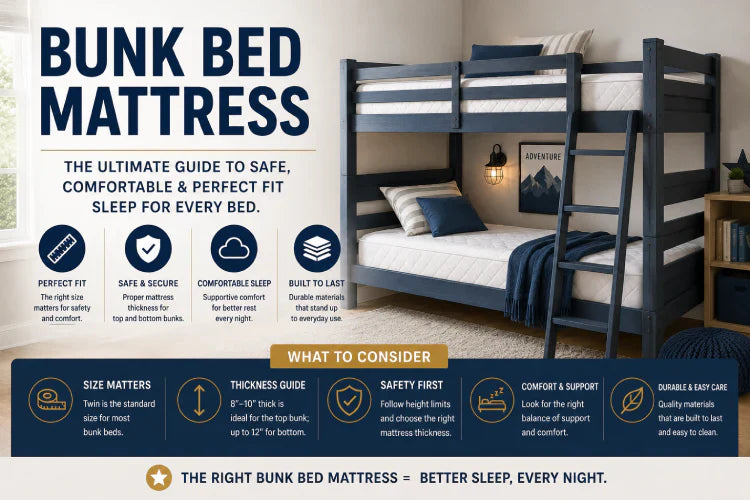
Bunk beds are a space-saving marvel for shared kids’ rooms, vacation homes, hostels, and even studio apartments. But while most people spend hours choosing the right bunk bed frame, the mattress that goes on it often gets far less attention—and that can be a costly mistake.
A bunk bed mattress isn’t just a smaller version of a standard mattress. It comes with specific thickness restrictions for safety, must fit precisely within the bed frame, and needs to balance comfort with practical considerations like weight and durability. Choose the wrong one and you could compromise your child’s safety, your guest’s comfort, or your budget.
In this complete guide, we’ll walk you through everything you need to know about bunk bed mattresses—from sizes and safety standards to materials and pricing—so you can make a confident, informed decision.

What Is a Bunk Bed Mattress?
A bunk bed mattress is a mattress specifically designed—or selected—to fit within the unique constraints of a bunk bed. While any mattress that fits the bed frame can technically be used on a bunk bed, a true bunk bed mattress is typically thinner, lighter, and sometimes firmer than a standard mattress.
The key difference lies in safety requirements. On a top bunk, the mattress must sit low enough that the guardrails remain effective. On the bottom bunk, while thickness restrictions are less strict, you still need a mattress that fits within the frame’s dimensions and supports the intended sleeper comfortably.
Bunk Bed Mattress vs. Standard Mattress
|
Feature |
Bunk Bed Mattress |
Standard Mattress |
|
Thickness |
5–8 inches (top bunk max ≤8 in) |
8–14+ inches |
|
Weight |
Lightweight (under 50 lbs ideal) |
Heavier, varies widely |
|
Size |
Twin, Twin XL, Full most common |
Twin through California King |
|
Safety Standards |
Must comply with CPSC/ASTM F1427 |
No specific bunk bed standards |
|
Firmness |
Medium-firm to firm preferred |
Varies by personal preference |
Bunk Bed Mattress Sizes
Choosing the correct mattress size is the first—and most fundamental—step. A mattress that’s too small can shift dangerously, while one that’s too large simply won’t fit. Here are the most common bunk bed mattress sizes and their dimensions:
|
Mattress Size |
Width × Length (inches) |
Width × Length (cm) |
Best For |
|
Twin |
38 × 75 |
96.5 × 188.0 |
Children, single sleepers; most common bunk size |
|
Twin XL |
38 × 80 |
96.5 × 203.5 |
Taller teens and adults |
|
Full |
54 × 75 |
134.5 × 190.5 |
Bottom bunks, larger children or adults |
|
Full XL |
54 × 80 |
137 × 203.5 |
Taller adults who need more width |
|
Queen |
60 × 80 |
152 × 203.5 |
Oversized bunk beds, guest rooms |
Tip: Always measure your bunk bed frame before purchasing. Some bunk beds—especially European or custom models—may use non-standard dimensions. The mattress should fit snugly with no more than a ½-inch gap on any side.
How Thick Should a Bunk Bed Mattress Be?
Thickness is arguably the most critical factor when choosing a bunk bed mattress—especially for the top bunk. The CPSC (U.S. Consumer Product Safety Commission) and ASTM F1427 standard require that the top of the mattress must sit at least 5 inches below the top of the guardrail. This means your mattress thickness is directly tied to the guardrail height.
The 5-Inch Safety Rule
To calculate the maximum safe mattress thickness for your top bunk:
Measure the distance from the mattress support surface (slats or bunkie board) to the top of the guardrail.
Subtract 5 inches from that measurement.
The result is your maximum allowable mattress thickness.
For most standard bunk beds, this translates to a maximum top-bunk mattress thickness of 6 to 8 inches. Always check your specific bed frame’s manual for the manufacturer’s recommended thickness limit.
Recommended Thickness by Age
|
Age Group |
Recommended Thickness |
Firmness |
Notes |
|
Toddlers & Young Children |
5–6 inches |
Firm |
Safety first; prevents excessive sinking |
|
Teens |
6–8 inches |
Medium-firm |
Supports spinal alignment during growth |
|
Adults |
8–12 inches (bottom bunk) |
Medium to medium-firm |
Top bunk still limited by guardrail height |
Bunk Bed Mattress Types: Which Material Is Right for You?
Not all mattress materials are equally suited for bunk beds. Weight, thickness, breathability, and motion isolation all matter more in a bunk bed setup. Here’s how the four main types compare:
|
Material |
Pros |
Cons |
Best For |
|
Innerspring |
Breathable; responsive; affordable; widely available in thin profiles |
Poor motion isolation; can be noisy; less contouring |
Budget shoppers; active kids who move around in sleep |
|
Memory Foam |
Excellent pressure relief; great motion isolation; lightweight options available |
Can sleep hot; may off-gas; thicker models may exceed guardrail limits |
Side sleepers; light sleepers sharing a room |
|
Latex |
Durable; naturally cooling; responsive; eco-friendly options available |
Heavier; more expensive; thicker profiles common |
Eco-conscious buyers; hot sleepers; long-term investment |
|
Hybrid |
Balanced support and comfort; good cooling; versatile feel |
Often too thick for top bunks; heavier; pricier |
Bottom bunks; adults wanting hotel-quality comfort |
Our Material Recommendation
For the top bunk, memory foam or a slim innerspring mattress (6–8 inches) is usually the best choice. They’re lightweight, affordable, and available in the thin profiles that safety demands. For the bottom bunk, you have more freedom—a hybrid or latex mattress up to 12 inches can provide the comfort and support adults or older teens need.
Safety Considerations for Bunk Bed Mattresses
Safety is the non-negotiable priority when it comes to bunk beds. Here are the essential safety factors every buyer—and parent—should know:
Guardrail Requirements (CPSC/ASTM F1427)
Guardrails: All open sides of the top bunk must have guardrails.
5-Inch Rule: The top of the mattress must be at least 5 inches below the top of the guardrail.
Gap Limit: Gaps between guardrail bars must not exceed 4 inches (to prevent entrapment).
Ladder Opening: The ladder-side opening can be up to 15 inches wide for entry/exit.
Weight Capacity
|
Bunk Bed Type |
Typical Weight Limit |
Notes |
|
Children’s Bunk Bed |
150–220 lbs (68–100 kg) |
Check manufacturer specs; don’t exceed limit |
|
Adult / Heavy-Duty Bunk Bed |
250–800 lbs (113–363 kg) |
Varies by frame material and construction |
Additional Safety Tips
Age Restriction: Children under 6 years old should never sleep on the top bunk.
Ceiling Clearance: Leave at least 36 inches (91 cm) between the top mattress and the ceiling.
Slats: Slats should be no more than 2.5–3 inches apart; wider gaps can cause mattress sagging.
Foundation: Use a bunkie board or solid foundation for even support without adding height.
Maintenance: Check and tighten all bolts, screws, and guardrails regularly.
Don’t Modify: Never remove or modify guardrails, and never use a mattress thicker than the manufacturer specifies.
How to Choose the Best Bunk Bed Mattress: 5-Step Guide
Step 1: Measure Your Bunk Bed Frame
Before anything else, measure the interior dimensions of your bunk bed frame and the distance from the slats to the top of the guardrail. Write these numbers down—they’ll determine your mattress size and maximum thickness.
Step 2: Determine Who Will Sleep on It
A mattress for a 5-year-old has very different requirements than one for a 25-year-old. Consider the sleeper’s age, weight, sleep position, and whether they tend to sleep hot or cold.
Step 3: Choose the Right Thickness
For the top bunk, calculate your maximum thickness using the 5-inch rule. For the bottom bunk, you can go thicker—up to 10–12 inches—but make sure the mattress doesn’t exceed the frame’s depth. If the bottom bunk is also for a child, 6–8 inches is still ideal.
Step 4: Pick a Material
Refer to the material comparison table above. In general: memory foam for pressure relief and motion isolation, innerspring for breathability and budget, latex for durability and cooling, and hybrid for balanced comfort on the bottom bunk.
Step 5: Check Certifications
Look for mattresses that carry CertiPUR-US® (for foam), GREENGUARD Gold, or OEKO-TEX® certifications. These indicate low chemical emissions and safer materials—especially important for children’s sleep environments.
Bunk Bed Mattress Price Guide
Bunk bed mattresses range widely in price depending on size, material, and brand. Here’s a general overview to help you budget:
|
Material |
Price Range (Twin Size) |
Expected Lifespan |
Value Rating |
|
Innerspring |
$80–$250 |
5–7 years |
Budget-friendly |
|
Memory Foam |
$100–$400 |
6–8 years |
Best value for comfort |
|
Latex |
$300–$800 |
8–12 years |
Premium durability |
|
Hybrid |
$250–$600 |
7–10 years |
Balanced performance |
Keep in mind that you’ll typically need two mattresses for a bunk bed (one for the top and one for the bottom). Some manufacturers offer bunk bed mattress bundles at a discounted price.
Frequently Asked Questions
Can you use a regular mattress on a bunk bed?
Technically, yes—as long as it fits the frame and meets the thickness requirements for safety. However, standard mattresses are often too thick for the top bunk (most are 10–14 inches), which would render the guardrails ineffective. For the bottom bunk, a standard mattress may work fine if it fits the frame’s dimensions.
What is the best thickness for a top bunk mattress?
Most safety experts and manufacturers recommend 6 to 8 inches for the top bunk. The key rule: the top of the mattress must be at least 5 inches below the guardrail. Always measure your specific bed frame to confirm the maximum safe thickness.
Do bunk bed mattresses need a box spring?
No. Bunk beds are designed to support the mattress directly on slats or a bunkie board. A box spring would add unnecessary height and could make the top bunk unsafe. If your slats are widely spaced (more than 3 inches apart), use a bunkie board to provide even support.
Are bunk bed mattresses different from regular mattresses?
Yes and no. Bunk bed mattresses use the same materials (foam, springs, latex), but they’re typically thinner, lighter, and sometimes firmer to meet safety requirements. Some manufacturers sell “bunk bed mattresses” specifically, but any mattress that fits the frame and thickness limits will work.
How often should you replace a bunk bed mattress?
Most bunk bed mattresses should be replaced every 6 to 8 years, depending on the material and usage. Children’s mattresses may need replacing more frequently as kids outgrow the firmness level or size. Visible sagging, lumps, or worn-out edges are clear signs it’s time for a new one.
Conclusion
Choosing the right bunk bed mattress comes down to three things: safety, size, and comfort. Start by measuring your frame and guardrail height. Then choose a thickness that keeps the top bunk safe (remember the 5-inch rule). Pick a material that suits the sleeper’s needs and your budget. And always look for safety certifications, especially when buying for children.
Whether you’re outfitting a shared kids’ room, a guest space, or a vacation rental, the right bunk bed mattress makes all the difference between restless nights and restful sleep. Take your time, measure carefully, and invest in quality—your sleepers will thank you.

Leave a comment
This site is protected by hCaptcha and the hCaptcha Privacy Policy and Terms of Service apply.