



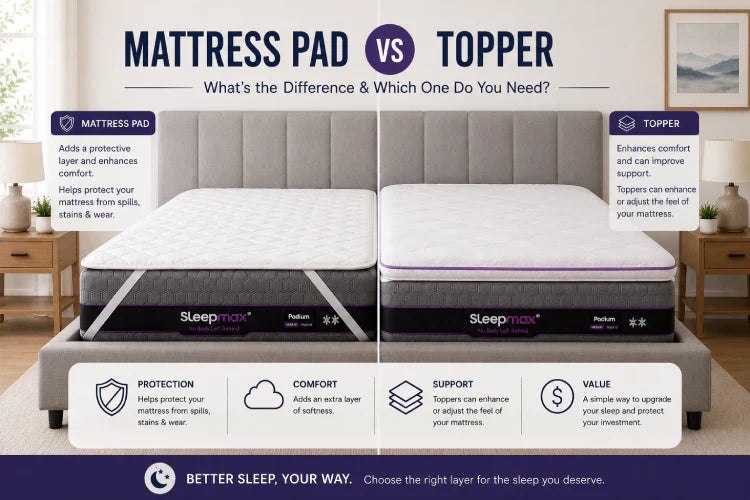
If you've ever searched for ways to make your bed more comfortable, you've probably come across two products that seem almost identical: mattress pads and mattress toppers.

What Is a Mattress Pad?
A mattress pad is a thin cushion that put on a mattress, usually like a fitted sheet with elastic corners. The main purpose of it is to make the mattress more comfort when the mattress is too firm. In the meanwhile, it also can protect the mattress from liquids, accidents, and dirt. Many mattress pads help absorb sweat, body oils, dust, and minor spills, reducing the amount of debris that reaches the mattress itself.
Most mattress pads are made from:
● Cotton
● Feather
● Polyester fiberfill
● Down alternative materials
● Wool
● Cooling fabrics
Benefits of a Mattress Pad
Light Comfort Enhancement
A mattress pad can make a mattress feel slightly softer without dramatically changing its support characteristics.
Improved Mattress Protection
Like mattress protector, pads create an additional barrier against stains, dirt, and moisture.
Easier Maintenance
Unlike mattresses, most pads can be removed and washed regularly.
Temperature Management
Some special design mattress pads use breathable cotton, bamboo-derived fabrics, or moisture-wicking wool to help regulate sleeping temperature.
Limitations of Mattress Pads
While useful, mattress pads have limitations. Because they are relatively thin, they cannot:
● Fix a sagging mattress
● Significantly soften a firm mattress
● Improve spinal alignment
● Relieve major pressure points
If your mattress feels uncomfortable every night, you probably won't solve the problem with a pad alone.
What Is a Mattress Topper?
A mattress topper is a much thicker comfort layer placed on top of an existing mattress. Most toppers have about 1 to 4 inches thick and are designed to substantially alter the feel of a mattress. A quality topper can make an old mattress feel almost like a different bed. Unlike mattress cover or mattress pad, it not design for protect mattress from stain and dirt.
Common materials include:
● Memory foam
● Gel-infused memory foam
● Latex
● High-density polyfoam
● Feather and down blends
Benefits of a Mattress Topper
Significant Pressure Relief
Toppers can distribute body weight across the full sleep surface. Side sleepers often benefit the most from additional pressure relief. This helps reduce pressure on:
● Shoulders
● Hips
● Lower back
● Knees
Adjust Firmness
A topper can make:
● A firm mattress feel softer
● A hard hotel-style mattress more plush
● An aging mattress more comfortable
Some latex toppers can even make an overly soft mattress feel more supportive.
Improved Motion Isolation
Memory foam toppers absorb movement, making them popular among couples.
Extended Mattress Lifespan
A topper absorbs some of the daily compression. The compression can destroy the comfort layer in a mattress in the long run. In many cases, this can slow visible wear and delay the need for mattress replacement.
Limitations of Mattress Toppers
Toppers are not miracle solutions.
They cannot fully repair:
● Broken springs
● Deep body impressions
● Structural sagging
● Damaged support cores
If a mattress sinks more than 1–1.5 inches, replacing the mattress is usually the better investment.
Mattress Pad vs Topper: Quick Comparison
At first glance, they look like they are one category product. Both sit on top of your mattress, both add an extra layer between you and the bed, and both promise a better night's sleep. So, many shoppers usally mistake buy a mattress pad or a mattress top.
But in reality, a mattress pad and a mattress topper are designed for very different jobs.
Choosing the wrong one can leave you disappointed, especially if you're trying to solve a specific problem such as back pain, overheating, pressure points, or an aging mattress. Understanding the differences can save you money and help you create a sleeping surface that truly meets your needs.
The easiest way to think about it is this:
A mattress pad fine-tunes your bed.
A mattress topper transforms your bed.
|
Feature |
Mattress Pad |
Mattress Topper |
|
Primary Purpose |
Protection and light comfort |
Significant comfort adjustment |
|
Typical Thickness |
0.5–2 inches |
2–4 inches |
|
Changes Mattress Feel |
Slightly |
Dramatically |
|
Pressure Relief |
Minimal |
Excellent |
|
Support Enhancement |
Limited |
Moderate to High |
|
Temperature Regulation |
Moderate |
Depends on material |
|
Washability |
Usually machine washable |
Often spot-clean only |
|
Price Range |
$30–$150 |
$100–$500+ |
|
Best For |
Mattress protection and minor comfort improvements |
Transforming comfort and firmness |
Compare Table of Mattress Pad vs Topper
Mattress Pad vs Topper: Comfort Differences
One of the biggest differences between the two products is how they affect comfort.
Imagine lying on a firm mattress.
Adding a Mattress Pad
You'll notice:
● Slightly softer surface feel
● More cushioning against the sheets
● Minor improvement in comfort
However, the mattress beneath remains largely unchanged.
Adding a Mattress Topper
You'll notice:
● Greater contouring
● Enhanced pressure relief
● Reduced joint discomfort
● A completely different sleeping experience
For many sleepers, a topper can make a mediocre mattress feel significantly more luxurious.
Which Option Is Better for Back Pain?
Many shoppers search for mattress accessories because they wake up with aches and stiffness.
In most cases, a topper is the better choice.
Why?
Back pain is often linked to:
● Pressure buildup
● Improper spinal alignment
● Insufficient support
A quality memory foam or latex topper can help distribute weight more evenly and improve comfort.
A mattress pad, on the other hand, generally doesn't contain enough material to meaningfully affect body support.
Which Sleeps Cooler?
Temperature regulation depends heavily on material choice.
Mattress Pads
Cooling mattress pads often use:
● Cotton
● Tencel
● Bamboo-derived fabrics
● Wool
These materials excel at moisture management and airflow.
Mattress Toppers
The cooling performance of a topper varies significantly.
Memory Foam
Traditional memory foam tends to retain heat.
Gel Memory Foam
Designed to reduce heat buildup but may still sleep warmer than latex.
Latex
One of the coolest foam materials available due to its open-cell structure and natural airflow.
Wool Toppers
Excellent at regulating temperature in both hot and cold conditions.
For hot sleepers, material matters more than whether the product is a pad or topper.
A Common Mistake: Using a Pad When You Need a Topper
Many consumers purchase a mattress pad hoping it will solve comfort issues.
Unfortunately, this often leads to disappointment.
A mattress pad works best when:
● Your mattress is already comfortable
● You want additional protection
● You need easier cleaning
A topper works best when:
● Your mattress feels too firm
● Pressure points cause discomfort
● You need deeper cushioning
● You want to alter firmness
Understanding the difference prevents unnecessary spending.
Can You Use Both Together?
Absolutely.
In fact, many sleep experts recommend combining them.
A typical setup looks like this:
1. Mattress
2. Mattress topper
3. Mattress pad
4. Fitted sheet
The topper provides comfort and support adjustment.
The pad adds protection and helps keep the topper cleaner.
This combination offers the benefits of both products while extending the life of each layer.
Which One Lasts Longer?
Durability depends on quality and materials.
Typical lifespan estimates:
Mattress Pads
● Basic polyester: 1–3 years
● Cotton pads: 2–5 years
● Premium wool pads: 5+ years
Mattress Toppers
● Low-density foam: 2–4 years
● High-density memory foam: 4–6 years
● Natural latex: 6–10 years
Latex toppers generally provide the longest lifespan and best resistance to body impressions.
Mattress Pad vs Topper: Which Should You Buy?
Choose a mattress pad if:
● You want light cushioning
● You need mattress protection
● You prefer a washable sleep surface
● Your mattress is already comfortable
Choose a mattress topper if:
● Your mattress feels too firm
● You experience pressure-point discomfort
● You want substantial comfort improvements
● You're trying to delay replacing an aging mattress
Choose both if:
● You want maximum comfort and protection
● You've invested in a premium topper
● You want to extend the lifespan of your sleep setup
Final Thoughts
When comparing a mattress pad vs topper, the difference comes down to purpose.
A mattress pad is primarily a protective and comfort-enhancing layer that offers subtle improvements and easier maintenance. A mattress topper, meanwhile, is designed to reshape the feel of your mattress and provide meaningful changes in pressure relief, firmness, and overall comfort.
If you're happy with your mattress and simply want a cleaner, slightly softer sleeping surface, a mattress pad is often enough.
If you're struggling with comfort, waking up sore, or trying to breathe new life into an older mattress, a topper will likely provide far more noticeable results.
The best choice ultimately depends on what you're trying to fix—and understanding that difference is the first step toward better sleep.

Leave a comment
This site is protected by hCaptcha and the hCaptcha Privacy Policy and Terms of Service apply.