




Find yourself waking up at the same time every night, say, around 4 AM? Is it just a coincidence, your biological clock at work, or a sign that something else is going on? Does waking up at 4 AM have a scientific explanation? Let's take a closer look at why you may keep waking up at 4 AM and what scientific research can tell us about it.
Table of contents
Why Do I Keep Waking Up at 4 AM?
There is no single explanation for waking up at 4 AM every night. Several processes that regulate sleep become particularly relevant as the night progresses.
Your Circadian Rhythm May Be Shifting You Toward Wakefulness
Your circadian rhythm is an approximately 24-hour biological timing system that helps coordinate sleep and wakefulness, hormone production, body temperature, metabolism, and other physiological processes.
As the biological morning approaches, circadian signals gradually become more favorable to wakefulness. This means that an awakening later in the night may be easier to sustain than one occurring shortly after you fall asleep.
Research also suggests that circadian timing can differ between individuals. In a study specifically examining people with early-morning-awakening insomnia, researchers found that their melatonin and core body-temperature rhythms were shifted earlier than those of good sleepers. The authors suggested that an advanced circadian phase could contribute to early arousal from sleep.
This does not mean that everyone who wakes at 4 AM has an advanced circadian rhythm. It is one possible explanation, particularly when early waking happens consistently and you also tend to become sleepy unusually early in the evening.
Sleep Becomes More Vulnerable to Disruption as the Night Progresses
Sleep is not a uniform state that remains equally deep throughout the night. It cycles through different stages, and the distribution of these stages changes across the night.
Age also affects sleep continuity. Research in older adults has found that spontaneous awakenings can become more frequent, with difficulty maintaining sleep becoming an important part of age-related sleep changes.
This helps explain why a small disturbance that you might sleep through earlier in the night could become more noticeable toward morning.
Stress or Anxiety May Keep Your Brain Alert
Sometimes the initial awakening is not the biggest problem. What happens after you wake up may be. You may notice a familiar sequence:
Wake up → check the clock → worry about getting enough sleep → think about tomorrow → become more alert → struggle to fall asleep again.
This is consistent with the concept of sleep reactivity. Some people are more sensitive to stress-related sleep disruption than others. Research on insomnia suggests that cognitive-emotional responses such as worry and rumination can interact with this vulnerability and make it harder to fall or stay asleep.
So if you wake at 4 AM and immediately start calculating how many hours remain before your alarm, the resulting anxiety may make returning to sleep more difficult.
Your Sleep Environment May Be Triggering the Awakening
A bedroom that feels comfortable when you first go to bed may not remain comfortable throughout the entire night. Potential nighttime disruptors include:

- Room temperature that becomes too warm
- Sweating or moisture buildup
- Noise from traffic, neighbors, pets, or a partner
- Light entering through windows
- An uncomfortable mattress or pillow
- Pressure or pain from an unsuitable sleep surface
- A partner's movement or snoring
Thermal conditions deserve particular attention. A review of sleep environments found that skin temperature, rapid temperature changes, and sweating can affect sleep quality, while bedding and sleepwear influence the thermal environment around the body.
Noise can also fragment sleep. A systematic review conducted for the World Health Organization found evidence that transportation noise is associated with sleep disturbance and an increased probability of awakening.
If you frequently wake at the same time, it can therefore be useful to consider not only when you wake up, but also what might be happening in your bedroom around that time.
Alcohol Can Disrupt Sleep Later in the Night
Alcohol can make some people feel sleepy initially, which may create the impression that it helps with sleep. However, its effects on sleep architecture are more complicated.
A 2025 systematic review and meta-analysis in Sleep Medicine Reviews analyzed 27 studies and found that alcohol altered sleep architecture, including delaying the onset of REM sleep and reducing REM sleep duration. The researchers also found evidence that REM disruption could occur even with relatively low doses.
This does not mean that every 4 AM awakening is caused by alcohol. But if you notice that early waking is more common after drinking in the evening, alcohol is worth considering as one possible contributor.
Your Sleep Schedule May Be Out of Sync With Your Body Clock
An inconsistent sleep schedule can make your sleep timing less predictable. Potential contributors include:
- Going to bed much earlier than usual
- Sleeping in on weekends
- Frequently changing your bedtime
- Shift work
- Jet lag
- An unusually early circadian phase
If your biological clock is consistently shifted earlier, you may become sleepy earlier in the evening and wake earlier in the morning.
This is different from simply having a bad night of sleep. A consistent pattern of early sleepiness followed by early waking may point toward a circadian timing issue rather than a problem with the 4 AM hour itself.
Age and Hormonal Changes Can Affect Sleep
Sleep patterns change throughout adulthood. Older adults tend to experience more fragmented sleep, which can make nighttime awakenings more noticeable.
Hormonal changes can also affect sleep, particularly during the menopausal transition.
A review published in Nature and Science of Sleep found that sleep difficulties are common during the menopausal transition and examined the relationships among poor sleep, hot flashes, depression, and other factors.

Hot flashes and night sweats may be particularly relevant if you wake feeling overheated. A review in Maturitas also identified hot flashes, mood symptoms, medical conditions, and behavioral and psychosocial factors among contributors to insomnia during menopause.
Could Waking Up at 4 AM Be a Sign of Insomnia?
Occasionally waking up during the night is part of normal sleep. The concern is more about the frequency, duration, and daytime consequences of the awakenings.
Early-morning awakening can be one manifestation of insomnia when a person repeatedly wakes earlier than desired and cannot return to sleep. It becomes more clinically relevant when the sleep problem causes problems during the day, such as fatigue, impaired concentration, irritability, or excessive sleepiness.
A 2015 systematic review and meta-analysis in Annals of Internal Medicine found that cognitive behavioral therapy for insomnia (CBT-I) produced clinically meaningful improvements in several sleep outcomes, including wake time after sleep onset.
In other words, repeatedly waking at 4 AM is not enough by itself to diagnose insomnia. The broader pattern matters.
Could a Health Condition Be Waking You Up at 4 AM?
Persistent early-morning awakenings can sometimes occur alongside other sleep or medical conditions.
Insomnia
If you regularly wake too early and cannot return to sleep, insomnia may be one possibility, particularly when the pattern affects your daytime functioning.
Sleep Apnea
Sleep apnea can cause repeated disruptions throughout the night, sometimes without the person fully realizing they are waking. Pay particular attention if early waking occurs alongside:
- Loud or frequent snoring
- Gasping or choking during sleep
- Witnessed pauses in breathing
- Excessive daytime sleepiness
- Morning headaches
- Persistent difficulty maintaining sleep
Insomnia and obstructive sleep apnea can also occur together. A systematic review and meta-analysis found that symptoms such as difficulty maintaining sleep and early-morning awakening are relatively common among people with obstructive sleep apnea.
More recent clinical literature continues to recognize comorbid insomnia and sleep apnea (COMISA) as an important overlap between two common sleep disorders.
Sometimes the reason is much simpler: you wake up because you need to urinate.
If nighttime urination happens repeatedly, particularly alongside other urinary or sleep symptoms, it may be worth discussing with a healthcare professional rather than assuming it is simply part of aging or drinking too much water before bed.
What Should You Do When You Wake Up at 4 AM?
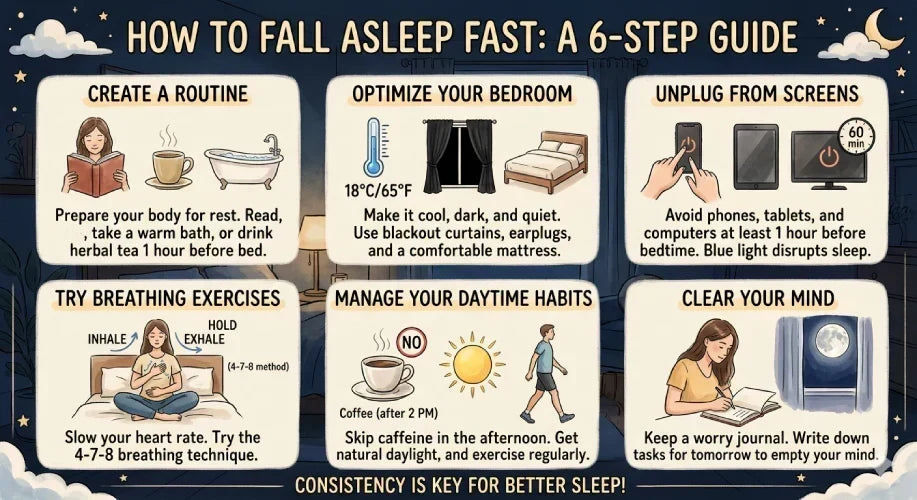
If you wake up and want to return to sleep, the goal is to avoid turning a brief awakening into a prolonged period of alertness.
Don't Keep Checking the Clock

Repeatedly checking the time can encourage calculations such as: "I only have three hours left."
That thought can increase frustration and make it harder to relax. If possible, keep the clock out of direct view and avoid repeatedly monitoring the time.
Keep the Room Dark, Quiet, and Comfortable
Light and noise are external signals that can interfere with sleep. For better sleep:
- Using blackout curtains if outdoor light enters the room
- Keeping your phone screen off
- Reducing unnecessary noise
- Using comfortable, breathable bedding
- Keeping the room at a temperature that feels comfortable throughout the night
- Don't Force Yourself to Sleep
If you remain awake and increasingly frustrated, staying in bed and trying harder to sleep may not be helpful.
CBT-I uses stimulus control as one component of treatment. The approach generally involves associating the bed with sleep rather than prolonged wakefulness and returning to bed when you feel sleepy again.
If early waking becomes a persistent problem, however, it is better to address the underlying sleep pattern rather than relying on occasional nighttime tricks.
How to Stop Waking Up at 4 AM
You cannot always prevent every nighttime awakening, but several habits can support more consistent sleep.
Keep a Consistent Sleep-Wake Schedule
Try to maintain relatively consistent bedtimes and wake times, including on weekends. A stable schedule gives your circadian system more predictable timing cues and can help prevent large shifts in sleep timing.
Get Appropriate Light Exposure During the Day
Light is one of the strongest environmental signals used to synchronize the circadian system.
Research on light therapy suggests that appropriately timed light exposure can improve certain sleep and circadian outcomes, although its effectiveness varies depending on the sleep problem and timing of the intervention. A systematic review and meta-analysis in Sleep Medicine Reviews evaluated 53 studies involving 1,154 participants and found that light therapy may benefit several sleep-related outcomes.
For ordinary sleep hygiene, spending time outdoors during the day can also provide natural light exposure without requiring a specialized light-therapy device.
Pay Attention to Alcohol and Evening Stimulants
If you frequently wake during the second half of the night, consider whether alcohol or late-day caffeine is part of the pattern. Rather than assuming one factor is responsible, keep track of what happens on nights when you sleep through versus nights when you wake at 4 AM.
Improve Your Sleep Environment
Your sleep environment should remain comfortable for the entire night, not just when you first get into bed.
Consider whether:
- Your mattress provides adequate support
- You experience pressure or discomfort
- Your bedding traps too much heat
- You wake up sweaty
- Your partner's movement disturbs you
- Noise or outdoor light reaches the room
Thermal comfort is particularly relevant for people who regularly wake feeling hot or sweaty. Research on sleep environments indicates that skin temperature, sweating, bedding, and the surrounding thermal microclimate can influence sleep quality.
Mattresses also contribute to better sleep. Check this article and learn how to choose the right mattress.
When Should You Talk to a Doctor About Waking Up at 4 AM?
If you experience one of the following issues, consider speaking with a healthcare professional:
- You wake at 4 AM most nights and cannot return to sleep
- The problem persists despite improving your sleep habits
- You regularly feel excessively sleepy during the day
- Your concentration, mood, or work performance is affected
- You snore loudly or wake gasping or choking
- Pain repeatedly wakes you
- Hot flashes or night sweats are interfering with sleep
- You frequently wake to urinate
- You suspect a medication, medical condition, or sleep disorder may be contributing
The Bottom Line
Waking up at 4 AM does not necessarily mean that something is wrong with your body. The clock time is less important than the interaction between your circadian rhythm, sleep patterns, environment, lifestyle, and health.
For some people, early waking may reflect a naturally earlier circadian timing. For others, stress, alcohol, environmental disturbances, hormonal changes, insomnia, sleep apnea, or other factors may be contributing.
If it happens occasionally and you fall back asleep easily, there may be little reason for concern. But if you repeatedly wake at 4 AM, remain awake for long periods, or feel tired during the day, look beyond the clock. Identifying the pattern behind your awakening and addressing the underlying cause is more useful than simply trying to force yourself back to sleep.


Leave a comment
This site is protected by hCaptcha and the hCaptcha Privacy Policy and Terms of Service apply.