


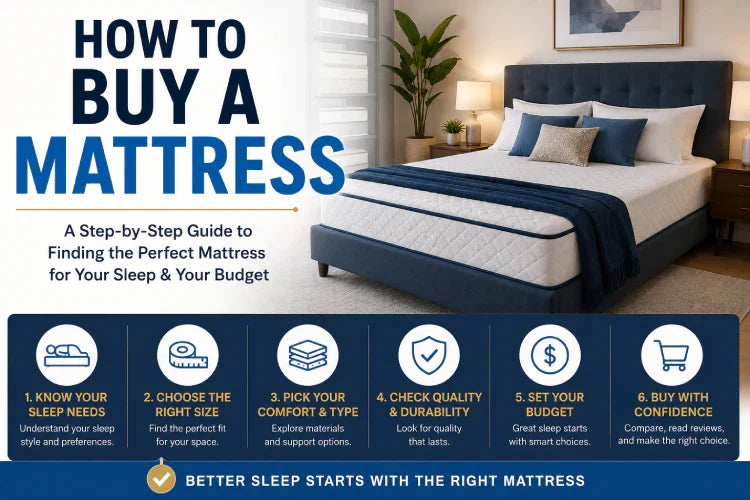
Buying a mattress is one of the most important investments you’ll make for your health and well-being. The average person spends roughly a third of their life in bed, yet most people put less thought into choosing a mattress than they do into buying a smartphone. A poor choice can lead to years of disrupted sleep, back pain, and wasted money. A great choice, on the other hand, can transform your rest and your life.
Whether you’re a first-time buyer or replacing an old mattress, this guide will walk you through every key factor — from mattress types and firmness levels to budget planning and where to buy — so you can make a confident, informed decision.

1. Understand the Main Mattress Types
The first step in learning how to buy a mattress is understanding what’s actually inside it. Each mattress type has distinct characteristics that affect support, pressure relief, motion isolation, temperature regulation, and durability.
|
Type |
Best For |
Description |
|
Innerspring |
Budget buyers / combination sleepers |
Traditional coil system. Bouncy, breathable, affordable. Less motion isolation. |
|
Memory Foam |
Side sleepers / pressure relief |
Conforms closely to the body. Excellent pressure relief. May sleep warm. |
|
Latex |
Hot sleepers / eco-conscious buyers |
Natural or synthetic. Responsive, breathable, durable. Heavier and pricier. |
|
Hybrid |
All sleep positions / couples |
Coils + foam/latex comfort layers. Best of both worlds. Most popular option. |
|
Airbed |
Couples with different firmness needs |
Adjustable firmness via air chambers. High price, ideal for couples with different preferences. |
For most shoppers, a hybrid or memory foam mattress offers the best balance of comfort and value. If you sleep hot, look for foam with cooling gel infusions or an innerspring/hybrid design that allows better airflow.
2. Choose the Right Mattress Size
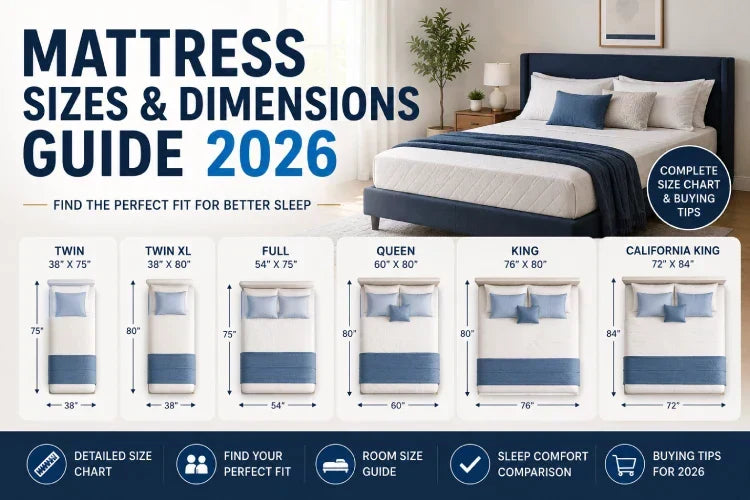
Mattress size affects both comfort and practicality. Consider your room dimensions, whether you share the bed, and your personal space preference before deciding.
|
Size |
Dimensions |
Best For |
|
Twin |
38" × 75" |
Kids, single sleepers, bunk beds |
|
Twin XL |
38" × 80" |
Taller single sleepers, college dorms |
|
Full |
54" × 75" |
Solo adults, smaller bedrooms |
|
Queen |
60" × 80" |
Most popular; couples or solo sleepers wanting space |
|
King |
76" × 80" |
Couples who want maximum space |
|
California King |
72" × 84" |
Taller individuals, large master bedrooms |
The Queen size is the most popular choice in the U.S., offering plenty of room for couples while fitting most standard bedrooms.
3. Determine the Right Firmness Level
Firmness is the most personal factor in mattress selection. It directly impacts spinal alignment, pressure relief, and how well you sleep. Firmness is typically rated on a 1–10 scale.
Soft (1–3): Best for side sleepers and those under 130 lbs. Conforms closely to hips and shoulders.
Medium-Soft (4–5): Versatile option, suitable for most side sleepers and lightweight combination sleepers.
Medium-Firm (6–7): The “sweet spot” for most people. Works well for back sleepers and average-weight individuals.
Firm (8–10): Best for stomach sleepers, heavier individuals (230 lbs+), or those who prefer minimal sinkage.
Keep in mind that body weight also influences how a mattress feels: a heavier person will sink further into the same mattress than a lighter person. If you share a bed with a partner of very different weight or sleep preference, consider a hybrid mattress or a split firmness option.
4. Match the Mattress to Your Sleep Position
Your dominant sleep position is one of the clearest indicators of what kind of support you need.
Side Sleepers: Need a softer surface (Medium to Medium-Soft) to relieve pressure on the hips and shoulders. Memory foam and hybrid mattresses excel here.
Back Sleepers: Benefit from a Medium-Firm mattress that supports the natural lumbar curve without allowing the hips to sink too deeply.
Stomach Sleepers: Require a Firm surface to keep the spine neutral and prevent the midsection from sagging, which can cause lower back pain.
Combination Sleepers: A responsive Medium or Medium-Firm mattress — especially a hybrid — makes it easy to shift positions during the night.
5. Set a Realistic Budget
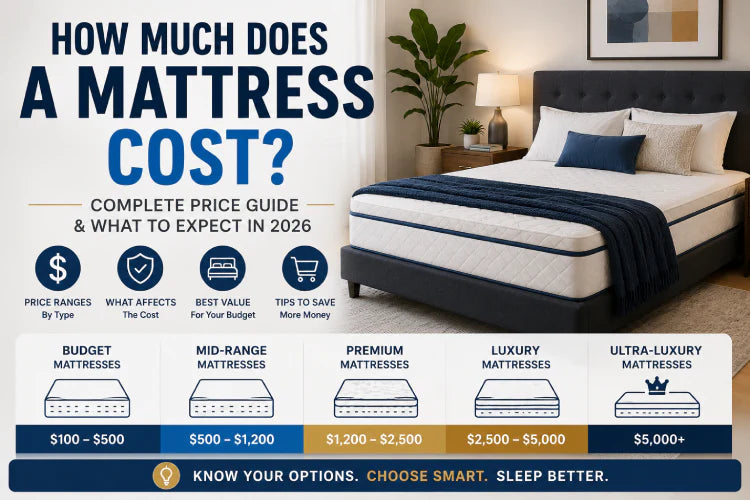
Mattress prices vary widely depending on materials, brand, and where you purchase. Here is a general breakdown:
|
Price Range |
Tier |
What to Expect |
|
Under $500 |
Budget / Entry-Level |
Basic innerspring or thin foam. Short lifespan (5–7 years). Good for guest rooms. |
|
$500 – $1,200 |
Mid-Range |
Most online mattress brands fall here. Good quality foam or hybrid. 8–10 year lifespan. |
|
$1,200 – $2,500 |
Premium |
High-density foam, natural latex, advanced hybrids. Excellent durability and comfort. |
|
$2,500+ |
Luxury |
Organic materials, custom firmness, hand-tufted covers. Best-in-class but diminishing returns. |
Shopping directly from online mattress brands (sometimes called “DTC” or direct-to-consumer brands) often gives you better value for money than buying in a physical store, as there are fewer middlemen. Many premium brands sell excellent mattresses in the $800–$1,500 range.
6. Look for These Key Features and Certifications
Once you have a mattress type, size, and firmness in mind, compare specific features:
Coil Count & Gauge (for innerspring/hybrid): Higher coil count doesn’t always mean better quality. Coil gauge (thickness) matters more for durability. Look for individually wrapped (pocketed) coils for better motion isolation.
Foam Density (for memory foam): High-quality memory foam is typically 4–5 PCF (pounds per cubic foot). Cheaper foam under 3 PCF breaks down faster.
Comfort Layer Thickness: A comfort layer of 2–4 inches typically provides adequate pressure relief without excessive sinkage.
Edge Support: Important if you sit or sleep near the edge of the bed. Look for reinforced foam or coil edges.
Temperature Regulation: Gel-infused foam, copper-infused foam, phase-change covers, or coil-based support cores all help with heat dissipation.
CertiPUR-US® Certification: Confirms that the foam was made without harmful chemicals and meets strict emissions standards.
OEKO-TEX® Standard 100: Indicates the materials have been tested for harmful substances across the entire production chain.
7. Take Advantage of Sleep Trials and Return Policies
One of the biggest advantages of buying from an online mattress brand is the sleep trial. Most reputable online mattress companies offer a 100–365 night trial period, during which you can return the mattress for a full refund if it doesn’t work for you.
When evaluating a mattress’s trial and warranty policy, check the following:
Trial Length: A minimum of 90 nights is standard. Some brands offer 365-night trials.
Return Process: Look for free in-home pickup with a full refund, not just a store credit.
Warranty Length: Most quality mattresses come with a 10-year warranty. Lifetime warranties are a bonus.
Sagging Threshold: Most warranties cover body impressions deeper than 1–1.5 inches.
Note that it usually takes at least 30 nights to properly break in and adjust to a new mattress. Don’t make your final judgment in the first week.
8. When Is the Best Time to Buy a Mattress?
Timing your purchase strategically can save you hundreds of dollars. Mattresses go on sale most frequently around major U.S. holidays:
Presidents’ Day (February): Traditionally the largest mattress sales event of the year.
Memorial Day (May): Major markdowns across all brands.
Labor Day (September): End-of-summer clearance sales.
Black Friday / Cyber Monday (November): Deep discounts on online brands.
New Year (January): Post-holiday clearance deals.
Online brands often run their own promotions throughout the year, so it’s always worth checking their websites directly for bundle deals that include free pillows, sheets, or mattress protectors.
9. Online vs. In-Store: Which Is Better?
Both channels have their advantages. Here’s a quick comparison:
|
Factor |
Online |
In-Store |
|
Price |
Lower (fewer markups) |
Higher (showroom overhead costs) |
|
Selection |
Wide variety of brands |
Limited to in-stock models |
|
Try Before Buy |
No (but sleep trial available) |
Yes (brief in-store test) |
|
Delivery |
Free shipping, usually |
May charge for delivery/setup |
|
Return |
Free home pickup (most brands) |
Varies by store policy |
|
Pressure |
None |
Salespeople may push upgrades |
For most shoppers, buying online from a reputable brand with a long sleep trial and free returns is the smarter choice. You get better prices, more options, and a genuine trial period — rather than a 3-minute lie-down in a brightly lit showroom.
10. Common Mistakes to Avoid
Even informed shoppers fall into these traps. Here’s what to watch out for:
Buying on price alone: The cheapest mattress is rarely the most economical choice if it wears out in three years.
Judging firmness in a showroom: A 5-minute lie-down cannot replicate how a mattress will feel after weeks of use. Always use the sleep trial.
Ignoring body weight and sleep position: These two factors matter more than any brand name.
Focusing only on coil count: 1,000 high-quality pocketed coils beat 3,000 thin, low-gauge coils every time.
Skipping the mattress protector: A waterproof protector preserves your warranty and extends the life of your mattress.
Not replacing the mattress foundation: An old, worn box spring or slatted base can undermine even a brand-new mattress.
Frequently Asked Questions
How long should a good mattress last?
Most quality mattresses last 7–10 years. Latex and high-density foam models can last 12+ years with proper care.
What mattress firmness is best for back pain?
Medium-Firm (6–7 on a 10-point scale) is generally recommended by sleep experts for reducing lower back pain, as it supports spinal alignment without creating pressure points.
Is a more expensive mattress always better?
Not necessarily. Many mid-range mattresses ($800–$1,200) perform comparably to luxury models. The key is matching the specs to your specific sleep needs.
Can I try a mattress before I buy online?
Yes — through sleep trials. Most reputable online brands offer 100–365 nights to test the mattress in your own home, with free returns if you’re not satisfied.
Do I need a box spring with a new mattress?
Not necessarily. Most modern mattresses are designed to work on a platform bed, slatted base, or adjustable base. Check the manufacturer’s recommendation for your specific model.
Final Thoughts
Learning how to buy a mattress doesn’t have to be overwhelming. Once you understand the key variables — mattress type, size, firmness, budget, and your own sleep position — the decision becomes much clearer. Take your time, use the sleep trial, and don’t let a salesperson rush you into a choice you’re not confident about.
The right mattress can genuinely improve your sleep quality, your energy levels, and your overall health. It’s not just a purchase — it’s an investment in a third of your life.
Related article: How to Choose the Best Mattress for Seniors: Firm or Soft?

Leave a comment
This site is protected by hCaptcha and the hCaptcha Privacy Policy and Terms of Service apply.