


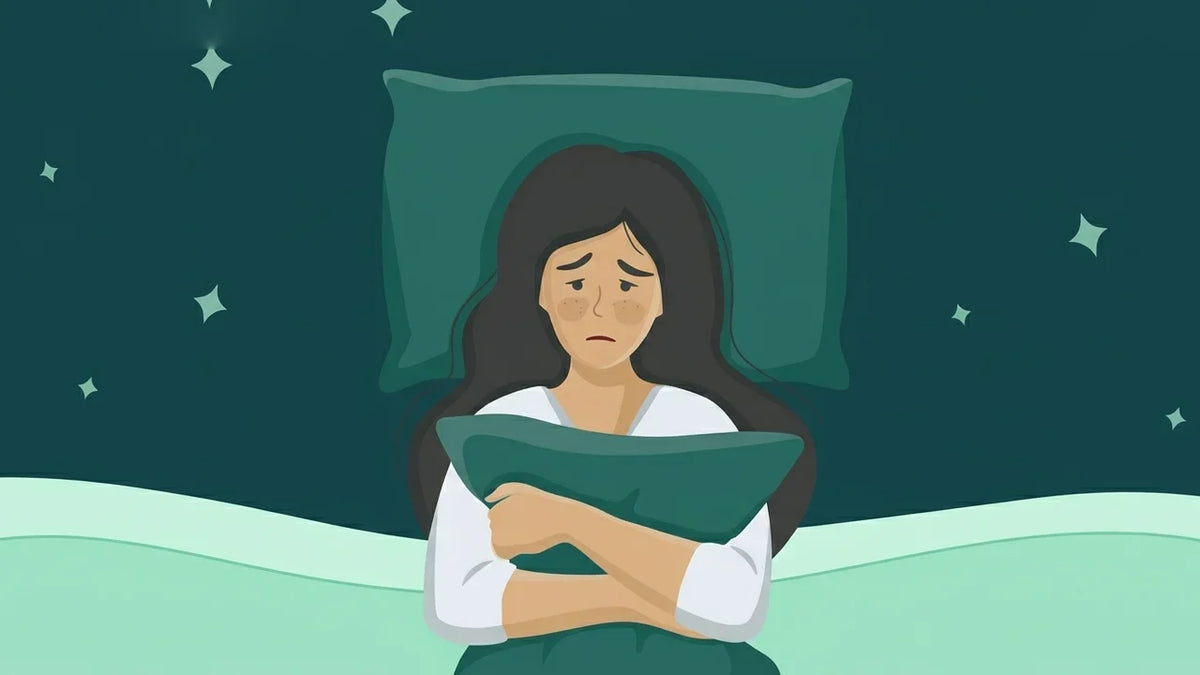
When was the last time you woke up feeling truly rested?
For most people, that answer is harder to remember than it should be. Late-night phone scrolling, deadline-driven work marathons, lying awake with a racing mind at 2 a.m. — modern life has quietly declared war on sleep. A 2025 report from the Chinese Sleep Research Association, based on a survey of over 150,000 people, found that roughly one in four adults sleeps fewer than six hours a night, and more than half go to bed after midnight.
We often overlook the problem of not getting enough sleep due to our busy work and daily lives. But here's what the science actually says: chronic sleep loss is systematically dismantling your health, your mind, and your emotional stability — often without you even noticing.
What Is Sleep Deprivation?
Sleep deprivation occurs when a person consistently fails to get the sleep their body and brain require — either in duration, quality, or both. The American Academy of Sleep Medicine (AASM) recommends that adults get between 7 and 9 hours of sleep per night. Falling short of this threshold on a regular basis, or frequently experiencing disrupted or shallow sleep, constitutes sleep deprivation.
It comes in two primary forms:
● Acute sleep deprivation — a dramatic reduction or total loss of sleep over a short period (one to two days)
● Chronic sleep insufficiency — consistently sleeping one to two hours less than needed each night, with effects that compound over time
The second type is by far the more common — and the more dangerous — form. Your body gradually adapts to the fatigue, creating the illusion that you're managing just fine. You're not.
7 Ways Sleep Deprivation Is Hurting You Right Now
1. Your Brain Is Running on Empty
The brain is both sleep's greatest beneficiary and its most immediate casualty when sleep is cut short.
A 2024 review published in Progress in Biochemistry and Biophysics found that sleep deprivation significantly impairs working memory, spatial memory, and episodic memory, while increasing error rates and slowing reaction times. At the neurological level, insufficient sleep reduces dendritic spine density and weakens synaptic connections, disrupting the long-term potentiation (LTP) process that is essential for consolidating new memories.
In plain terms: a sleep-deprived brain is like a computer trying to save files to a corrupted hard drive. Data gets lost.
2. Your Emotions Are Running the Show
Sleep deprivation throws your emotional regulation system completely off balance. The amygdala — the brain's emotional alarm center — becomes hyperactive, while the prefrontal cortex, which governs rational thinking and impulse control, loses its ability to keep emotional reactions in check.
The result? You snap at people over small things. You catastrophize. You feel anxious without a clear reason. You cry at commercials.
Chronic sleep loss has a well-established bidirectional relationship with depression and anxiety disorders: poor sleep worsens mood, and poor mood makes it harder to sleep. It's one of the most vicious cycles in mental health.
3. Your Heart Is Overworking
During healthy sleep, blood pressure naturally drops by 10 to 20 percent — a restorative dip that gives the cardiovascular system time to recover. Sleep deprivation eliminates this recovery window. The heart and blood vessels stay under sustained pressure through the night, and over time, that strain accumulates.
Multiple large-scale studies have linked sleeping fewer than six hours a night to significantly elevated risks of high blood pressure, heart attack, and stroke. For anyone with existing cardiovascular risk factors, chronic sleep loss is not a lifestyle inconvenience — it's a serious medical concern.
4. Your Immune System Has Gone Offline
Think of sleep as your immune system's nightly recharge. During deep sleep, the body produces cytokines — proteins that regulate immune responses and help fight off infection and inflammation. When sleep is cut short, cytokine production drops, and immune cell activity declines.
Research has shown that people who sleep fewer than seven hours a night are nearly three times more likely to develop a cold after exposure to a virus compared to those who sleep eight hours or more. Even vaccine effectiveness is reduced in sleep-deprived individuals, who produce significantly fewer antibodies in response to immunization.
5. Your Metabolism Is Working Against You
Sleep deprivation disrupts two key hunger-regulating hormones: leptin (which signals fullness) decreases, while ghrelin (which triggers appetite) increases. The practical effect is that even after eating a full meal, your brain keeps sending hunger signals — particularly for high-calorie, high-carbohydrate foods.
At the same time, sleep loss reduces insulin sensitivity, creating conditions that increase the risk of type 2 diabetes and promote visceral fat accumulation. If you've been eating carefully and exercising consistently but still can't seem to shed weight, your sleep quality might be the missing variable.
6. Your Body Is Aging Faster
Growth hormone (HGH) secretion peaks during deep sleep. In adults, HGH drives cellular repair, muscle recovery, and skin regeneration. When chronic sleep deprivation cuts into deep sleep stages, HGH production falls — and the downstream effects are visible: slower recovery from physical activity, reduced skin elasticity, and accelerated cellular aging.
The connection between poor sleep and premature aging isn't just cosmetic. At the cellular level, sleep deprivation has been associated with shortened telomere length, a biological marker of aging.
7. You're a Danger on the Road
The National Sleep Foundation estimates that drowsy driving contributes to hundreds of thousands of traffic accidents annually — with impairment levels comparable to drunk driving. After 17 consecutive hours without sleep, cognitive performance is equivalent to a blood alcohol concentration (BAC) of 0.05%. After 24 hours, it reaches 0.10% — legally impaired in every jurisdiction. Sleep deprivation kills on the road with the same reliability as alcohol.
Why "Catching Up" on Weekends Doesn't Work
Many people run a sleep deficit all week and try to recover on Saturday and Sunday. It feels logical. Unfortunately, research doesn't support it.
While some cognitive functions can partially recover after extended sleep, the deeper neurological effects of accumulated sleep debt — particularly damage to synaptic plasticity and memory consolidation processes — require consistently good sleep to repair, not occasional binge-sleeping. Worse, sleeping in on weekends disrupts your circadian rhythm, making it harder to fall asleep on Sunday night and harder to function on Monday morning. The cycle perpetuates itself.
6 Science-Backed Strategies to Sleep Better, Starting Tonight
The good news: sleep quality is highly improvable, and the changes don't have to be dramatic. These six strategies are grounded in sleep science and easy to implement.
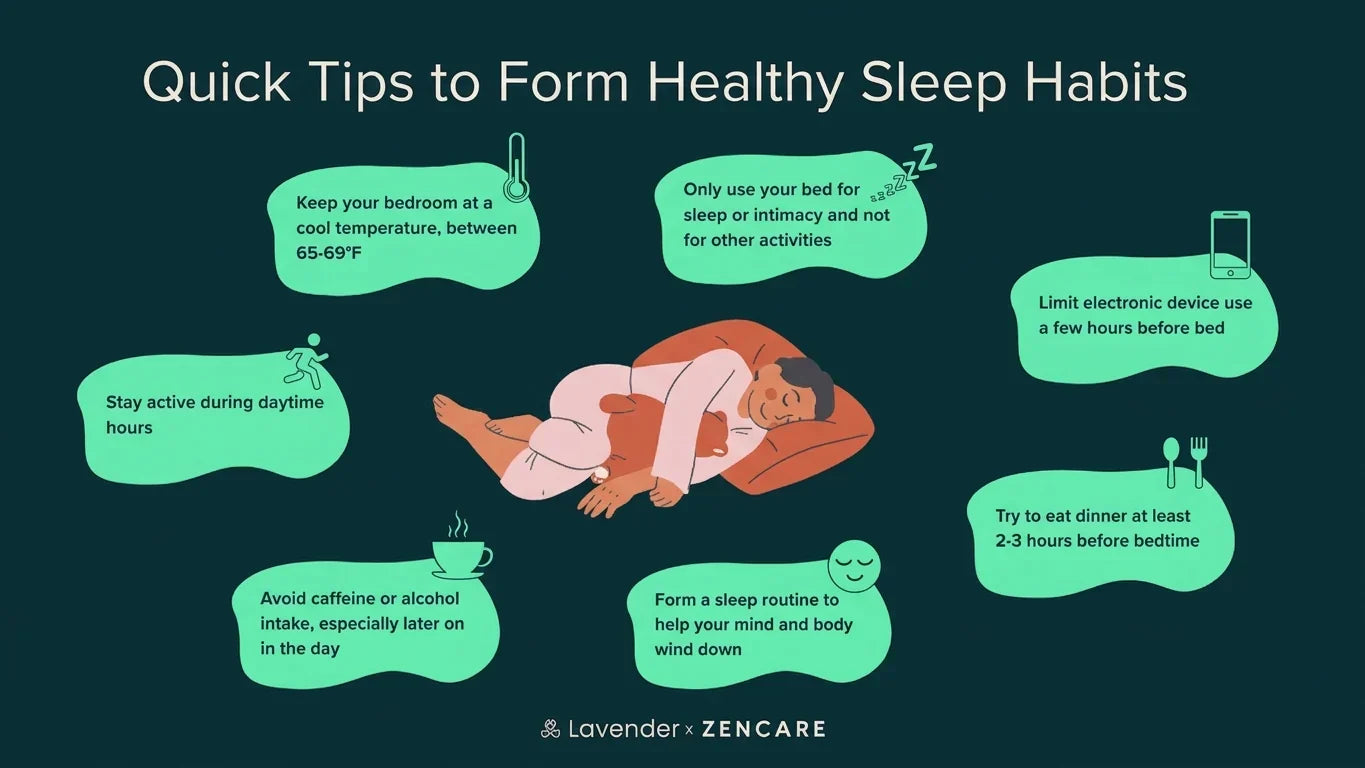
1. Lock in a consistent sleep schedule. Go to bed and wake up at the same time every day — including weekends. A regular schedule is the most effective way to regulate your circadian clock. Aim for lights out between 10 and 11 p.m. and waking between 6 and 7 a.m.
2. Redesign your sleep environment. Your bedroom should be cool (between 65°F and 72°F / 18°C and 22°C), dark, and quiet. Use blackout curtains, white noise if needed, and remove anything that signals "work" or "stimulation" from the space. The physical environment where you sleep matters far more than most people realize.
3. Cut screens an hour before bed. The blue light emitted by phones, tablets, and laptops suppresses melatonin production — the hormone that tells your brain it's time to sleep. Replace screen time with reading, light stretching, or meditation in the final hour before sleep.
4. Watch what you consume in the evening. Avoid caffeine (coffee, tea, soda, chocolate) for at least six hours before bedtime. Avoid alcohol within four hours of sleep — while it may help you fall asleep faster, alcohol significantly disrupts deep sleep quality and causes more frequent nighttime awakenings.
5. Exercise — but not right before bed. Regular physical activity is one of the most reliable sleep quality improvers available. The caveat: finish intense workouts at least three hours before bedtime. Elevated body temperature and heart rate from exercise can delay sleep onset.
6. Create a wind-down ritual. Spend 30 minutes before bed doing the same relaxing activities each night — a warm bath, gentle stretching, light reading. This conditions your brain to recognize the signals that sleep is coming. Reserve your bed exclusively for sleep; don't work, eat, or watch shows in bed.
The Foundation of Better Sleep: Your Mattress Matters
You can optimize every lifestyle habit on this list and still sleep poorly if you're lying on the wrong mattress. It's one of the most overlooked variables in sleep quality — and one of the most impactful.
A quality mattress does two critical things: it provides consistent spinal support and distributes body pressure evenly. When your body is properly supported, your muscles can fully relax, making it possible for you to cycle through the deep sleep stages where the real restoration happens. A mattress that's too firm, too soft, or simply worn out after eight or more years of use is frequently the root cause of chronic back pain, frequent waking, and that persistent feeling of waking up tired regardless of how many hours you spent in bed.
When choosing a mattress, consider:
● Support: Your spine should maintain its natural alignment, neither sinking too deep nor arching unnaturally
● Pressure relief: Look for materials that cushion pressure points at the hips and shoulders, particularly for side sleepers
● Temperature regulation: Body heat management is critical to staying in deep sleep; breathable materials prevent overheating
● Motion isolation: If you share a bed, a mattress that absorbs movement prevents your partner's tossing and turning from disrupting your sleep cycles
● Compatibility with your sleep position: Side sleepers need more contouring; back and stomach sleepers generally need firmer support
You spend roughly one-third of your life on your mattress. That number alone makes it one of the most worthwhile investments in your overall health.
The Bottom Line
Sometimes, because of all kinds of busyness, we end up pushing sleep to the very bottom of our list of priorities. But the scientific evidence is clear: sleep is by no means optional. It's the biological foundation on which everything else — your focus, your mood, your metabolism, your immune system, your heart health — is built.
No level of productivity, no morning routine, no supplement stack can compensate for chronic sleep deprivation. At some point, the debt comes due.
Start tonight. Fix your schedule. Improve your environment. And if you've been sleeping on the same mattress for nearly a decade, it might be time to make a change that your body will thank you for every single morning.

Leave a comment
This site is protected by hCaptcha and the hCaptcha Privacy Policy and Terms of Service apply.