


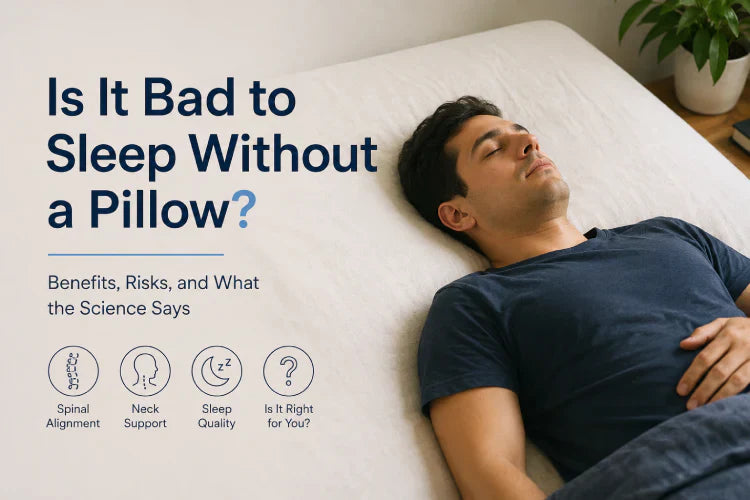
You've probably heard conflicting advice about pillows. Some say you should never sleep without one, while others swear by pillow-free sleeping. So, what's the truth? Is it bad to sleep without a pillow? The answer isn't as simple as a yes or no — it depends largely on your sleeping position, personal comfort, and overall health goals.
In this comprehensive guide, we'll explore the science behind pillow-free sleeping, examine the potential benefits and drawbacks, and help you determine whether ditching your pillow might be the right choice for you.
Understanding the Role of a Pillow

Before we dive into the pros and cons of sleeping without a pillow, it's important to understand what pillows actually do. A quality pillow serves several essential functions:
Keeps your head, neck, and spine aligned during sleep
Reduces pressure points that can cause discomfort
Provides support for the natural curve of your neck
Can help reduce snoring and improve breathing
The key to healthy sleep is maintaining proper alignment from your head all the way down to your spine. When this alignment is disrupted, you may wake up with neck pain, back pain, or headaches. However, whether a pillow helps or hinders this alignment depends entirely on how you sleep.
Benefits of Sleeping Without a Pillow
While sleeping with a pillow is the norm in many cultures, some people find benefits in going pillow-free. Here are the potential advantages:
1. Better Spinal Alignment for Stomach Sleepers
If you're a committed stomach sleeper, you may actually benefit from skipping the pillow. When you sleep on your stomach, your spine is already forced into an unnatural curve. Adding a pillow under your head can exaggerate this curve, putting additional stress on your neck and lower back.
Sleeping without a pillow allows your head to rest in a more neutral position, which can reduce neck strain and muscle tension. Many stomach sleepers report less morning neck pain after making the switch.
2. Fewer Facial Wrinkles
There's some evidence that sleeping with your face pressed against a pillow can contribute to wrinkle formation. The constant pressure and friction against the pillow fabric can compress and fold the delicate skin on your face over time.
By sleeping without a pillow (or switching to a very thin one), you reduce the compression on your facial skin. While this won't eliminate wrinkles entirely, it may help slow their development over time.
3. Reduced Neck Pain for Some Sleepers
Some people find that traditional pillows actually contribute to their neck pain rather than relieving it. This can happen if the pillow is too high, too firm, or doesn't properly support the cervical curve.
For certain individuals, especially those with flat-back sleeping postures, removing the pillow can promote a more natural spinal position and alleviate chronic discomfort.
Drawbacks of Sleeping Without a Pillow
Despite these potential benefits, sleeping without a pillow isn't suitable for everyone. Here are the significant risks and drawbacks to consider:
1. Spinal Misalignment for Back and Side Sleepers
If you sleep on your back or side, skipping the pillow can actually do more harm than good. When you lie on your side without a pillow, there's a gap between your ear and the mattress. This causes your head to tilt downward, pulling your cervical spine out of its natural alignment.
Similarly, back sleepers need a pillow to maintain the natural inward curve of their neck. Without support, the head falls backward, straining the muscles and ligaments in the neck and upper back.
2. Increased Back Pain
Without proper neck support, your entire spine suffers. The lack of pillow support can lead to poor posture during sleep, which often translates to increased back pain upon waking. Many people who try pillow-free sleeping report waking up stiff and sore.
3. Poor Sleep Quality
Discomfort from spinal misalignment can make it difficult to fall asleep and stay asleep. If you're constantly adjusting to find a comfortable position, you may experience fragmented, low-quality sleep that leaves you feeling unrested.
4. Worsened Sleep Apnea and Snoring
For individuals prone to snoring or obstructive sleep apnea, sleeping without a pillow can actually worsen these conditions. When lying flat on your back without head support, your tongue may fall backward, obstructing your airway and making breathing more difficult during sleep.
Who Should (and Shouldn't) Skip the Pillow?
The decision to sleep without a pillow should be based on your sleeping position and individual needs. Here's a quick guide:
|
Sleeping Position |
Pillow-Free? |
Recommendation |
|
Stomach Sleeper |
May benefit |
Try a thin pillow or no pillow |
|
Back Sleeper |
Not recommended |
Use a medium-loft pillow for neck support |
|
Side Sleeper |
Not recommended |
Use a high-loft pillow to fill the gap |
|
Combination Sleeper |
Not recommended |
Use an adjustable pillow to accommodate all positions |
Key Takeaway: Only stomach sleepers may benefit from pillow-free sleeping. If you primarily sleep on your back or side, skipping the pillow is likely to cause discomfort and spinal problems.
How to Transition to Pillow-Free Sleeping
If you're determined to try pillow-free sleeping, here's a gradual approach that can help minimize discomfort:
Week 1-2: The Transition Phase
Start by replacing your regular pillow with a folded towel or very thin cushion
Sleep on your stomach if possible, as this position benefits most from reduced pillow height
Pay attention to how you feel when you wake up
Week 3-4: Going Pillow-Free
Gradually remove the towel or cushion completely
Use a body pillow or additional mattress support if needed for comfort
Track any changes in neck pain, back pain, or sleep quality
Alternative Support Tips
Place a thin pillow under your pelvis if you're a stomach sleeper — this can reduce lower back strain
Back sleepers can put a pillow under their knees for added lumbar support
Side sleepers should consider a pillow between their knees, even when going pillow-free
Invest in a supportive mattress that adapts to your body's natural curves
Choosing the Right Pillow If You Need One
For most people, a quality pillow is essential for a good night's sleep. If you fall into the back or side sleeper categories, here are factors to consider when choosing the perfect pillow:
|
Sleeping Position |
Ideal Pillow Height |
Recommended Fill Type |
|
Stomach |
Very Low / None |
Soft down, polyester |
|
Back |
Medium |
Memory foam, latex |
|
Side |
High |
Latex, memory foam, buckwheat |
Frequently Asked Questions
Is it bad to sleep without a pillow if I have neck pain?
It depends on the cause of your neck pain and your sleeping position. If you're a stomach sleeper with neck pain, removing the pillow may help. However, if you're a back or side sleeper, going pillow-free often worsens neck pain by creating spinal misalignment. Consult a healthcare professional for personalized advice.
Can sleeping without a pillow help with snoring?
Not typically. For most people, sleeping without a pillow can actually increase snoring because the head tilts backward, narrowing the airway. However, some stomach sleepers may experience reduced snoring with less head elevation. If snoring is a concern, speak with a doctor about potential sleep apnea treatment options.
How long does it take to get used to sleeping without a pillow?
The adjustment period varies by individual. Some people adapt within a few nights, while others may need 2-4 weeks. If you experience persistent discomfort after a month, pillow-free sleeping probably isn't right for your body type and sleeping position.
Does the type of mattress affect whether I need a pillow?
Yes, absolutely. A firmer mattress may allow some stomach sleepers to go pillow-free more comfortably. Softer mattresses often require more pillow support to maintain spinal alignment. The ideal combination depends on your weight, sleeping position, and personal preferences.
Is a very thin pillow better than no pillow at all?
For stomach sleepers, a very thin pillow (or no pillow) is generally the best choice. For back and side sleepers, even a thin pillow provides important cervical support. The goal is maintaining neutral spine alignment, not simply reducing pillow height.
The Bottom Line
So, is it bad to sleep without a pillow? The answer depends entirely on your sleeping position. For the minority of people who sleep on their stomach, pillow-free sleeping may offer benefits including reduced neck strain and fewer facial wrinkles. However, for the majority of back and side sleepers, skipping the pillow can lead to spinal misalignment, neck pain, and poor sleep quality.
The most important thing is maintaining proper alignment from your head to your spine. If you're unsure whether pillow-free sleeping is right for you, start with a gradual transition and pay close attention to how your body responds. And remember: the best sleep position is one where you wake up feeling rested and pain-free.
At the end of the day, your body knows best. Listen to it, experiment thoughtfully, and don't hesitate to consult a healthcare professional if you experience chronic pain or sleep issues.


Leave a comment
This site is protected by hCaptcha and the hCaptcha Privacy Policy and Terms of Service apply.