


The hour hand is pointing to three, but the house is quiet. However, your mind is running. You are looking at the ceiling. You feel more awake than you did all day. This scenario occurs in the case of many people. Insomnia is more than just lack of sleep. It also affects your mood, concentration, and health badly. According to the American Academy of Sleep Medicine, about 30-35% of adults experience short-term insomnia symptoms. If you are worn out from being drowsy, you have reached the right place. Try out these insomnia tips. They will help you resolve your sleepless nights and be able to relax.
What causes your insomnia?
The first step to finding a solution to a problem is to identify the cause. So, your reasons are what you need to solve the problem of insomnia in your life. The reasons could be complicated. But some main reasons stress the sleepers most of the time. By recognizing your symptoms, you can decide on the best insomnia tips for you.
Here are some of the main reasons that cause sleepless nights:
● Stress and Anxiety: Under stress, your body's cortisol production is heightened. High melatonin levels are most affected by high levels of cortisol which, in turn, are the ones that help you sleep. The result is the creation of alertness that makes it impossible to sleep.
● Lifestyle Habits: Activities you do during the day have a direct impact on your sleep at night. An uneven schedule is bad for your sleeping pattern. Alcohol and caffeine consumed too late also cause problems. A heavy meal before bed can also disrupt the body's natural sleep rhythm. Lack of exercise is another reason for sleepless nights.
● Environmental Factors: Your bedroom may be against you. When the room is too bright, noisy, or warm to sleep, it affects your sleep badly. Blue light caused by phones and TVs is a big disruptive factor for sleep in our modern world.
What You Can Do to Improve Your Sleep?
Beating insomnia is about adopting new healthy habits. These core suggestions will be helpful to you in building better sleep. Start by trying out a few that appeal to you. From there build. Consistency is the magic key for the long-term solution to insomnia.
Part 1: Daytime Habits to Pave the Way for Nightly Rest
Your journey to better sleep starts upon your waking up. The choices you make during the day set the stage. They decide how well you will rest at night.
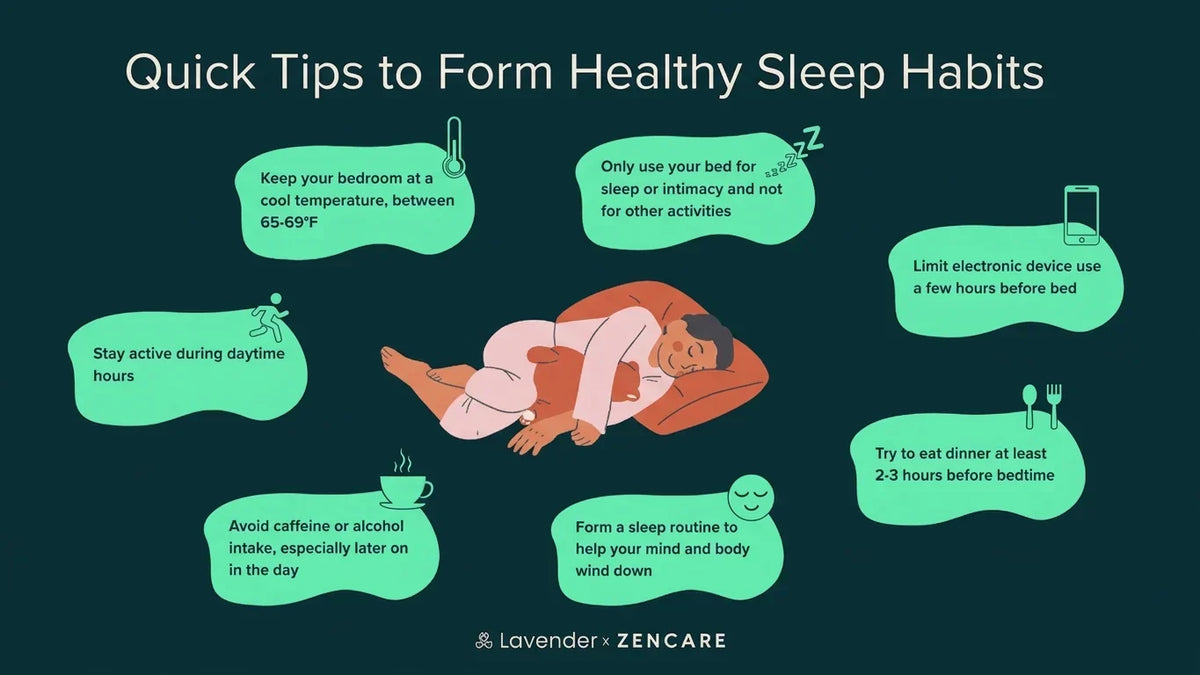
● Follow an Optimal Sleeping Schedule: Sleep and wake up at the same time every day. Yes, even on weekends. This is one of the most powerful insomnia tips. It helps your body's internal clock also called circadian rhythm.
● Bask in Morning Sunlight: Get natural light in your body, spend at least 15-20 minutes outside soon after waking up. Sunlight tells your brain to stop making melatonin. This helps create a healthy sleep-wake cycle for the day ahead.
● Exercise Regularly Smartly: Participate in at least 30 minutes of moderate activity five to six days a week. Brisk walking is a good option. However, make sure to finish your workout at least 3-4 hours before you go to bed. Exercising close to bedtime can be a stimulant.
● Be Watchful About Naps: A short nap can be effective. But long or late-day naps make it harder to sleep at night. If you need to take a nap, keep it to 20-30 minutes and take it before 3 p.m. As per the WebMD sleep experts, long naps can disrupt your nighttime sleep.
Part 2: The "Wind-Down" Hour: Preparing Your Mind and Body
The hour before bedtime is precious. It is time to transition from a busy day to a restful night. Establishing a "wind-down" routine is an excellent insomnia solution. It informs not only your mind but also your body that it is time to prepare for sleep.
● Power Down Electronics: You need to eliminate all screens at least 60 to 90 minutes prior to bed. This will include phones, tablets, and TVs. The blue light from these devices fools your brain into thinking that it's still daytime. This stops the production of melatonin.
● Engage in a Relaxing Activity: Swap your screen time for something calming. Read a book. Listen to soothing music. Take a bath with warm water. For many people, keeping it simple works wonders. Brew a cup of chamomile tea while you listen to a calming podcast for 30 minutes. This will tell you that your day is over.
● Practice a Relaxation Technique: Simple breathing exercises can calm your nervous system. Try the 4-7-8 method. Breathe in for 4 seconds. Hold your breath for 7 seconds. Exhale slowly for 8 seconds. Repeat this 3 to 5 times. Progressive Muscle Relaxation (PMR) is another fantastic technique. You tense and then release each muscle group, from your toes to your head.

Part 3: Mindset Shifts as a Powerful Insomnia Solution
Sometimes the biggest barrier to sleeping is your own mind. Worrying about not sleeping creates even more anxiety. It is thus, hard to sleep. These mindset-focused insomnia tips can be surprisingly effective.
● Don't "Try" to Sleep: You can't force the brain to go to sleep. The more you try to make it happen, the more awake you will feel. It should be relaxation, not sleep itself, which you go for. If you concentrate on resting your body, sleep will come naturally.
● Reframe Your Thoughts: When you are wide awake at night negative thoughts come to your mind such as "This is terrible, I will be a wreck tomorrow." Try to change that thought to something neutral, like "My body is resting right now and that is still helpful." This change can reduce the panic that keeps you from sleeping.
● The 20-Minute Rule: If you stay awake in bed for 20 minutes, get up. Go to an adjacent room with dim lighting. Do something that is monotonous like reading or listening to quiet music. Only get back to bed when you have that tired feeling. This acts as a disconnect between the brain connecting your bed with frustration of being awake.
Part 4: Your Sleep Sanctuary and Natural Aids
Your surrounding, as well as what you ingest, have a lot to say about how easily you will fall asleep. Use these insomnia tips to create the perfect conditions for rest.
● Design Your Bedroom for Sleep: The bedroom will be your sleep sanctuary. Supplant it with cool bedding (around 65°F or 18°C). It should be dark with blackout curtains or an eye mask. Make it quiet with earplugs or a white noise machine. The bed should be for sleep and intimacy only.
● Watch What You Eat and Drink: Avoid large meals, caffeine, and nicotine in the hours before bed. A glass of wine might make you feel drowsy at first. But alcohol actually disrupts sleep later in the night. It causes you to wake up.
● Consider Science-Backed Remedies: Some natural solutions might be beneficial. According to the NCOA, a lot of people believe that melatonin for the short run is either good or bad. But herbal teas like chamomile and passionflower might also support sleep.
|
Natural Aid |
How It Helps |
Best For |
|
Melatonin |
A hormone that tells your brain it’s time to sleep. |
Short-term sleep issues such as jet lag or adjusting your sleep schedule |
|
Chamomile |
Contains antioxidants that may promote sleepiness and relaxation. |
Winding down before bed and encouraging relaxation |
|
Lavender |
The scent has a calming effect and may help reduce anxiety. |
Creating a relaxing atmosphere through aromatherapy |
Always consult with your doctor before starting any new supplements. They can have side effects or interact with other medications you are taking.

When to Seek Professional Help?
Although these insomnia tips can help many people, sometimes self-help is not enough. Recognizing the need to proactively seek professional help in dealing with insomnia for effectively tackling it is crucial.
You should take counsel from a doctor if:
● You have experienced sleep problems like insomnia for at least three nights a week for three months or longer. This is chronic insomnia.
● Your lack of sleep is largely impacting your work, mood, relationships, or overall health.
● You think your sleep problems might be due to another medical issue. For example, sleep apnea (extreme snoring, gasping for breath), restless legs syndrome, chronic pain, or depression.
A physician can clinical help you in dealing with the challenge. It's vital to identify and treat the primary cause. A healthcare professional is the right person to assist you. They may offer a solution that doesn't use medicine. This method is known as cognitive-behavioral therapy for insomnia (CBT-I).
Conclusion: Your Decision to Sleep Better Is Right Now
Getting through insomnia takes effort to do; it is not a short thing. It is about making small changes in a consistent way and eventually turning them into healthy habits. Concentrate on the three things that lead to good sleep. These are healthy day habits, a calming sleep routine, and a promising mindset. Thus, you can create a bedrock of deep slumbers.
This insomnia treatment step is clear. Move slowly and with patience as you apply this new strategy. Keep in mind that every little step that you take is a victory. The way you take will nuance itself into a sustaining insomnia solution. Getting good sleep is a realistic activity. The path can be taken as soon as tonight.
Frequently Asked Questions (FAQ)
What does it mean if I wake up in the middle of a night and can't get back to sleep?
A wake up in the middle of the night is often because of a spike in cortisol (the stress hormone) or a drop in blood sugar. It can also be a conditioned response where your brain has learned to be awake at that time. Following the "20-minute rule" and learning the couple of relaxation methods can really make a big difference in your situation.
Are over-the-counter sleeping pills a good insomnia solution?
Although these pills can be really effective for a short-term downside, the majority of experts recommend against the long-term since there are risks involved like potential side effects, dependence, and the argument that they don't get to the root of the insomnia. Lifestyle changes and techniques like CBT-I are thought to be the safest and most effective long-term insomnia treatment instead.
How long until these insomnia tips feet work?
It varies for everyone. Some people have better lives after a few days while others will need to practice regular sleeping for a few weeks before they can adjust their sleep cycles. The key is to be constant and patient.
Are there any foods that can help me sleep better?
Yes, a few foods are rich in nutrients that help people in their sleep. The most common ones are tryptophan (e.g. turkey and nuts), magnesium (e.g. leafy greens and seeds), and complex carbohydrates. However, some people can only sleep better by a light snack such as a small bowl of oatmeal or a banana before bed.
Is it bad to use my phone in bed if I have the blue light filter on?
Blue light filter helps, yet it isn't a total cure. The active mind due to social media, news articles, and email checking is what it is that keeps you from going to sleep. The best option for you is to keep any electronics away from your bedroom.

Leave a comment
This site is protected by hCaptcha and the hCaptcha Privacy Policy and Terms of Service apply.