


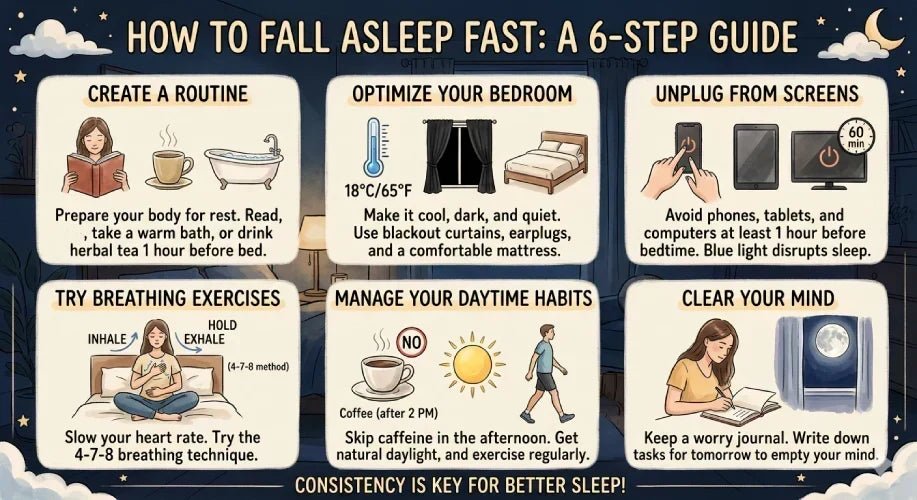
Staring at the ceiling while your mind races is common in 2026. It's also very frustrating. This guide gives you practical ways to fall asleep fast tonight. It also helps you build habits for better sleep long-term. We will cover why you struggle to sleep and the risks involved. You'll get a toolkit of methods you can use right away.
● Understanding the "Why": Trouble falling asleep often comes from stress. Bad habits like using your phone in bed make it worse. A messy sleep schedule is another problem.
● Quick Techniques: To fall asleep fast, try simple breathing exercises. The 4-7-8 method works well. Progressive Muscle Relaxation (PMR) also calms your body and mind.
● Long-Term Fixes: The best way to fall asleep fast every night is good "sleep hygiene." This means having a set sleep schedule. Keep your bedroom cool and dark. Have a relaxing routine before bed.
● Health Risks: Not getting enough sleep is serious. It can affect your mood and focus. It can even lead to long-term health problems like heart disease.
● What to Avoid: Stay away from caffeine, alcohol, and big meals before bed. These can stop you from falling asleep and staying asleep.
Why can't I fall asleep quickly?
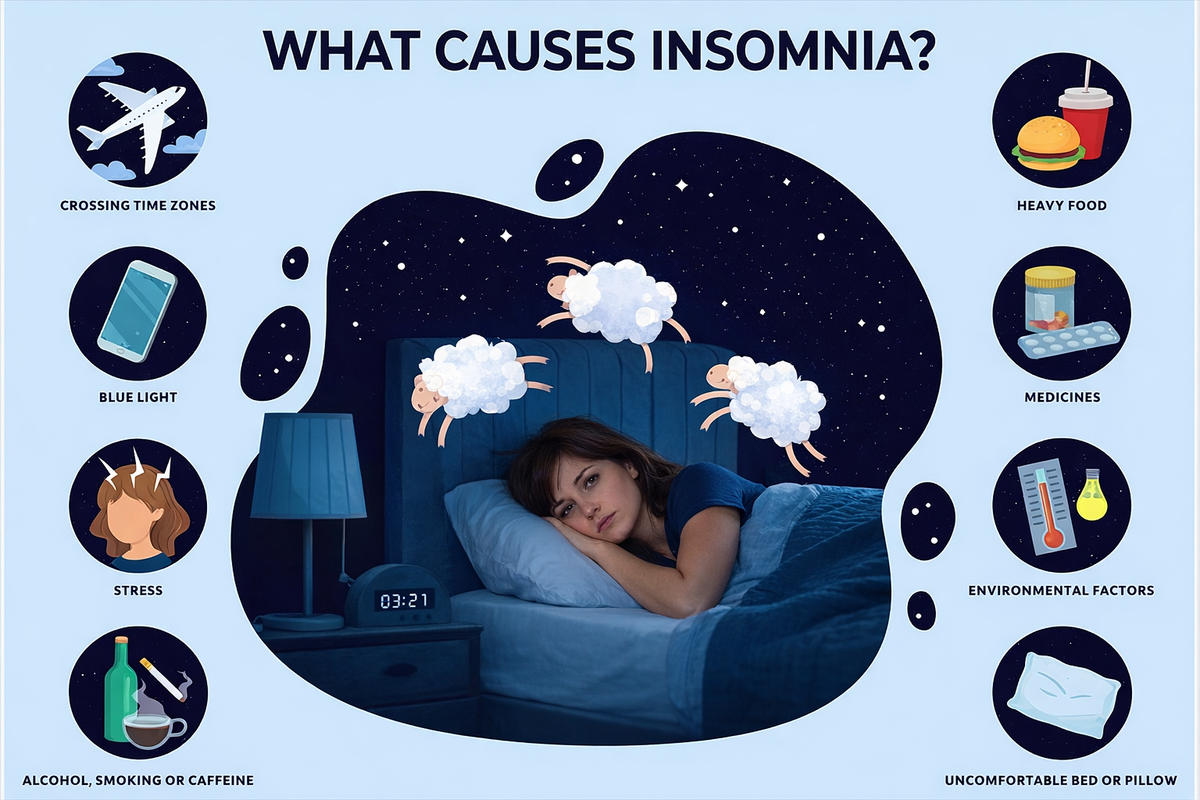
To solve a problem, you first need to understand its cause. Difficulty falling asleep often comes from several factors. These include mental, lifestyle, and environmental issues. Finding your personal triggers is the first step to finding a solution.
Mental Factors
Your mind is often the biggest barrier to sleep. If you feel stressed or anxious, your body makes a hormone called cortisol. This is your "fight or flight" hormone. It works directly against melatonin, your sleep hormone.
A racing mind is another common issue. You might replay events from the day. Or you make mental to-do lists for tomorrow. This mental activity keeps your brain alert. Trying too hard to sleep can also keep you awake. The more you worry about not sleeping, the more stress you create. This makes it even harder to drift off.
Lifestyle and Daily Habits
Your daily habits play a huge role in how well you sleep. An inconsistent sleep schedule is a major problem. Going to bed and waking up at different times confuses your body's internal clock. This is called your circadian rhythm. Establishing a structured schedule is one of the most effective ways to regulate your sleep patterns.
What you consume also matters. Caffeine is a stimulant that can stay in your system for hours. This makes it hard to wind down. Alcohol might make you feel sleepy at first. But it disrupts your sleep later in the night. Large meals or intense exercise too close to bedtime can also energize your body when it should be relaxing.
Environmental Issues
Your bedroom environment can either help or hurt sleep. One of the biggest problems in our modern world is blue light from screens. The light from phones, tablets, and TVs tells your brain it's still daytime. This stops the production of melatonin.
A bedroom that is too hot, bright, or noisy can make it very hard to fall asleep. Your body temperature naturally drops to start sleep. So a cool room is essential.
What are the dangers of prolonged sleep deprivation?
A few sleepless nights can leave you feeling tired and irritable. But when it becomes a chronic issue, the dangers are much more serious. Not getting enough sleep affects nearly every part of your health and well-being.
● Brain Problems: Lack of sleep makes it hard to focus, remember things, and make good decisions. Your brain feels foggy and slow.
● Weak Immune System: Your body produces infection-fighting proteins while you sleep. Without enough rest, you are more likely to get sick.
● Mood Problems: Sleep deprivation is strongly linked to irritability and anxiety. It increases your risk of depression. Everything feels more difficult when you are tired.
● More Accidents: Drowsy driving is as dangerous as drunk driving. Lack of sleep also leads to more accidents at work and at home.
● Long-Term Health Problems: Over time, poor sleep can lead to serious health issues. Many studies show that chronic sleep deprivation increases your risk of obesity. It also raises your risk of type 2 diabetes and heart disease.
How to fall asleep quickly? - Common methods
When you are lying in bed and just can't drift off, you need a tool that works right now. These methods are designed to calm your nervous system. They help you fall asleep fast.
The 4-7-8 Breathing Technique
Think of this technique as a natural tranquilizer for your nervous system. By focusing on a set breathing pattern, you slow your heart rate. You also quiet your mind. The 4-7-8 breathing technique is a simple relaxation method designed to calm the body. After a few cycles, you can feel a sense of calm spreading through your whole body.

● Exhale completely through your mouth, making a whoosh sound.
● Close your mouth and inhale quietly through your nose for a count of four.
● Hold your breath for a count of seven.
● Exhale completely through your mouth for a count of eight, making the whoosh sound again.
● Repeat this cycle three more times.
Progressive Muscle Relaxation (PMR)
Physical tension can keep you awake. PMR works by having you tense and then release different muscle groups. This helps your body let go of that tension.
● Lie down and take a few deep breaths.
● Start with your feet. Tense the muscles in your toes and feet for five seconds. Then release the tension completely for 10 seconds. Notice the difference.
● Move up to your calves. Tense them for five seconds, then release.
● Continue this process up your body. Do your thighs, abdomen, chest, arms, shoulders, and finally, the muscles in your face.
The Military Method
This method was reportedly developed to help pilots fall asleep in under two minutes. It works even in stressful situations. It requires a bit of practice but combines mental and physical relaxation.
● Relax your entire face. Include your jaw, tongue, and the muscles around your eyes.
● Drop your shoulders and let your arms fall to your sides.
● Exhale, relaxing your chest.
● Relax your legs, starting from your thighs and moving down to your feet.
● Spend 10 seconds clearing your mind. Picture a calm scene, like lying in a canoe on a calm lake.
● If thoughts intrude, repeat the words "don't think, don't think" for 10 seconds.
Which Method Is Right for You?
Not every method works for everyone. Here's a quick guide to help you choose.
| Method |Best For... |Difficulty | || 4-7-8 Breathing |A racing mind, anxiety |Easy | || PMR |Physical tension, restlessness |Medium | || Military Method |Both mental & physical tension |Advanced | |

What are some helpful sleep tips?
While in-the-moment tricks are useful, the real key to consistently falling asleep fast is building healthy long-term habits. This is often called "sleep hygiene."
Master Your Sleep Environment
Your bedroom should be a sanctuary for sleep. Three things are most important: keep it cool, dark, and quiet.
● Cool: The ideal temperature for sleep is around 65°F (18°C). A cool room helps your body's temperature drop. This signals that it's time to sleep.
● Dark: Use blackout curtains or an eye mask to block out all light. Even small amounts of light can disrupt melatonin production.
● Quiet: If you live in a noisy area, consider using earplugs or a white noise machine. These block out disruptive sounds.
● Reserve the Bed: Try to only use your bed for sleep and intimacy. This strengthens your brain's association between your bed and rest.
Align Your Lifestyle with Your Body Clock
Working with your body's natural rhythm, not against it, is crucial.
● Stick to a Schedule: Go to bed and wake up at the same time every day. Do this even on weekends. This consistency is the single most important tip for better sleep.
● Get Morning Sunlight: Exposure to sunlight in the morning helps set your internal clock for the day. Just 15-20 minutes outside can make a big difference.
● Be Smart About Naps: If you need to nap, keep it short (20-30 minutes). Take it early in the afternoon. Long or late naps can make it harder to fall asleep at night.
Build Your Personal 30-Minute Wind-Down Routine
Just as you warm up for exercise, you need to "wind down" for sleep. A consistent pre-sleep ritual signals to your body that it's time to rest. Here's how you can build your own routine.
● Step 1: Disconnect (30 mins before bed): Put away all screens. This means your phone, tablet, TV, and computer. The blue light and stimulating content are enemies of sleep.
● Step 2: Choose a Calming Activity (15-20 mins):
● Read a physical book. Choose something relaxing, not a thriller.
● Listen to calm music or a sleep podcast.
● Take a warm bath or shower. The drop in body temperature afterward promotes sleep.
● Do some gentle stretching or yoga.
● Journaling: Write down any worries or create a to-do list for tomorrow. This gets them out of your head.
● Step 3: Final Preparation (5 mins before bed):
● Dim the lights in your bedroom.
● Brush your teeth.
● Make sure your room is at a comfortable temperature.
Frequently Asked Questions
How long should it take to fall asleep?
For most healthy adults, falling asleep within 10-20 minutes is normal. If you consistently take longer than 30 minutes, it might point to an issue. On the other hand, falling asleep instantly could be a sign that you are sleep-deprived.
What should I do if I wake up in the middle of the night?
First, avoid checking the clock or your phone. This can increase anxiety. Try a relaxation technique like the 4-7-8 breathing method. If you are still awake after 20 minutes, get out of bed. Go to another dimly lit room and do something calm, like reading. Stay there until you feel sleepy again.
Can certain foods or drinks help me fall asleep faster?
Yes, some people find that warm milk, chamomile tea, or a small snack with complex carbohydrates can be helpful. A few whole-wheat crackers work well. However, it is more important to avoid things that disrupt sleep. Stay away from large meals, caffeine, and alcohol before bed.
Do sleep supplements like melatonin actually work?
Melatonin can be effective for specific issues like jet lag. It also helps people with a delayed sleep cycle. However, it is not a cure-all for every sleep problem. It is best to talk to a doctor before starting any supplement. Make sure it is right for you and address the root cause of your sleeplessness.
Is it bad to watch TV to fall asleep?
While some find the background noise comforting, it is generally not a good idea. The blue light from the screen can interfere with your body's melatonin production. Exciting or stressful content can keep your brain stimulated. A better alternative is listening to a calming podcast o

Leave a comment
This site is protected by hCaptcha and the hCaptcha Privacy Policy and Terms of Service apply.