


Picking a new mattress can feel big. Maybe you're setting up your child's first "big kid" bed. Or you're moving into your first apartment. You might be filling a guest room. In all these cases, you might ask: what size is a twin mattress, and is it right for me?
We will cover everything. This includes exact sizes and materials. We'll talk about who uses them and how to pick the best one. In the end, you will feel sure about your choice. You'll know if a twin mattress fits your space, budget, and sleep needs.
Understanding Twin Mattresses: The Complete Breakdown
To make a smart choice, you need basic facts. A twin size mattress is more than just its size. It has different materials, firmness levels, and prices. Knowing these details will help you compare options like an expert.
Sizes and Key Comparisons
The first step is knowing the exact measurements. In the United States, there are standard mattress sizes that most brands follow. This makes shopping for frames and bedding much easier. So, what size is a twin mattress compared to other sizes?
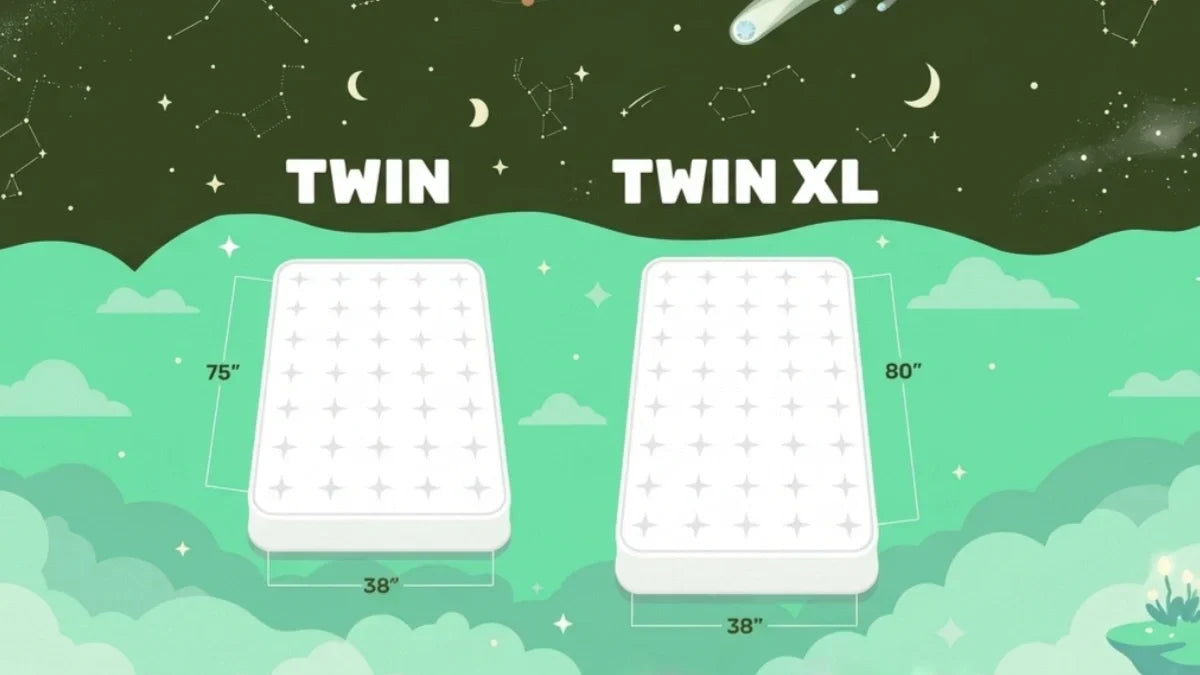
A standard twin is 38 inches wide and 75 inches long. This small size makes it great for saving space. But how does it compare to other common sizes for single sleepers?

Here is a simple table to show the differences.
|
Mattress Size |
Dimensions (Inches) |
Dimensions (CM) |
Best For |
|
Twin |
38 × 75 |
97 × 191 cm |
Children, bunk beds, small bedrooms, adults under 6 ft |
|
Twin XL |
38 × 80 |
97 × 203 cm |
Taller teens, college dorm rooms, adults over 6 ft |
|
Full |
54 × 75 |
137 × 191 cm |
Single adults wanting extra space, couples who don’t mind a cozy fit |
Common Types of Mattresses
- Memory Foam: This material hugs your body. It helps relieve pressure points. It's great for a comfy guest bed or for kids who need soft support. It also stops motion. Movement on one side of the bed isn't felt on the other.
- Innerspring: This is the classic mattress type with steel coils in the center. It gives a bouncy feel and strong support. Innerspring models are often the cheapest twin size mattress options.
- Hybrid: A hybrid mattress mixes the best of both worlds. It has a support core of innerspring coils. The top layers are foam or latex. Sleepmax hybrid mattress, for example, offers pressure relief, adaptive support, and cooling comfort to create a comfortable sleep environment.
- Latex: Latex is a strong and responsive material made from rubber tree sap. It gives a gentle lift rather than a deep sink. It's also naturally cooling. It fights dust mites. This makes it good for people with allergies.
Decoding Firmness Levels
Mattress firmness is often rated on a scale from 1 to 10. One is the softest and 10 is the firmest. Most mattresses fall between 3 and 9. The right firmness for a twin size mattress depends on the sleeper's weight and sleeping position.
- Soft (3-4/10): This level offers deep cushioning. It works best for lightweight people who sleep on their side. It lets their shoulders and hips sink in comfortably.
- Medium-Firm (5-7/10): This is the most popular choice for a reason. It offers a great balance of support and comfort. It's an excellent option for growing children who need proper spine alignment. It works for most back or side sleepers too.
- Firm (8-9/10): A firm mattress gives a solid, "on-top-of-the-bed" feeling. It is often recommended for people who sleep on their stomach. It's also good for those who simply prefer a very sturdy sleep surface.
Thickness and Height Options
When choosing the thickness of a Twin mattress, there are two key factors to consider. First, think about overall comfort, whether the mattress allows you to fall asleep easily without causing lower back pain or discomfort. Second, consider the mattress height and whether it makes getting in and out of bed convenient in your daily routine.
If the mattress is for a child, safety should be the top priority. A thinner mattress is generally recommended, as it provides sufficient support for children while reducing safety risks. For adults, a medium-thickness mattress or thicker is usually a better choice, as it offers stronger support and improved comfort. However, it’s important to take the bed frame height into account to avoid making the bed too tall and inconvenient to use.
Twin Mattress Thickness Guide (38" × 75" Standard Size)
|
Thickness Type |
Height (Inches / CM) |
Comfort Level |
Key Benefits |
Ideal For |
|
Thin / Low-Profile |
6–8 inches (15–20 cm) |
Firm to medium-firm |
Lightweight, easy to move, works well with safety rails and bunk beds |
Children, bunk beds (especially top bunks), trundle beds, temporary guest rooms |
|
Medium (Most Common) |
8–10 inches (20–25 cm) |
Medium to medium-firm |
Balanced comfort and support, good pressure relief, versatile |
Teenagers, standard twin beds, everyday use, guest rooms |
|
Thick / Luxury |
10–12+ inches (25–30+ cm) |
Medium-plush to plush |
Extra cushioning (memory foam/latex), stronger support core, enhanced contouring |
Adults, premium comfort seekers, sleepers needing extra back support |
What to Expect: Average Market Prices
A twin size mattress costs less than bigger sizes. However, prices in 2026 can vary a lot based on materials and quality. Here is a general idea of what you can expect to pay.
- Budget (Innerspring/Basic Foam): $150 - $350
- Mid-Range (Good Quality Foam/Basic Hybrid): $350 - $600
- Premium (Hybrid/Latex): $600+
Who Uses a Twin Mattress?
Understanding the "who" and "where" can help you see if a twin size mattress fits your life. Let's look at the most common situations where this small bed shines.
For Children: The First "Big Kid" Bed
The move from a crib to a bed is a big milestone. A twin size mattress is the perfect choice for this change. As a sleep expert, I often tell parents that a medium-firm twin gives the support a growing child's body needs.
Its smaller size also leaves more floor space in a child's room for playing and activities. A strong twin mattress can last a child well into their teen years. This makes it a wise buy.
For Teenagers and College Students
For teenagers, the choice often comes down to a twin vs. a twin XL. If your teen is tall or still growing, a twin XL is the smarter choice. The extra five inches of length stops their feet from hanging off the end.
When it comes to college, most dorms require a Twin XL mattress. Always check the school's housing rules before you buy. A comfortable Twin XL can make a huge difference in a student's quality of sleep and study.
For Single Adults in Small Spaces
Living in a studio apartment or a small city bedroom means every square foot counts. A twin size mattress can be a space-saving hero. It lets you have a comfortable bed without giving up your living area.

To make it feel more adult, pair it with a stylish frame or a daybed. This turns the bed into a useful piece of furniture that looks great during the day. For single adults under 6 feet tall, a quality twin mattress gives plenty of room for a good night's sleep.
For Guest Rooms and Daybeds
A twin mattress is the standard choice for daybeds. It's also popular for guest rooms. It's perfect for a room that doubles as a home office or hobby space. You can easily fit a desk and a twin bed in a room where a larger bed would feel cramped.
The main benefit is saving space. The downside is that it's only comfortable for one guest at a time. If you often host couples, a full or queen mattress might be a better fit if you have the room.
What Factors Should We Consider When Choosing a Twin Mattress?
Now that you know the basics, it's time to make a decision. This simple checklist will guide you through the final steps of choosing the right twin size mattress.
Step 1: Profile the Sleeper
First, think about the person who will use the bed. Answering these questions will narrow down your options a lot.
- Who is this for? Is it for a young child, a growing teenager, or an adult guest? A child needs durability. A guest might need versatile comfort.
- How tall are they? Anyone under 6 feet tall will likely be comfortable on a standard twin. If they are taller, a Twin XL is a must.
- What is their preferred sleeping position? This is key for choosing firmness. Side sleepers often need a softer bed. Stomach sleepers need a firmer one. Back sleepers usually do best with a medium-firm feel.
Step 2: Measure Your Space
Don't just assume a twin will fit. Take out a tape measure to be sure. A twin bed is 38 inches wide and 75 inches long.
According to minimum room size recommendations, a room should be at least 7 feet by 10 feet to comfortably fit a twin bed. This leaves space for a nightstand and a dresser.
Remember to also account for walking paths, closets, and door swings. You want the room to feel useful, not crowded.
Step 3: Set Your Total Budget
The price of the mattress is only part of the total cost. A smart budget includes all the needed accessories.
- Mattress: Use the price ranges from earlier to set a realistic target.
- Frame/Foundation: A new mattress needs proper support to last. A simple metal frame, a platform bed, or a box spring are all options.
- Bedding: You will need sheets, a comforter, and pillows. Remember that a Twin XL requires special Twin XL sheets that are longer than standard twin sheets.
Step 4: Consider the Long-Term
Finally, think about how long you want this mattress to last. Is this a short-term bed for a dorm room or a long-term buy for a child's bedroom?
Spending a bit more on a strong material like latex or a high-quality hybrid can save you money in the long run. A cheap foam mattress might seem like a good deal now. But if you have to replace it in just a few years, it's not a great value. A quality twin size mattress should last between 7 and 10 years.
FAQ: Your Twin Size Mattress Questions Answered
1. What is the exact size of a twin mattress?
A standard twin size mattress in the U.S. measures 38 inches wide and 75 inches long. In centimeters, that is 96.5 cm by 190.5 cm.
2. Is a twin mattress the same as a single mattress?
Yes. The terms "twin" and "single" are used to mean the same mattress size: 38 inches by 75 inches. The name "twin" became popular because these beds were often sold in pairs, or "twin" sets, for shared rooms.
3. Can an adult comfortably sleep on a twin mattress?
Yes, an adult under 6 feet tall can sleep comfortably on a twin mattress. It is a very popular choice for single adults who live in small apartments or studios where making the most of space is important.
4. What is the difference between a twin and a twin XL mattress?
The only difference between a twin and a twin XL mattress is the length. Both sizes are 38 inches wide. However, a standard twin is 75 inches long, while a Twin XL is 80 inches long. Those extra 5 inches give much-needed legroom for taller sleepers.
5. How much should I expect to pay for a good twin size mattress?
While you can find budget options starting around $150, a good quality twin size mattress that is both comfortable and strong typically costs between $350 and $600 in 2026. Premium models with advanced features or materials like latex can cost more.


