


Overview
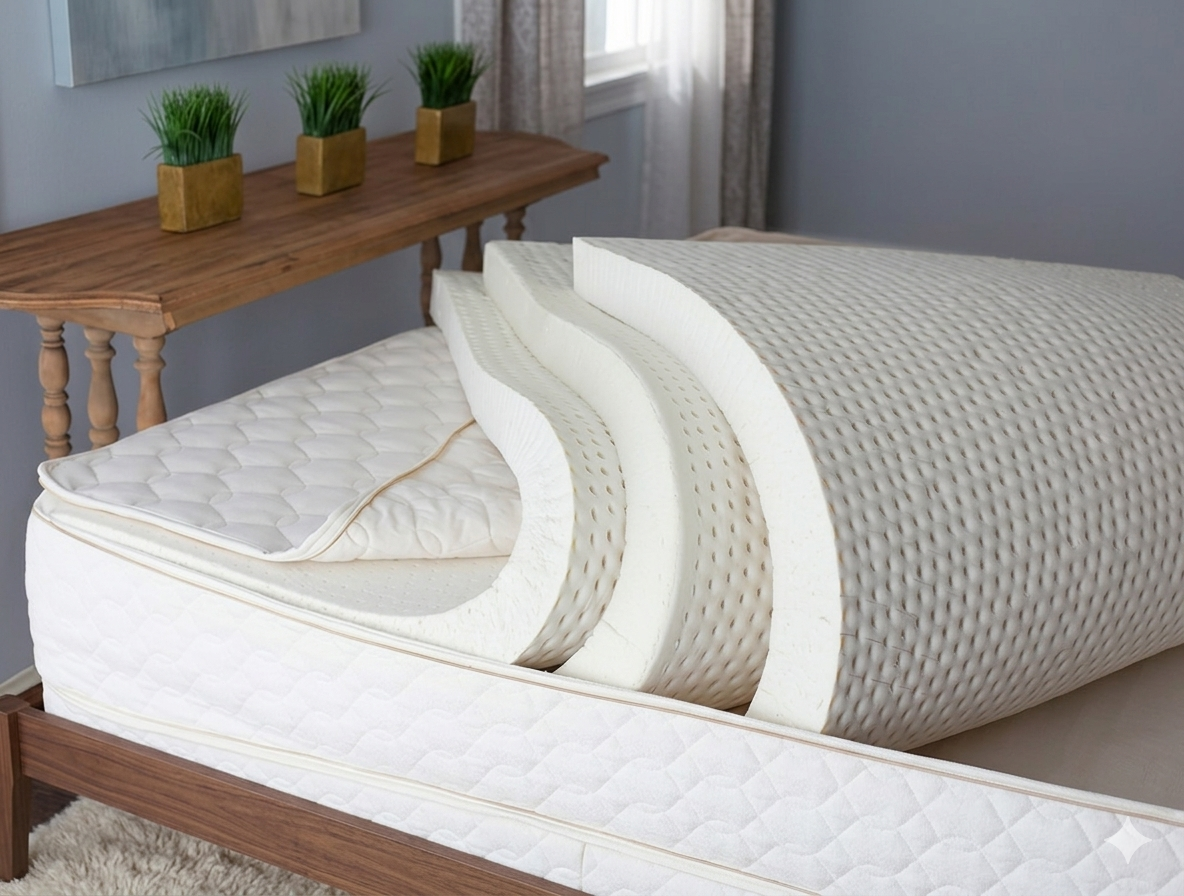
Latex mattresses are mattresses made with latex as the main raw material, primarily divided into two major categories: natural latex mattresses and synthetic latex mattresses. Natural latex is extracted from the sap of rubber trees and processed using modern techniques; synthetic latex is refined and manufactured from petroleum. With their unique physical properties and environmental characteristics, latex mattresses have occupied an important position in the high-end mattress market in recent years, becoming the preferred choice for people pursuing high-quality sleep.
What is features of Latex Mattresses
Natural and Eco-Friendly Properties
· Pure Source: Natural latex is derived from the natural sap of rubber trees, free from formaldehyde and other harmful substances
· Biodegradable: Natural latex products can automatically decompose and return to nature without leaving harmful substances or causing environmental pollution
· Static-Free: Latex mattresses use non-metallic components, effectively preventing magnetic field formation, providing complete insulation and anti-static properties
Superior Support Performance
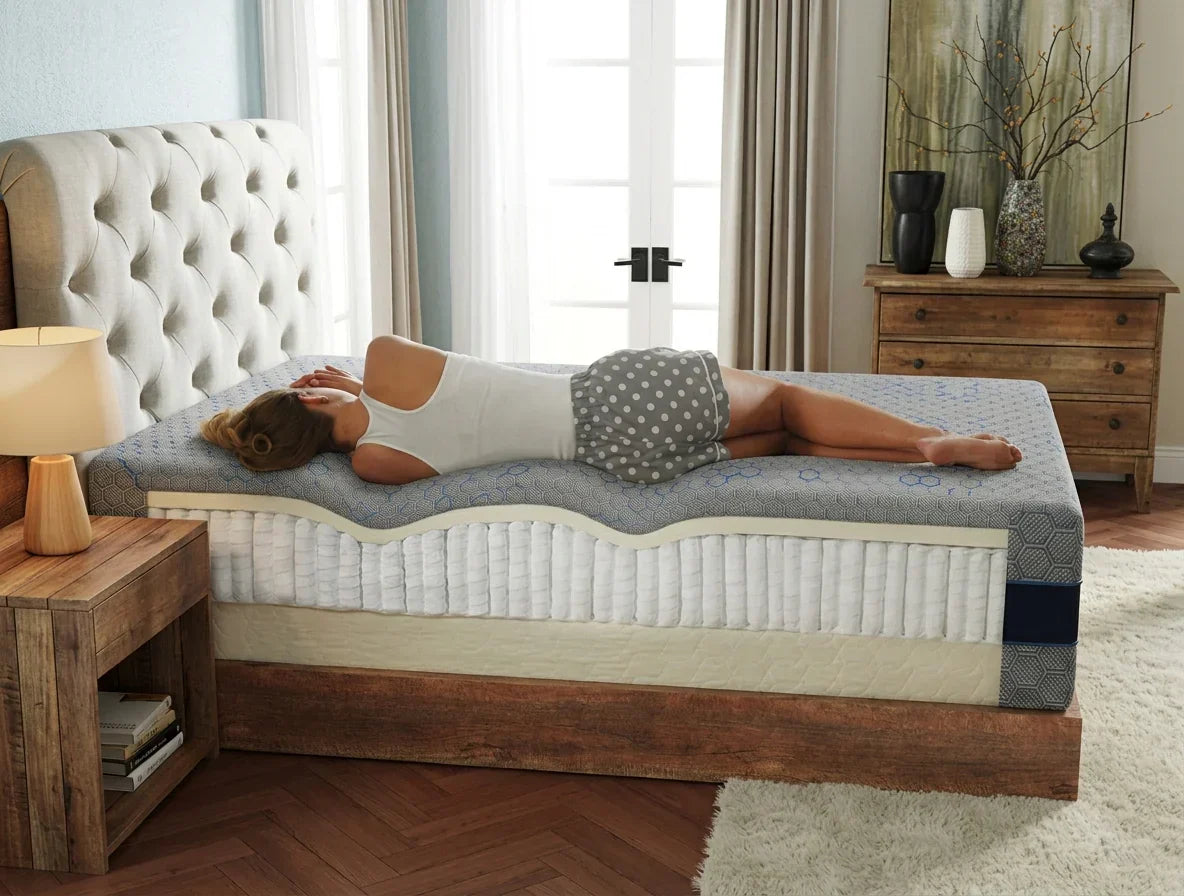
· Ergonomic Design: Adopts ergonomic nine-zone design, designed according to the stress distribution of human body parts including head, neck, shoulders, ribs, waist, tailbone, hips, legs, and feet, providing precise support
· High Conformity: The contact area of latex mattresses with the human body is significantly higher than that of ordinary mattresses, able to evenly distribute body weight and achieve comprehensive support
· Sleep Posture Correction: Has the function of correcting poor sleeping postures, helping to maintain proper spinal alignment
Excellent Elasticity and Resilience
· High Elasticity: Can adjust according to body contours and pressure distribution, providing effective support and comfort
· Quick Recovery: Quickly returns to its original shape after compression, maintaining long-term use without deformation
· Strong Adaptability: Can meet the needs of people with different body weights, providing balanced support regardless of body type
Outstanding Airflow
· Honeycomb Pores: Natural latex surface has thousands of honeycomb-like air pores that can expel excess heat and moisture from the body, promoting natural ventilation
· Keep Dry: Good ventilation can effectively eliminate body temperature and moisture, keeping the mattress fresh and dry, preventing bacterial growth and odors
· Natural Air Conditioning System: Promotes air circulation within the mattress, keeping the air inside fresh and healthy
Powerful Antibacterial and Anti-Mite Functions
· Oak Tree Protein: The oak tree protein in latex can effectively inhibit bacteria and allergens
· Medical Validation: Medical reports show that traditional bedding easily breeds dust mites, while latex mattresses can reduce allergies or asthma problems caused by dust mites
· Healthy Sleep Environment: Greatly benefits people suffering from asthma, allergic rhinitis, and other respiratory system conditions
Quiet and Shock-Absorbing Properties
· Zero Noise: Latex mattresses produce no noise and no vibration, so even turning over at night produces no sound, not affecting sleep partners
· Promotes Sleep: Quiet and shock-absorbing characteristics help improve sleep quality, providing a more stable sleep environment
Durability and Easy Cleaning
· Long-Lasting: Made using special foaming processes, with strong resilience and shape that can be maintained without deformation for a long time
· Easy to Clean: Does not attract dust; when stained, it can be cleaned with soap and water, then dried with a fan or in an oven without deformation, maintaining cleanliness
In-Depth Comparison of Latex Mattresses with Other Mattresses
Comprehensive Comparative Analysis of Four Major Mattress Types
|
Comparison Dimension |
Latex Mattresses |
Memory Foam Mattresses |
Spring Mattresses |
Coconut Coir Mattresses |
|
Comfort |
Good elasticity, easier position changes, excellent airflow |
Conforms to body contours, provides wrapped feeling, like being hugged |
Strong support, good bounce, responsive feel |
Harder, insufficient softness, firm surface |
|
Support |
Quick recovery, provides uniform support, maintains spinal alignment |
Slow recovery, shapes according to body, adapts to curves but may sag under lighter weight |
Strong support, pocket springs have good anti-interference, uniform pressure distribution |
Strong support, suitable for different groups, excellent for spine alignment |
|
Airflow |
Honeycomb pores, excellent ventilation, doesn't store body heat and moisture |
Poor airflow, tends to store body heat; humid southern regions need caution |
Some products have poor airflow, but modern designs include air flow systems |
Good airflow, but not as good as latex; traditional designs allow some air flow |
|
Eco-Friendliness |
Made from natural latex, eco-friendly and sustainable, biodegradable |
Made from polyurethane and chemical additives, less eco-friendly |
Mixed materials, some use recycled steel and eco-friendly fabrics |
Coconut coir is naturally eco-friendly, but manufacturing quality varies |
|
Durability |
More durable, no need for regular flipping, density can last for years |
High-quality ones can last for years, but require regular rotation and flipping to maintain shape |
Long service life, but may have local elastic fatigue, spring wear over time |
Durable but may compress over time, especially in humid environments |
|
Anti-Allergy |
Naturally anti-mite and antibacterial, suitable for allergy-prone individuals |
Can inhibit bacteria and mites, but poor airflow can lead to bacterial growth |
Prone to bacterial and mite growth; requires anti-mite treatment |
Natural fiber has some anti-mite properties, but may still harbor allergens |
|
Firmness |
Wide density range, 60D-95D different firmness levels, customizable |
Medium to soft, adjusts to body temperature and weight, pressure-relieving |
Medium to firm, adjustable based on spring density and configuration |
Higher firmness, suitable for people who like hard beds, very firm surface |
|
Noise |
Completely silent, no sound when turning, no vibration |
Silent, no noise when moving or turning |
Some spring mattresses make noise when turning, affecting sleep partners |
Usually silent, no moving parts |
|
Weight |
Heavier, inconvenient to move |
Medium weight, manageable |
Relatively lightweight, easy to move |
Medium weight, manageable |
|
Suitable Groups |
People pursuing high-quality sleep, allergy-prone individuals, sweaters, most adults |
People with back pain or joint issues, those sensitive to pressure, side sleepers |
People who like traditional support, budget-conscious users, couples (independent springs) |
People who like hard beds, some elderly people, those needing spinal support |
|
Heat Regulation |
Excellent, honeycomb structure dissipates heat |
Poor, tends to retain body heat |
Variable, depends on padding and cover materials |
Good, natural fibers allow air circulation |
|
Motion Isolation |
Excellent, minimal motion transfer |
Excellent, absorbs movement |
Poor for traditional springs, good for independent pocket springs |
Good, minimal motion transfer |
|
Maintenance |
Easy to clean, doesn't attract dust |
Requires regular rotation and flipping |
Requires occasional rotation, may need specialized cleaning |
Requires occasional airing, sensitive to moisture |
|
Lifespan |
10-15 years with proper care |
7-10 years with proper care |
8-12 years depending on quality |
5-10 years, may compress over time |
Key Differences Summary and Selection Guidance
Comprehensive Analysis of Each Mattress Type
Latex Mattresses:
Best For: Allergy-prone individuals, sweaters, people seeking eco-friendly options, those wanting quiet sleep, most adults seeking balanced comfort and support ·
Key Advantages: Natural antibacterial properties, excellent airflow, quick recovery, uniform support, durable, biodegradable, hypoallergenic ·
Considerations: Higher price point, heavier weight, possible latex odor during initial use, small percentage of population may have latex allergy ·
Sleep Impact: Promotes deeper sleep through temperature regulation, reduces tossing and turning by 23-35% compared to traditional mattresses ·
Health Benefits: Reduces allergy symptoms by up to 45%, improves circulation, beneficial for arthritis sufferers
Memory Foam Mattresses:
Best For: People with pressure point issues, side sleepers, those seeking "body-hugging" comfort, individuals with joint pain, couples needing motion isolation ·
Key Advantages: Pressure relief, body contouring, motion isolation (90% reduction), good for couples, evenly distributes body weight ·
Considerations: Heat retention (can increase temperature by 2-4°C), may have off-gassing odor, requires time to adjust to body, may feel "stuck" for some users ·
Sleep Impact: Improves sleep quality for side sleepers by reducing pressure on shoulders and hips, decreases sleep disturbances from partner movement ·
Health Benefits: Reduces pressure sores risk for immobile patients, beneficial for fibromyalgia sufferers, can alleviate sciatic pain
Spring Mattresses:
Best For: Traditional sleepers, budget-conscious consumers, those who prefer bouncy feel, combination sleepers, individuals needing firm support ·
Key Advantages: Wide price range, good support, responsive feel, long history of use, good edge support, easy to move ·
Considerations: Potential noise, motion transfer (traditional springs), may develop sagging over time, may require flipping ·
Sleep Impact: Provides firm support that some sleepers prefer, better for back sleepers needing spinal alignment, may increase sleep efficiency for traditional preferences ·
Health Benefits: Good for maintaining spinal alignment, suitable for people with lower back pain who prefer firm surfaces
Coconut Coir Mattresses: ·
Best For: People who prefer firm sleeping surfaces, elderly needing spinal support, budget buyers, hot sleepers, those in humid climates ·
Key Advantages: Firm support, affordable, natural materials, good for spinal alignment, excellent airflow, moisture resistant ·
Considerations: Limited comfort for side sleepers, may be too hard for some, quality varies greatly, may compress over time, not suitable for all body types ·
Sleep Impact: Provides extremely firm support preferred by some sleepers, may reduce sleep quality for those who prefer softer surfaces ·
Health Benefits: Excellent for spinal issues requiring firm support, beneficial for posture correction, good for elderly with osteoporosis concerns
Hybrid Solutions and Modern Trends
Popular Hybrid Combinations:
1. Latex + Independent Springs: Combines latex's comfort with spring's support, popular among 25-35 age group
2. Memory Foam + Latex Topper: Adds airflow to memory foam's pressure relief
3. Coconut Coir + Latex Layer: Adds comfort to firm coconut coir base
4. Multi-Layer Designs: Combine different materials for optimal performance in different zones
Market Trends: ·
Youth Preference: Natural latex with up to 95% conformity has become preferred by young consumers ·
Airflow Focus: Mattresses using jute as transition layers have moisture discharge efficiency 23% higher than pure foam structures ·
Edge Reinforcement: M-shaped reinforced springs have collapse resistance 1.7 times that of ordinary foam borders ·
Age-Specific Preferences: 25-35 age group prefers medium firmness latex + independent spring combinations; over 45 age group shows higher satisfaction with coconut coir + 3D fiber hard support mattresses
Latex Mattress Density and Firmness Selection Guide
Latex mattress density is represented by "D", referring to the weight per unit volume. Higher density means a firmer mattress. Market latex mattresses mainly have densities between 60D-95D.
Density Levels Explained
|
Density Range |
Firmness |
Suitable Groups and Scenarios |
|
60D-75D |
Soft |
People who like a wrapped feeling, lighter weight (<60kg), primarily back sleepers |
|
80D-85D |
Medium |
Most adults, mixed sleep positions (back + side), seeking balance of comfort and support |
|
90D-95D |
Medium-Firm |
Heavier weight (>70kg), people needing strong lumbar support (e.g., elderly, sedentary workers) |
|
100D-110D |
High Firmness |
Special needs (e.g., spinal correction), people who prefer hard board bed experience |
Selecting Density Based on Sleeping Position
· Primarily Back Sleeping: Recommended density 60D-85D. Moderate sinking conforms to spinal curves, avoiding lumbar suspension (e.g., 60D back sleeping sag depth should be ≤3cm)
· Primarily Side Sleeping: Recommended density 85D-95D. Higher density provides stronger shoulder and hip support, preventing spinal curvature when side sleeping
· Primarily Stomach Sleeping: Recommended density 75D-85D. Avoid excessive abdominal sag causing excessive pressure on the lumbar region
Selecting Density Based on Body Weight
· Weight <60kg: Prioritize 75D-85D, avoid excessive firmness causing compression
· Weight 60-80kg: Recommend 85D-95D, balance comfort and support
· Weight >80kg: Need 95D or higher, prevent sagging deformation
4.4 Selecting Density Based on Age
· Children and Teenagers: Recommend 95D or firmer density, beneficial for skeletal development
· Adults: 85D-95D is suitable, adjust according to personal preference
· Elderly: Recommend 95D-110D, provide stronger support, especially for elderly people with spinal problems
Thickness and Density Combination
|
Thickness |
Recommended Density |
Usage |
|
5cm |
85D |
Use in combination with existing mattress, enhance comfort |
|
7.5cm |
85D |
Use in combination or alone (for lighter weight people) |
|
10cm |
95D |
Can be used alone, good support |
|
15cm+ |
95D+ |
Use alone, best support, higher price |
Important Notes:
· Asian body types generally suit 70D-80D density
· Latex content generally does not exceed 95%; 100% latex mattresses do not exist! Choose natural latex content of 88% or above for good quality, 90% or above for higher quality
Suitable Groups for Latex Mattresses
Elderly Population
Reason Analysis:
· Elderly people's bones and joints easily develop problems; latex mattress elasticity and support can effectively relieve pressure, reducing body compression
· Helps improve sleep quality; effective for blood circulation and fatigue relief
· Natural latex mattresses are medium firmness, providing good support and protecting elderly spinal health
· For elderly people with spinal problems, 95D or 110D latex mattresses are more beneficial
Recommended Configuration: Density 95D-110D, thickness 10-15cm
Allergy-Prone Individuals
Reason Analysis:
· Latex mattresses have natural anti-mite and antibacterial properties, effectively reducing dust mite and bacterial growth
· Oak tree protein in latex can effectively inhibit bacteria and allergens
· Static-free, emits natural latex fragrance, further reducing allergy risk
· Greatly benefits people suffering from asthma, allergic rhinitis, and other respiratory system conditions
Recommended Configuration: Natural latex content 90% or above, any suitable density
Overweight Individuals
Reason Analysis:
· Latex mattresses have strong support, can provide better support and pressure distribution, reducing body pressure and discomfort
· Latex mattress elasticity can moderately adjust according to body type and pressure, ensuring balanced body support
· Protects spinal health, avoiding lumbar problems caused by excessive weight
Recommended Configuration: Density 95D or above, thickness 10-15cm
Fatigue-Prone Individuals
Reason Analysis:
· Latex mattresses have excellent elasticity and shock absorption properties, effectively relieving fatigue and pressure
· Can adapt to body curves, providing personalized support for various body parts
· Reduces fatigue and discomfort, helps recover energy and mental state faster
Recommended Configuration: Density 80D-90D, thickness 5-10cm
Sweating-Prone Individuals
Reason Analysis:
· Latex mattresses have good ventilation, can help dissipate heat and expel sweat, keeping sleep dry
· Honeycomb pores expel excess heat and moisture from the body, keeping the mattress fresh
· Suitable for use in humid southern regions
Recommended Configuration: Density 70D-85D, focus on airflow
People with Sleep Quality Issues
Reason Analysis:
· Latex mattresses have greater contact area with the human body than ordinary mattresses, evenly distributing body weight
· Quiet and shock-absorbing, almost no noise when turning over, not affecting rest
· Can reduce turning frequency, provide deeper sleep experience
· Significant improvement for people with insomnia, excessive dreaming, and poor sleep
Recommended Configuration: Density 80D-90D, thickness 10-15cm
Pain Sufferers Needing Joint Support
Reason Analysis:
· Latex mattresses have good support and softness, can reduce joint pressure and relieve pain
· Auxiliary effect for cervical spondylosis patients
· Can adapt to body curves, providing personalized support for various body parts
Recommended Configuration: Density 85D-95D, adjust according to pain location
White-Collar Workers Pursuing High-Quality Sleep
Reason Analysis:
· 25-35 age group prefers medium firmness latex + pocket spring combination
· High work pressure, high requirements for sleep quality
· Pursuing quality of life and healthy sleep
Recommended Configuration: Density 80D-90D, thickness 10-15cm, can be combined with pocket springs
Growing Children and Students
Reason Analysis:
· Natural latex mattresses are eco-friendly and safe, free from harmful substances
· Appropriate firmness benefits skeletal development
· Anti-mite and antibacterial, protecting children's health
· Oak tree protein can also repel mosquitoes, making them unwilling to approach
Recommended Configuration: Density 95D or above, thickness 10-15cm
Frequent Drivers
Reason Analysis:
· Long-term driving causes back and waist fatigue; latex mattresses can relieve fatigue
· Quickly recover physical strength, ensuring safe driving the next day
· Good support, protects the lumbar spine
Recommended Configuration: Density 85D-95D, thickness 5-10cm is sufficient
Unsuitable Groups:
· Consumers with limited budgets seeking cost-effectiveness (latex mattresses are relatively more expensive)
· People allergic to latex (a very small percentage of people are allergic to natural latex)
· People who prefer extremely hard board bed experience (need to choose 100D-110D high-firmness latex mattresses)
Latex Mattress Care and Maintenance
Basic Maintenance Principles
· Remove Packaging: Newly purchased mattresses should have the outer packaging film removed to allow the mattress's ventilation function to work
· Use Sheets: Recommend covering the latex mattress with pure cotton sheets, frequently changing bedclothes and bedcovers
· Regular Cleaning: Insist on cleaning the mattress surface, use a vacuum cleaner to remove surface dust and dirt
Cleaning Methods
· Daily Cleaning: Use a vacuum cleaner to clean the mattress, keep it clean
· Stain Treatment: If there are stains, clean with soap and water
· No Strong Acids or Alkalis: Do not use strong acid or strong alkali detergents to avoid damaging the surface
Regular Rotation
· First Year: Rotate the mattress front/back, left/right, or corners every 2-2 months
· Afterwards: Rotate approximately every six months
· Purpose: Distribute mattress pressure evenly, avoid local elastic fatigue, ensure good mattress elasticity and appearance
Prohibitions
· No Sun Exposure: Do not expose the mattress to sunlight; high temperatures will accelerate latex oxidation, lose elasticity, and shorten service life
· Avoid High-Temperature Appliances: Do not use appliances or smoke in bed, and avoid working with heating appliances such as electric blankets and chargers. Appliance heat can easily cause latex mattresses to deform and harden
· Avoid Humid Environments: Indoor environments that are too humid are not suitable for placing latex mattresses to prevent moisture damage
· Avoid Direct Sunlight: Since the main raw material is natural latex, do not place the mattress where it will receive direct sunlight. Long-term direct sunlight will reduce resilience and cause yellowing
· Avoid Excessive Deformation: When moving, avoid excessive deformation of the mattress; do not squeeze, fold, or bend the mattress, and do not bind it directly with rope to avoid damaging the internal structure
· Avoid Unbalanced Bed Frames: Do not use soft mesh bed frames or unbalanced bed boards to avoid uneven stress on the mattress springs, leading to spring fatigue and deformation
Environmental Requirements
· Ventilated and Dry: Place in a ventilated and dry location
· Appropriate Temperature: Avoid extreme temperature environments
· Humidity Control: Maintain appropriate indoor humidity
Combination Use Techniques
· Fabric Protection: Before placing the mattress on the bed frame, first lay a layer of soft fabric such as old duvet covers or old sheets to prevent mattress damage from long-term contact with the bed frame
· Bed Frame Selection: Use a flat and stable bed frame to ensure even mattress pressure distribution
Strategies for Combining with Existing Mattresses
· Original Mattress Too Hard: If it's a coconut coir mattress, you can add a 5cm thick 75D-85D latex layer to enhance comfort
· Original Mattress Too Soft: You can add a high-density latex layer to increase support
· Independent Spring Combination: 25-35 age group prefers medium firmness latex + independent spring combination
Conclusion
Latex mattresses have become an important choice for high-quality sleep due to their excellent characteristics including natural eco-friendliness, antibacterial and anti-mite properties, good airflow, and excellent elasticity. By understanding their core characteristics, comparisons with other mattress types, suitable groups, and purchasing and maintenance knowledge, consumers can make informed choices based on their own needs.
Although latex mattresses are relatively more expensive, their outstanding support performance, healthy and eco-friendly characteristics, and durability make them an ideal choice for long-term use. For people pursuing high-quality sleep, focusing on healthy living, and having special sleep needs, latex mattresses are undoubtedly health products worth investing in.
When choosing a latex mattress, it's crucial to select appropriate density, thickness, and configuration based on your age, weight, sleeping position, health condition, and budget, while paying attention to identifying product authenticity and quality, and performing daily maintenance properly. Only then can you maximize the advantages of latex mattresses and enjoy healthy, comfortable, high-quality sleep.

Leave a comment
This site is protected by hCaptcha and the hCaptcha Privacy Policy and Terms of Service apply.