


I've spent the last fifteen years helping people find the right mattress, and if there's one question that comes up more than anything else, it's this: "Will a queen fit in my bedroom?" It seems simple enough, but you'd be surprised how many people get this wrong – and I mean really wrong. I've seen customers return mattresses because they couldn't get them up the stairs, couldn't open their closet doors, or simply ended up with a bed that overwhelmed their entire room.
Let's cut through the confusion and talk about queen size mattress measurements in practical terms – the kind of information that actually helps you make a smart purchase.
The Basic Numbers: Queen Size Dimensions
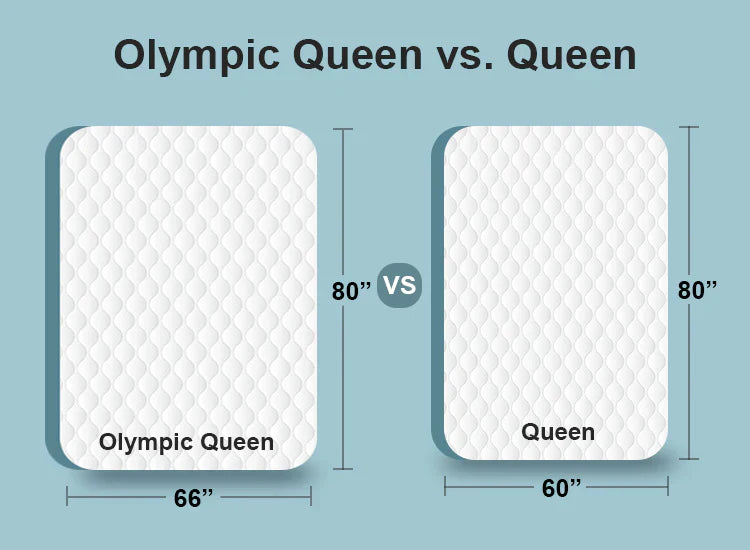
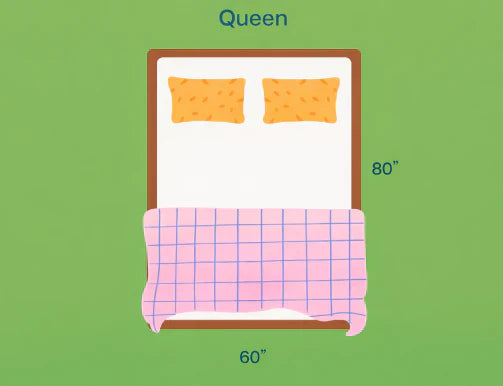
A standard queen mattress measures 60 inches wide by 80 inches long. That's 5 feet across and about 6 feet 8 inches from top to bottom. These dimensions have been pretty consistent across North America for years, which is good news when you're shopping for sheets or bed frames – you don't have to worry too much about compatibility issues.
But here's where it gets interesting: while the mattress itself is 60 × 80, the actual footprint of your bed setup will be larger once you add a frame, headboard, and footboard. Most bed frames add another inch or two in each direction, so you're looking at roughly 62–63 inches wide and 81–83 inches long total. This matters when you're measuring your space, which we'll get into shortly.

Queen Variations You Might Encounter
Every so often, you'll run across some "special" queen sizes that don't follow the standard measurements:
Olympic Queen: This one's 66 inches wide instead of 60 – basically, you get an extra 6 inches of width while keeping the same 80-inch length. It's a nice middle ground if you want more space than a regular queen but your room can't handle a king.
California Queen: This adds length rather than width – 60 × 84 inches instead of 60 × 80. If you're over 6 feet tall and tired of your feet hanging off the end of the bed, this could be worth considering.
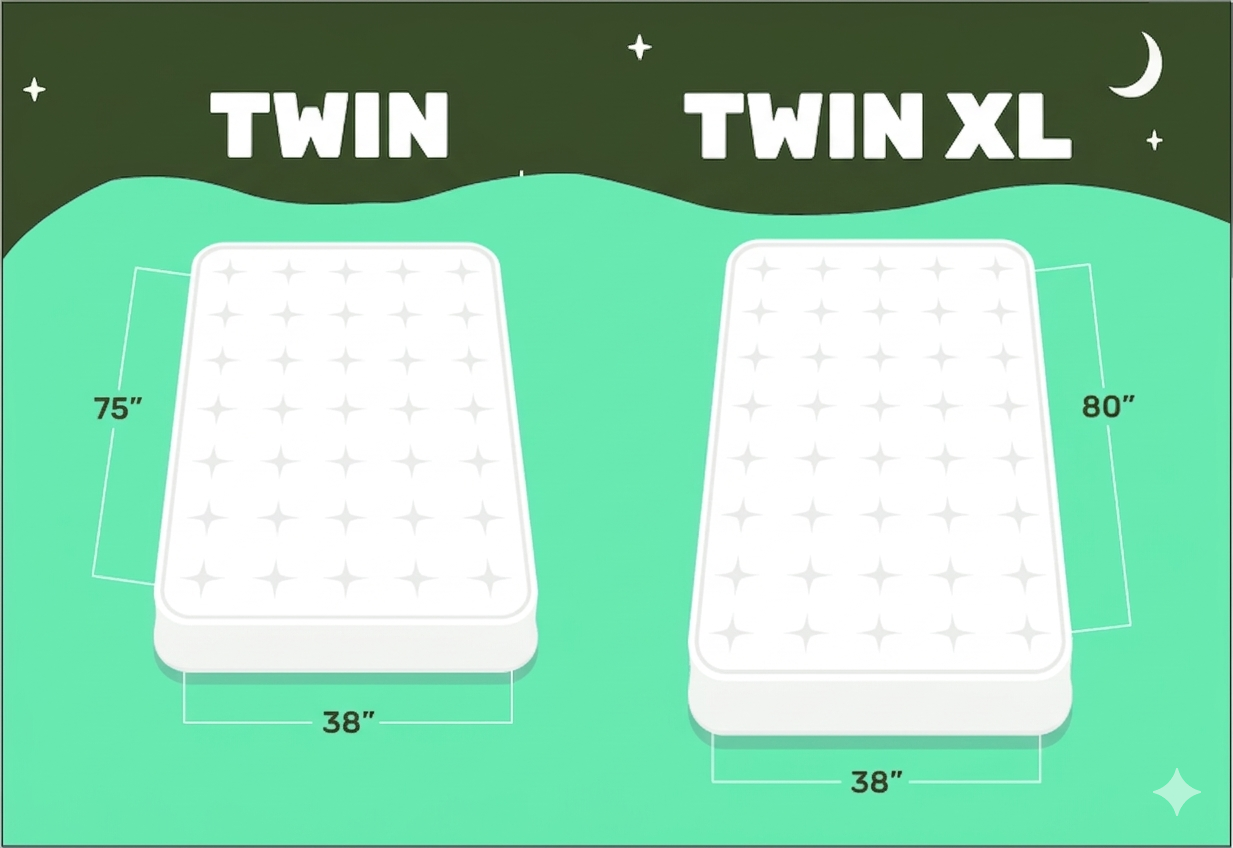
Split Queen: This is essentially two twin XL mattresses (30 × 80 each) placed side by side on the same frame. It's great if you and your partner have really different firmness preferences or if one of you is a light sleeper who gets woken up by every little movement.
International Size Differences
If you're shopping online from international retailers or traveling abroad, you need to know that "queen size" isn't universal:
The point here is: if you're buying from an overseas company, always check the exact measurements in centimeters, not just the name.
Will a Queen Fit in Your Bedroom?
Here's the thing about bedroom dimensions – you can't just go by square footage. I've seen 10 × 12-foot rooms that felt spacious and 12 × 14-foot rooms that felt cramped. It's all about layout and how you use the space.
Minimum room size: I'd say you need at least 10 × 10 feet to make a queen work without it feeling like the bed is taking over the entire room. At this size, you're looking at a pretty tight setup – maybe the bed against one wall, a small nightstand on one side, and that's about it.
Ideal room size: 10 × 12 feet or larger gives you some breathing room. You can fit the queen bed with nightstands on both sides, maybe a dresser, and still have space to walk around without feeling like you're navigating an obstacle course.
Large master bedrooms: If you've got 12 × 14 feet or more, you've got options. You can center the bed, add substantial furniture pieces, maybe even create a sitting area – the kind of setup you see in hotel suites.
The rule I always tell my customers: leave at least 2 feet of clearance around the bed for walking paths. Less than that, and you'll feel cramped every time you try to move around your bedroom.
How to Measure Your Room the Right Way
Look, I know measuring sounds boring and basic, but you'd be amazed how many people skip this step and end up regretting it. Here's what you need to do:
Step 1: Measure the Room
Get a tape measure and record the length and width of your bedroom from wall to wall. Write these numbers down – don't try to remember them. If your room is oddly shaped, take multiple measurements so you understand the actual usable space.
Step 2: Note the Fixed Elements
You need to account for things that aren't moving:
Step 3: Map Out Your Furniture
Draw a simple floor plan showing what furniture you have now and what you want to add. Include dimensions for everything – bed, nightstands, dresser, anything else that's going in the room.
Step 4: Use Painter's Tape to Test
This step alone has saved so many of my customers from making expensive mistakes. Use blue painter's tape to mark out a 60 × 80 rectangle on your floor where the bed would go. Actually walk around it, imagine the other furniture in place, and see how it feels. You might discover that what looked fine on paper feels totally different in reality.
Step 5: Check the Delivery Path
I can't tell you how many times I've seen people order a beautiful new mattress only to realize it won't fit up the stairs or around a corner. Measure every doorway, hallway, and staircase the mattress has to navigate to get to your bedroom. Standard queen mattresses can usually fit through 30-inch doorways when tilted diagonally, but older homes might have narrower passages.
Queen vs. Other Sizes: The Real Comparison
Let me break down how queen sizes stack up against other options, because this is where most people get confused.
Queen vs. Full Size
A full (also called double) mattress is 54 × 75 inches. That's 6 inches narrower and 5 inches shorter than a queen. For couples, a full gives each person 27 inches of personal space – honestly, that's pretty tight. Most couples I work with end up upgrading to queen size because they want that extra breathing room. Solo sleepers might do fine on a full, but if you like to spread out, you'll probably feel cramped.
Queen vs. King Size
Here's where people really struggle. A king mattress is 76 × 80 inches – same length as queen, but 16 inches wider. That gives each person 38 inches of personal space instead of 30 inches. It doesn't sound like much on paper, but in person, it's a huge difference. However, king beds need a bigger room (ideally 12 × 12 feet minimum), they cost more, and all the bedding is more expensive too.
So which should you choose? If your room can handle it and you don't mind spending more, king is luxurious – especially if you have pets or kids who end up in bed with you sometimes. But for most people in most homes, queen hits that sweet spot between space and practicality.
Who Should Choose a Queen Size?
Based on my years in the industry, here's who typically does best with queen size:
Couples in average-sized bedrooms: If your bedroom is 10 × 10 to 12 × 12, queen usually makes more sense than king. You'll have enough space to sleep comfortably without the bed overwhelming the room.
Single sleepers who want extra room: If you're sleeping alone but don't want to feel confined, queen gives you plenty of space to spread out without taking over your entire bedroom.
People on a budget: Queen mattresses and bedding are generally less expensive than king sizes. You're not sacrificing much in terms of comfort, but you'll save money on the initial purchase and on all the accessories.
Pet owners: If your dog or cat sleeps in bed with you, queen gives you enough space that you're not constantly pushing them off the edge (or being pushed off yourself).
Taller individuals: At 80 inches long, queen mattresses accommodate most people up to about 6'2". If you're taller than that, you might want to look into California King or California Queen options.
Shopping for Queen Bedding and Accessories
Once you've decided on queen size, you'll need to outfit it properly. Here's what to look for:
Fitted Sheets: Standard queen fitted sheets are 60 × 80 inches. The key thing to pay attention to is pocket depth – most standard mattresses are 7–12 inches thick, but some of the newer plush models can be 14 inches or more. Make sure your sheet pockets are deep enough.
Flat Sheets: Usually around 90 × 102 inches. This gives you enough overhang to tuck in properly.
Comforters/Duvets: Queen comforters typically range from 86 × 86 to 90 × 94 inches. The exact size depends on the brand and style – some people like more overhang than others.
Pillows: You've got options here. Standard pillows (20 × 26) work fine, but queen pillows (20 × 30) fill the space a bit better. Two queen pillows side by side usually look just right on a queen bed.
Bed Frames: Most queen bed frames have interior dimensions around 61–63 × 81–83 inches to accommodate the mattress with a bit of overhang. Platform beds might have different requirements, so always check the specs.
Real Examples from My Experience
Let me share a couple of real scenarios I've encountered that might help you think through your own situation:
The Downtown Apartment
A customer in a city apartment had a bedroom that measured exactly 10 × 10 feet. She really wanted a king bed, but when we measured it out, there simply wasn't enough room – she would have had about a foot of walking space on each side. We went with a queen instead, centered on the longest wall, with two compact nightstands. It ended up feeling spacious enough, and she could actually move around her room.
The Suburban Master Suite
Another customer had a large master bedroom – 14 × 16 feet with plenty of space. He insisted on a queen because he thought it would be "cozier," but honestly, the room felt empty with that small bed. We eventually convinced him to upgrade to a king, and it made all the difference. The bed finally filled the space properly, and the room felt balanced instead of cavernous.
The Guest Room Challenge
I worked with a family who wanted to use their 10 × 11-foot guest room as both a bedroom and a home office. We ended up placing the queen bed against one wall and putting a compact desk in the corner opposite. It was tight, but it worked – they could comfortably accommodate guests without losing their workspace.
Common Mistakes I See People Make
After all these years in the business, I've noticed some patterns. Here are the mistakes that come up over and over:
Not measuring the room properly: People guess at their room dimensions or measure only one wall. You need the full picture – length, width, and all the obstacles.
Forgetting about bed frames: A 60 × 80 mattress is one thing, but add a headboard and footboard, and suddenly you need more space than you planned for.
Ignoring delivery logistics: I can't stress this enough – measure your hallways, staircases, and doorways before you order. Nothing's worse than having your new mattress delivered and discovering it won't fit in your building.
Choosing based on price alone: I get it, mattresses are expensive. But going too small just to save money usually backfires. You'll end up uncomfortable and probably upgrade anyway, costing you more in the long run.
Not testing the layout: Use that painter's tape trick! It takes five minutes and can save you from a very expensive mistake.
What About Height Requirements?
The 80-inch length of a standard queen works fine for most people, but there are exceptions:
Average height folks (up to about 6'2") : Standard queen length is perfectly adequate. You'll have a few inches of extra space for pillows and bedding.
Taller individuals (6'3" and up) : This is where you might run into issues. If your feet hang off the end of the bed, it's not just uncomfortable – it can actually affect your sleep quality and cause back problems. Look into California King (84 inches long) or California Queen (also 84 inches long) options.
Sleep position matters too: If you're a back or stomach sleeper who stretches out fully, you'll need more length than someone who curls up on their side.
The Bottom Line
Queen size mattresses became popular for a reason – they hit this sweet spot where most couples can sleep comfortably without needing an enormous bedroom. The 60 × 80 dimensions give you enough personal space while still fitting in most homes.
But here's the thing: there's no one-size-fits-all answer. The right mattress size depends on your room dimensions, your sleeping habits, your budget, and who's actually sleeping in the bed. Take the time to measure properly, consider your options, and don't be afraid to go into a store and actually lie down on some different sizes to see what feels right.
After fifteen years in this industry, I've learned that the people who end up happiest with their purchase are the ones who did their homework before buying. They measured their rooms, thought about how they actually sleep, and made an informed decision rather than just grabbing whatever was on sale.
Your bed is where you spend roughly a third of your life – it's worth getting right.
Sleepmax's Queen Collection
At Sleepmax, we've been doing this long enough to know what works. Our queen mattresses are all precisely 60 × 80 inches – no surprises there. But what really sets them apart is the construction:
Better materials: We use higher-density foams and better coil systems than you'll find in most mass-market mattresses. This means your mattress will maintain its shape and support longer.
Designed for real couples: Our queen mattresses have enhanced motion isolation so you're not waking each other up every time one of you moves. The edge support is solid too – you can sit on the edge without feeling like you're sliding off.
Temperature regulation: We know that two people in bed generate a lot of heat. That's why our queen mattresses feature cooling technologies that actually work – gel-infused foams, breathable covers, and airflow channels that help you both stay comfortable all night.
Real warranties: We stand behind what we sell. Our queen mattresses come with warranties that actually cover the things that tend to go wrong – sagging, faulty coils, materials breaking down. None of that fine print nonsense where nothing is actually covered.
If you're in the market for a queen mattress, I'd invite you to come test ours out. Lie down for at least 10-15 minutes – that's how long it takes your body to really get a feel for whether a mattress is going to work for you. Bring your partner if you have one – sleep on it together and see how the motion isolation feels.
And remember: we offer sleep trials because we know you can't really tell if a mattress is right for you in a 5-minute showroom visit. Take it home, sleep on it for a few weeks, and if it's not working, bring it back. Simple as that.
Your sleep matters too much to settle for something that's not quite right. Take the time to get the size and the mattress itself right – you'll thank yourself every morning when you wake up actually rested.

Leave a comment
This site is protected by hCaptcha and the hCaptcha Privacy Policy and Terms of Service apply.