


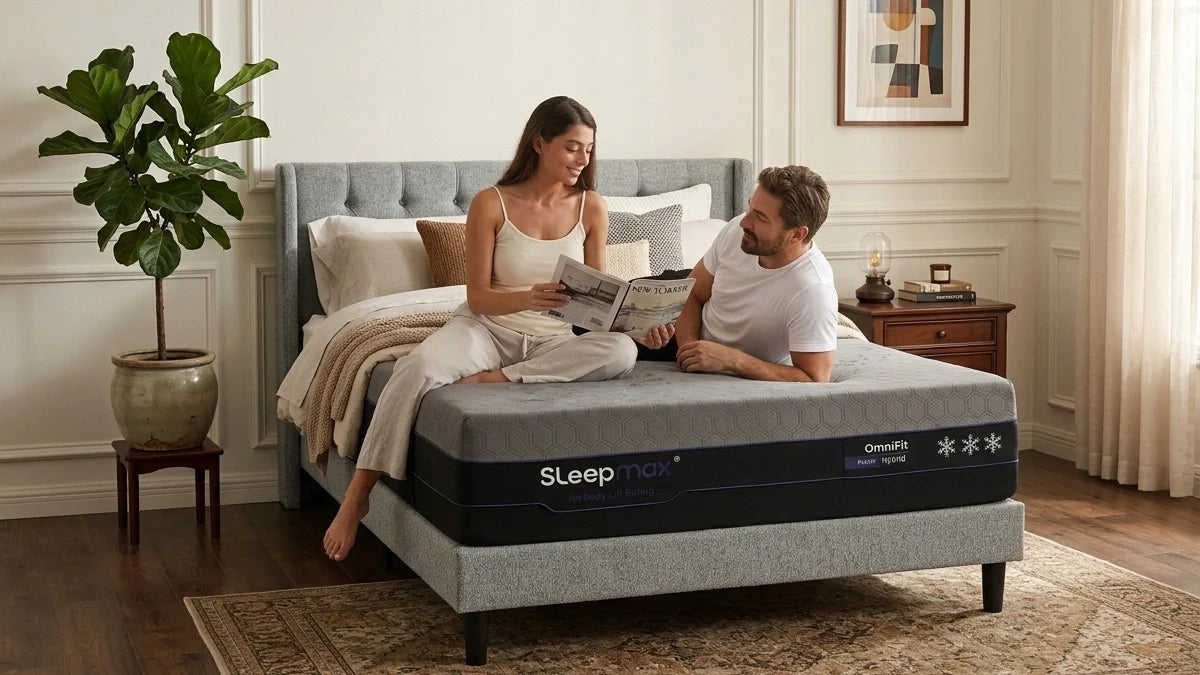
When one partner sleeps hot and the other cold, the usual response is to negotiate a single thermostat setting or buy one supposedly universal comforter. That treats two different comfort needs as if they were one problem.
A better solution is a split-comfort bed: one shared mattress, but separately controlled bedding above each sleeper. The goal is not to make either person tolerate the other’s preferred temperature. It is to give the hot sleeper a low-insulation, easy-to-vent zone while the cold sleeper gets enough adjustable warmth.
What a Split-Comfort Bed Actually Is
A split-comfort bed divides the usable sleep surface into two thermal zones. It does not mean buying a split king, an adjustable base, or two mattresses.
In its simplest form, the bed has:
- One shared fitted sheet or two side-specific bottom layers
- A lighter top layer on the hot side
- A warmer, adjustable stack on the cold side
- Separate blankets or duvets rather than one shared cover
- Independent access to airflow without blowing directly across both sleepers
Separate blankets are also a recurring consumer recommendation because each person can select a cover suited to their needs rather than exchanging heat beneath one shared cover.
Build the Bed from the Bottom Up
Each layer affects your sleep environment. Check the bed from the bottom up so that you can identify the layer causing discomfort instead of replacing everything at once.
1. Start with the mattress you already have
Do not assume that different temperature preferences require a new mattress. First remove nonessential layers and test the mattress with a simple fitted sheet and separate covers.
Pay attention to whether the hot sleeper feels uncomfortable mainly:
- Beneath the torso, suggesting the surface stack may be retaining too much warmth
- Under the shared covers, suggesting excess top insulation
- Only when touching the other sleeper, suggesting transferred body heat
- During particular seasons or room conditions
If the problem appears only after adding a thick protector or topper, test without that removable layer when doing so will not conflict with care or warranty requirements.
2. Audit the shared bottom layers
A fitted sheet, protector, pad, and topper span both sides, so they can become the hidden point of compromise. List every layer between each person and the mattress.
For the hot side, favor a simpler stack that feels comfortable without unnecessary cushioning or padding. For the cold side, avoid trying to create all the needed warmth underneath the body; side-specific top layers are easier to change during the night.

If you want one continuous fitted sheet, compare fabrics by feel, laundering requirements, pocket depth, and how well they fit the complete mattress stack. Couples considering a new foundation layer can explore SLEEPMAX Cooling Sheet Sets, but sheets should be treated as one component of the system—not a substitute for separate top insulation.
3. Give each sleeper an independent top layer
This is the most important change. Use two Twin, Twin XL, or appropriately sized individual covers across a Queen or King bed, depending on the mattress dimensions and how much drape each sleeper prefers.
A practical starting arrangement is:
| Zone | Base cover | Optional adjustment | Nighttime release valve |
|---|---|---|---|
| Hot sleeper | Light sheet or thin blanket | Removable light throw | Uncover feet or fold cover down |
| Cold sleeper | Sheet plus warmer blanket | Small throw for torso or feet | Remove one layer without disturbing partner |
Avoid permanently fastening the two covers together during the test period. Each sleeper should be able to vent, remove, or add a layer without pulling on the other person’s bedding.
4. Build warmth through removable layers
The cold side usually benefits from several independently removable layers rather than one all-or-nothing cover. A sheet, medium blanket, and localized throw offer more control than a single very warm duvet.
Keep the extra layer within the cold sleeper’s half of the bed. A throw laid across the full width can trap the hot sleeper beneath insulation they did not choose.
Local placement also matters. Someone with cold feet may need an extra foot layer, not more insulation over the chest. Another sleeper may prefer warmth around the torso while leaving the feet uncovered. Treat these as distinct configurations.
5. Create side-specific airflow
Position a fan so that it serves the hot sleeper’s side without crossing the cold sleeper’s pillow or exposed skin. Start with indirect airflow and adjust direction before increasing speed.
Useful placement options include:
- Near the foot of the hot side, angled along that half of the mattress
- On a bedside surface, aimed above rather than directly at the sleeper
- Across the room, creating gentle circulation on only one side
Keep cords away from walking paths and follow the fan manufacturer’s placement and safety instructions. The cold sleeper should retain easy access to their covers when airflow is running.
Stop Using the Thermostat as the Only Control
Room temperature affects both sleepers simultaneously, so it is a blunt tool for a two-person problem. Use it to establish a stable baseline, then make most comfort changes at bed level.
Body temperature is not one fixed value; an often-cited 98.6°F is an average, and actual body temperature varies (Banner Health). That fact does not diagnose why either partner feels hot or cold, but it is a useful reminder that matching preferences should not be assumed.

Choose a baseline room setting neither person finds intolerable. Then let the hot sleeper adjust airflow and coverage while the cold sleeper adjusts insulation. Change one variable at a time so you know what worked.
Run a Seven-Night Comfort Test
A short structured test is more useful than changing the entire bed after one difficult night.
Nights 1 and 2: separate the covers
Keep the room and bottom layers unchanged. Replace the shared comforter with individual covers. Record whether either partner wakes because of heat, cold, drafts, stolen covers, or bunching at the center.
Nights 3 and 4: tune the cold side
Add one removable layer only to the cold sleeper’s half. Decide whether it belongs at the feet, torso, or full body. Do not add the same layer to the hot side for visual symmetry.
Nights 5 and 6: tune the hot side
Remove an unnecessary top layer or introduce side-specific airflow. Check whether the cover can be pushed aside without dragging the cold sleeper’s bedding with it.
Night 7: simplify
Remove any layer that did not clearly improve comfort. The final arrangement should be easy to remake, launder, and adjust half-awake.
Use a minimal log:
| Question | Hot side | Cold side |
|---|---|---|
| Comfortable at bedtime? | Yes/No | Yes/No |
| Woke from temperature? | Hot/Cold/No | Hot/Cold/No |
| Changed a layer overnight? | What changed? | What changed? |
| Disturbed by partner’s cover? | Yes/No | Yes/No |
When the Mattress May Be Part of the Problem
Consider the mattress only after separate top bedding and airflow have been tested. A mattress change may be relevant when temperature discomfort comes with poor support, pressure discomfort, sagging, or repeated disturbance from movement.
A split king is a different solution from split bedding. It uses separate sleep surfaces and can allow more independent configuration. NCOA notes that split kings or two Twin beds on separate frames may help when one partner moves frequently by decreasing disturbance to the other partner (NCOA). That addresses movement and bed independence; it does not by itself guarantee different thermal conditions.
Before replacing a mattress, ask:
- Is the excess warmth coming from below, above, or from shared body heat?
- Does the mattress remain comfortable when the top bedding is simplified?
- Would separate covers solve the issue without creating a center seam?
- Is motion isolation or independent positioning also a priority?
- Can each partner test the proposed surface under realistic return or trial terms?
SLEEPMAX offers hybrid mattresses and cooling bedding for shoppers comparing temperature regulation, pressure relief, motion isolation, and partner sleep. Product choice should still follow the diagnosed problem: do not buy a new sleep surface to solve a blanket-management issue.
Common Split-Comfort Mistakes
Keeping a shared comforter overnight
A full-width comforter can reconnect the two zones even when separate blankets sit beneath it. If appearance matters, place the decorative layer on the bed during the day and remove it before sleep.
Solving cold feet with full-body insulation
Use a localized foot throw or sleepwear adjustment instead of increasing insulation across the entire bed. This preserves the hot side and gives the cold sleeper finer control.
Changing several variables at once
A new mattress pad, new sheets, a colder room, and a fan introduced together may improve the night, but you will not know which change mattered. Test one layer or control at a time.
Choosing covers by label alone
Terms such as “cooling,” “breathable,” and “all-season” do not tell you how a product will feel in your exact room and bedding stack. Compare construction information, care requirements, fit, return terms, and how readily each layer can be removed.
Treating persistent symptoms as a bedding puzzle
A split-comfort setup is a comfort strategy, not a medical explanation. If unusual sweating, chills, fever, or a significant new change in temperature tolerance persists, seek appropriate medical guidance rather than relying only on bedding adjustments.
Frequently Asked Questions
Can we build a split-comfort bed on a queen mattress?
Yes. The concept depends on independent covers and localized layers, not a particular mattress size. Check cover dimensions so each person can turn without exposing themselves or pulling the other side.
Do we need two fitted sheets?
Usually not. Begin with one fitted sheet and separate top bedding. Two bottom zones are harder to keep aligned on a one-piece mattress and may create a ridge, so add side-specific lower layers only when the shared surface has been identified as the problem.
Will separate blankets make the bed look untidy?
They can be folded symmetrically during the day or covered with a removable decorative layer. At night, independent access matters more than a perfectly continuous surface.
Should the cold sleeper use the heavier cover?
Use the lightest combination that remains comfortable, then add a localized removable layer if needed. The correct setup is the one that can be adjusted without changing the hot sleeper’s zone.
Is a split king required for different sleep temperatures?
No. A split king provides two sleep surfaces and may help with independent positioning or movement disturbance, but separate bedding can create thermal zones on a conventional Queen or King mattress.
The Practical Takeaway
When one partner sleeps hot and the other cold, divide the controllable layers instead of negotiating one universal setting. Start with separate covers, give the cold sleeper removable localized warmth, direct airflow only toward the hot side, and keep the room at a stable baseline.
Test each change before buying more. The best split-comfort bed is not the most complicated one; it is the arrangement in which either person can adjust their own zone without waking or overheating the other.


