




A bedroom isn't just somewhere you sleep; it's where your body and mind recover and recharge. But let's face it: an estimated 32.8% of adults don't get enough sleep, according to HelpGuide. So, how do you get better sleep in your bedroom? Keep reading to discover 8 simple, science-backed tips for creating a more comfortable sleep environment.
Table of Contents
- What Makes a Good Sleep Environment?
- 1. Keep Your Bedroom Cool for Better Sleep
- 2. Make Your Bedroom as Dark as Possible
- 3. Keep Your Bedroom Quiet
- 4. Create a Comfortable Bed Setup
- 5. Make Your Bedroom Calm and Clutter-Free
- 6. Reduce Screens and Electronics Before Bed
- 7. Keep the Air Comfortable
- 8. Turn Your Bedroom Into a Place to Wind Down
- Bedroom Sleep Environment Checklist
- Final Words: Create a Good Bedroom Environment for Good Sleep
1. Keep Your Bedroom Cool for Better Sleep
Temperature is one of the first things to consider when you're trying to improve your bedroom environment.
The NIH recommends keeping your bedroom cool, while the CDC and Prevention suggest a bedroom temperature around 60–67°F (16–19°C).
Your ideal temperature may be somewhat warmer or cooler depending on your preferences, bedding, clothing, humidity, and whether you tend to sleep hot or cold.
How to make your bedroom colder? If your bedroom feels too warm at night, try:
- Lowering the thermostat before bedtime
- Using a fan to improve air circulation
- Closing blinds or curtains during hot daytime hours
- Opening windows when outdoor conditions are suitable
- Choosing lighter, breathable bedding
- Avoiding overly heavy blankets
- Wearing lightweight sleepwear
- Considering a cooling mattress and bedding setup that doesn't trap excessive heat
2. Make Your Bedroom as Dark as Possible
Light is another important part of your sleep environment.
A 2023 systematic review and meta-analysis of observational studies, which analyzed seven studies involving nearly 578,000 participants, found that higher exposure to light at night was associated with a greater prevalence of sleep problems. And "maintaining bedroom darkness at night may be a feasible measure to reduce the prevalence of sleep problems".

How to make your bedroom darker?
- Install blackout or room-darkening curtains
- Close blinds before going to bed
- Turn off unnecessary electronics
- Cover or remove bright indicator lights
- Keep your phone away from the bed
- Use an eye mask if you cannot control the light coming into the room
3. Keep Your Bedroom Quiet
Noise can make it harder to maintain a comfortable sleep environment, especially when the sound is unpredictable or repeatedly wakes you up. Traffic, neighbors, pets, appliances, notifications, and other household sounds can all become nighttime distractions.
To make your bedroom quieter, try the following tips:
- Turning off phone notifications
- Using your phone's Do Not Disturb mode
- Closing windows when outdoor noise is disruptive
- Using earplugs
- Listening to a white-noise video
- Moving noisy appliances farther away from the bedroom
4. Create a Comfortable Bed Setup
How to get better quality sleep? CDC guidance recommends sleeping on a comfortable mattress, and pillows can help create a good sleep environment. And you need to replace your mattress periodically as it wears out.
No matter which type of mattress you choose, whether it's innerspring, latex, memory foam, or a hybrid mattress, it should provide enough support and cushioning for your body.

A good pillow should help keep your head and neck in a comfortable position rather than forcing your neck noticeably upward or downward.
Don't overlook your sheets and blankets. Your bedding affects how warm, cool, and comfortable you feel during the night.
5. Make Your Bedroom Calm and Clutter-Free
Your bedroom doesn't have to look like a luxury hotel to be relaxing. What matters more is whether the space feels comfortable and easy to wind down in.
A cluttered room isn't automatically going to cause poor sleep, but reducing unnecessary visual and mental distractions can make the bedroom feel more restful.
6. Reduce Screens and Electronics Before Bed
To create a relaxing sleep environment, turning off electronic devices before bedtime matters because screens can make it hard to wind down.
According to the CDC, the circadian clock responds to light as a signal for wakefulness and to darkness as a signal for sleep.
Research on electronic media use has found an association between electronic media use and poorer sleep quality. A 2024 systematic review and meta-analysis covering 55 papers and more than 41,000 participants found that both general and problematic electronic media use were associated with poorer sleep outcomes.
Better alternatives before bedtime
- Read a physical book
- Listen to calm music
- Take a warm bath or shower
- Do gentle stretching
- Practice a relaxation technique
- Prepare your bedroom for sleep
- Dim the lights around the house
7. Keep the Air Comfortable
Temperature isn't the only environmental factor that matters. Air movement, humidity, ventilation, and indoor pollutants can also affect how comfortable a bedroom feels.
Here is a summary of the page's recommendations for improving indoor air quality:
According to the US EPA, improving indoor air quality relies on three primary strategies alongside moisture control: "controlling the sources of pollution; ensuring there is adequate ventilation; and using supplemental air cleaning and filtration".
In addition, it points out that you should keep indoor humidity below 60% (ideally between 30% and 50%) to prevent mold growth and dust mite proliferation.
8. Turn Your Bedroom Into a Place to Wind Down
A good sleep environment isn't just physical. What you do in the bedroom can influence how your brain associates the space with sleep.
CDC guidance recommends using the bedroom primarily for sleep and intimacy, which will make you feel the bedroom is associated with the feeling of relaxation and sleep.
This idea is also consistent with behavioral approaches to insomnia, where the goal is to strengthen the association between bed and sleep rather than spending long periods awake, working, or worrying in bed.

To create a relaxing pre-bed routine, the National Center for Complementary and Integrative Health notes that techniques such as progressive relaxation, breathing exercises, and guided imagery may be used as part of strategies for sleep, while cognitive behavioral therapy for insomnia remains the most strongly recommended treatment for chronic insomnia.
Bedroom Sleep Environment Checklist
If you want to improve your bedroom without changing everything at once, start with this simple checklist:
| Sleep factor | What to aim for |
| Temperature | Comfortably cool, adjusted to your preference |
| Light | As dark as practical |
| Noise | Quiet or consistent background sound |
| Mattress | Comfortable and supportive |
| Pillow | Appropriate for your sleeping position |
| Bedding | Comfortable and suitable for the temperature |
| Air | Fresh and comfortable |
| Clutter | Minimal distractions |
| Electronics | Limited before bedtime |
| Routine | Calm and consistent |
There is no need to optimize everything all at once. Begin with the most pressing issue you see. If you wake up hot, focus on temperature. If streetlights annoy you, deal with light. If your mattress is uncomfortable, start with your bed. The ideal bedroom environment is the environment that addresses the problems that are really interfering with your sleep.
Final Words: Create a Good Bedroom Environment for Good Sleep
You don't need to completely redesign your bedroom to sleep better. Start with the basics: keep it cool, dark, quiet, and comfortable, then focus on the details that make the biggest difference for you.
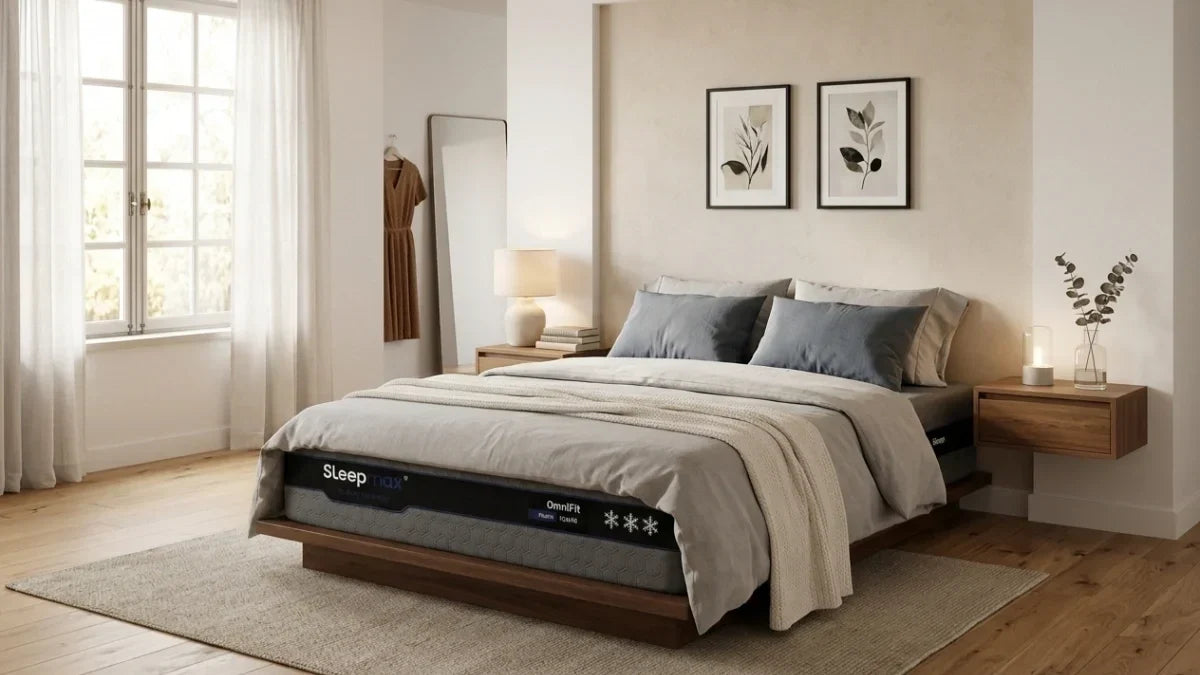
Your mattress is one of the things that can most directly affect your comfort throughout the night, making the right choice an important part of a better sleep environment. Sleepmax Omnifit pressure relief hybrid mattress is built for recovery, pressure relief, and cooling, helping you stay comfortable through the night so you can wake up feeling refreshed and ready to recharge for the day ahead. If you're considering replacing your mattress, a Sleepmax mattress in a box with a 365-night trial is a convenient option to consider.


Leave a comment
This site is protected by hCaptcha and the hCaptcha Privacy Policy and Terms of Service apply.