


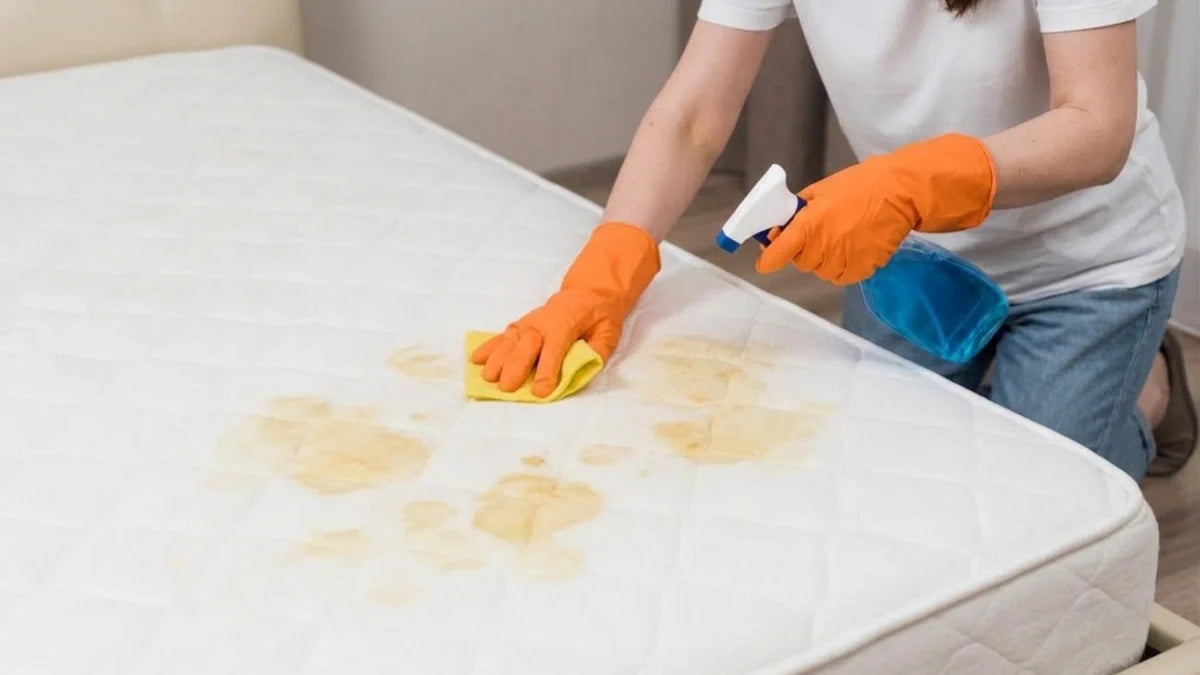
Found yellow stains on your mattress? Don’t rush to replace it just yet. In many cases, those stains can be treated with a few simple cleaning methods. Keep reading to learn how to get yellow stains out of a mattress and what you can do to prevent them from coming back.
Why Does Your Mattress Have Yellow Stains?
Here are several common reasons:
- Sweat and body oils: The most common cause, especially when stains gradually appear in areas where your body makes the most contact with the mattress, like the neck area.
- Urine: Can leave yellow or yellow-brown stains, often accompanied by a noticeable odor.
- Spills and food: Drinks, food, and other liquids can leave yellowish or brownish marks if they aren't cleaned promptly.
- Pets: Urine and other bodily fluids from pets can cause both discoloration and lingering odors.
- Moisture and humidity: A damp sleeping environment can contribute to discoloration and may create conditions for mold or mildew.
- Mattress aging: Some yellowing can simply come from the natural aging and oxidation of mattress materials.
How to Get Yellow Stains Out of a Mattress
What you'll need
- Vacuum cleaner
- Microfiber cloths
- Spray bottle
- 3% hydrogen peroxide
- Enzyme cleaner
- A clean bowl
- Fan or anything for good airflow
A step-by-step guide
1. Remove your bedding
Take off your sheets, mattress protector, and other bedding. Check whether the yellow stain is also on the bedding. Wash them according to their care instructions before putting them back on the mattress.
2. Vacuum the mattress
Vacuum the entire surface, paying particular attention to the stained areas. This helps remove dust, hair, or particles trapped in the mattress.
3. Clean the mattress
Test the following method in a small area to see whether it works first.
3.1 3% Hydrogen peroxide
- Pour a small amount of 3% hydrogen peroxide into a clean and small bowl
- Soak a microfiber cloth in it
- Wring out the cloth slightly, then gently press it onto the stained area.
- Repeat the process a few times without soaking the mattress in a small area and see whether it helps.
- Let it sit for several minutes, then check the fabric for discoloration or other changes.
- If there is no visible damage and the stain responds well, continue treating the remaining yellow areas in the same way.
Avoid pouring hydrogen peroxide directly onto the mattress. Using a damp cloth gives you more control over the amount of liquid and helps prevent excessive moisture from getting into the mattress.
3.2 Enzyme cleaner
If the yellow stain is accompanied by an unpleasant smell, especially from urine, pet accidents, sweat, or other organic residues, an enzyme cleaner for mattress may be more useful.
Enzyme cleaners work differently from hydrogen peroxide. Rather than mainly targeting the appearance of the stain, they are designed to break down organic residues that can contribute to lingering odors.
Apply the enzyme cleaner according to the product manufacturer's instructions. Avoid saturating the mattress, and allow it to dry completely before putting your bedding back on.
4. Let the mattress dry completely
This step is easy to overlook. After cleaning, it takes about 6 hours for the mattress to dry completely before putting your sheets and mattress protector back on. If possible, open windows, turn on a fan, or increase airflow.

Do not cover a damp mattress with bedding! This can trap moisture inside the mattress.
What Not to Do When Removing Yellow Mattress Stains
- Don't soak the mattress. Excess moisture can be difficult to remove, especially from foam.
- Don't mix cleaning chemicals. Use one cleaning method at a time.
- Don't use bleach unless the manufacturer specifically says it is safe.
- Don't scrub aggressively. Blotting is generally safer for mattress fabrics.
- Don't skip the spot test.
- Don't put your bedding back on while the mattress is damp.
- Don’t place your mattress under sunshine, which could probably deteriorate it.
How to Prevent Yellow Stains on a Mattress
Preventing the yellow stains is easier than cleaning them. And here are some tips that could help:
- Use a washable waterproof mattress protector or a mattress pad as a barrier between your body and the mattress.
- Wash your bedding regularly, like half a month.
- Let your bedding and mattress surface air out instead of immediately trapping moisture under heavy bedding.
- Keep your bedroom at a comfortable temperature if you tend to sweat at night.
- Vacuum your mattress regularly, once a month, eg.
When Should You Consider Replacing Rather Than Cleaning a Mattress?
Cleaning can improve the appearance of a mattress, but it cannot fix every problem. You might need to consider replacing your mattress when you notice the following signs:
- The yellowing is extensive and deeply embedded.
- The mattress has a persistent musty or unpleasant odor.
- There is visible mold or mildew.
- The mattress has significant sagging or structural damage.
- Cleaning does not noticeably improve the stain.
- The mattress is already near the end of its expected lifespan.
A stain alone doesn't necessarily mean your mattress needs to be replaced. But if discoloration comes with persistent odor, moisture problems, mold, or structural deterioration, cleaning may no longer be the best solution.
Get a Cleaner Sleep Environment With SLEEPMAX
A clean mattress starts with preventing moisture, sweat, and other residues from building up over time.
SLEEPMAX hybrid mattresses combine cooling-focused materials with breathable construction to support a more comfortable sleep environment. With different sizes and firmness options available, you can choose a mattress that fits your sleep preferences.
If your mattress is old, repeatedly develops stains, or no longer provides the comfort and support you need, it may be time to consider a replacement. With the 365-night trial provided by SLEEPMAX, you have a full year to experience your mattress at home before deciding whether it's the right fit.
FAQ
How to get urine out of a mattress?
An enzyme-based cleaner can be particularly useful because urine contains organic compounds that enzymatic cleaners are designed to break down. Treat the area as soon as possible, blot rather than scrub, and allow the mattress to dry completely.
Why can hydrogen peroxide remove yellow stains from a mattress?
Hydrogen peroxide works by oxidizing the compounds that cause discoloration. Yellow mattress stains often come from sweat, body oils, and other organic residues. Hydrogen peroxide can react with the colored molecules in these stains and break down the structures responsible for their visible color, helping the yellow discoloration fade. [1]
References:
[1] https://edu.rsc.org/download?ac=14696



Leave a comment
This site is protected by hCaptcha and the hCaptcha Privacy Policy and Terms of Service apply.