


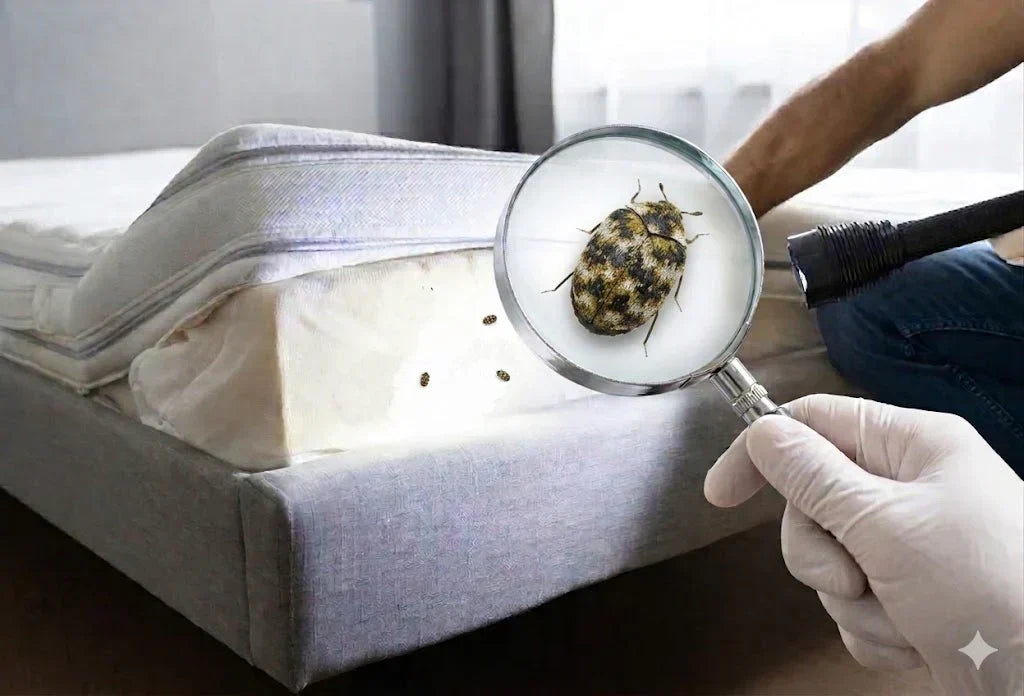
You vacuum the floors, wash your sheets, and air out the bedroom, yet something still feels off. Maybe you have noticed tiny holes in your bedding, mysterious skin irritation every morning, or small brown specks scattered across your mattress. Before you blame it on allergies or rough fabric, consider a less obvious culprit: carpet beetles.
Carpet beetles are among the most common and most overlooked household pests in North America. They are small, quiet, and surprisingly destructive. When they find their way into your mattress, they can silently ruin your bedding, trigger allergic reactions, and compromise the very space where you rest and recover each night. This guide will help you understand exactly what carpet beetles are, how to spot them in your mattress, and what you can do to get rid of them for good.
What Are Carpet Beetles?

Carpet beetles (family Dermestidae) are small, oval-shaped insects that typically measure between 1 and 4 millimeters as adults. Depending on the species, they may appear black, or patterned with a mix of white, yellow, and orange scales, somewhat resembling a tiny, mottled ladybug.
Despite their name, carpet beetles are not limited to carpets. They infest a wide range of natural materials found throughout the home, including:
- Wool, silk, leather, and fur
- Feathers and down (pillows and comforters)
- Animal hair and felt
- Dried plant products and stored pantry goods
The real damage is done by the larvae, not the adult beetles. Larvae are slightly larger (up to about 5 mm), carrot-shaped, brownish, and covered in stiff bristly hairs. They are voracious feeders and can remain in the larval stage for anywhere from several months to over a year, depending on temperature and food availability.
Adult carpet beetles, on the other hand, feed on pollen outdoors. They enter homes through open windows, doors, vents, or even on cut flowers and potted plants. Once inside, they lay their eggs in dark, undisturbed areas rich in natural fibers and your mattress checks every one of those boxes.
Why Do Carpet Beetles Target Mattresses?
Your mattress is, from a carpet beetle's perspective, an ideal habitat. Consider what it offers:
- Natural fibers such as cotton, wool, and silk (common in higher-end mattresses and bedding)
- Warmth and darkness under sheets and inside the mattress itself
- Skin cells, hair, and body oils that accumulate over time and serve as additional food sources
- Undisturbed corners, seams, and crevices perfect for laying eggs
Memory foam mattresses made entirely of synthetic materials are somewhat less attractive to carpet beetles, but the bedding on top, bed sheet set, mattress pads, mattress topper, and pillows, can still be targets if they contain wool, cotton, or down filling.
5 Key Signs of Carpet Beetles in Your Mattress
1. Irregular Holes in Bedding or the Mattress Cover
Carpet beetle larvae chew through natural fibers, leaving behind small, irregularly shaped holes. Unlike moth damage, which tends to follow a more scattered pattern, carpet beetle holes are often concentrated in one area. Check the edges, seams, and underside of your mattress, as well as pillowcases, wool blankets, and mattress toppers.
2. Shed Larval Skins
Larvae molt multiple times as they grow. These shed skins, hollow, shell-like casings, accumulate near feeding sites. They may look like tiny, pale-brownish husks. Finding them in the folds of your mattress or beneath bedding is a strong indicator of an active infestation.
3. Fecal Pellets
Carpet beetles leave behind small, pepper-like fecal pellets. These are easy to dismiss as dust or debris, but if you notice them consistently on or near your mattress, it is worth investigating further. They are typically dark brown or black, and uniform in size.
4. Skin Rashes or Irritation in the Morning
Carpet beetles do not bite. However, the stiff, barbed hairs on their larvae can cause a condition known as carpet beetle dermatitis, a skin rash that looks and feels similar to insect bites or contact dermatitis. If you regularly wake up with unexplained red, itchy welts, and bed bugs have been ruled out, carpet beetles may be the culprit. Respiratory symptoms such as sneezing, runny nose, or watery eyes can also occur in sensitive individuals.
5. Seeing Live Larvae or Adult Beetles
You may spot adult carpet beetles near windows (they are attracted to light) or discover larvae crawling along mattress seams or on the bedroom floor. Even a single adult beetle indoors suggests that eggs may have been laid somewhere in the room, including in or near your mattress.
Health Risks: More Than Just Damage to Fabric
Beyond physical damage to your bedding and mattress, carpet beetles pose real health concerns:
Children, older adults, and anyone with existing allergies or respiratory conditions are particularly vulnerable to these health effects.
How to Get Rid of Carpet Beetles in Your Mattress
Step 1: Strip and Wash All Bedding
Remove all sheets, pillowcases, mattress pads, and blankets. Wash everything in hot water (at least 120°F / 49°C) and dry on the highest heat setting for at least 30 minutes. High temperatures kill carpet beetle eggs, larvae, and adults at every life stage.
Step 2: Vacuum the Mattress Thoroughly
Use a vacuum with a HEPA filter and a crevice attachment to clean every surface of your mattress: top, bottom, sides, and all seams. Pay special attention to tufts, quilted edges, and the underside where larvae tend to hide. After vacuuming, seal and dispose of the vacuum bag immediately to prevent reinfestation.
Step 3: Steam Clean the Mattress
Steam cleaning is highly effective against carpet beetles because it penetrates deep into the mattress surface with sustained heat. Move the steam cleaner slowly across every section of the mattress, especially around seams. Allow the mattress to dry completely before remaking the bed.
Step 4: Treat the Surrounding Area
Carpet beetles rarely confine themselves to the mattress. Treat the entire bedroom:
- Vacuum all carpets, rugs, and upholstered furniture
- Wash or dry-clean curtains, throw blankets, and decorative pillows
- Use boric acid or diatomaceous earth along baseboards and in closets, both are effective, low-toxicity options
- Apply an insecticide labeled for carpet beetles in cracks, crevices, and baseboards if needed (keep children and pets away during application)
Step 5: Use a Mattress Encasement
Once the mattress has been thoroughly cleaned, encase it in a high-quality, zippered mattress protector. A good encasement seals the entire surface, denying carpet beetles access to the interior and making future cleaning far easier. Look for encasements with a zipper closure rated for pest protection, they also guard against dust mites and bed bugs as a bonus.
Step 6: Call a Professional if Necessary
If the infestation is severe, widespread, or recurring, contact a licensed pest control professional. They can assess the full extent of the problem and apply targeted treatments such as professional-grade insecticide sprays or heat treatment without endangering your household. This is particularly important if beetles have spread to multiple rooms or have damaged irreplaceable items such as antique textiles.
Preventing Future Carpet Beetle Infestations
The best strategy against carpet beetles is to make your home and mattress as inhospitable to them as possible. Here is how:
When to Replace Your Mattress
In most cases, a thorough cleaning and treatment will resolve a carpet beetle infestation without requiring you to replace your mattress. However, replacement may be the right choice if:
- The mattress has visible holes, tears, or structural damage caused by larvae
- The infestation has been ongoing for a long time and larvae have penetrated deep into the mattress foam or coils
- Repeated treatments have failed and the infestation keeps returning
- The mattress is already old, worn, or no longer providing proper support
If your mattress is beyond saving, upgrade to an affordable and high-quality hybrid mattress that offers breathable materials and built-in protection against household pests.
Final Thoughts
Carpet beetles is small, but their impact on your sleep environment and your health can be significant. The good news is that with prompt action and consistent prevention habits, a carpet beetle infestation is entirely manageable. Vacuum your mattress regularly, invest in a protective encasement, store natural fiber items properly, and stay alert for the early warning signs described in this guide.
Your mattress is one of the most important investments you make in your wellbeing. Protecting it from pests is not just about preserving the fabric. It is about safeguarding the quality of rest that your body needs every single night.


