Types of Mattresses: A Complete Guide to Finding Your Perfect Sleep

Types of Mattresses: A Complete Guide to Finding Your Perfect Sleep

Walk into any mattress store — or browse any online shop — and you'll quickly discover that choosing a mattress is far more complicated than picking a size. Innerspring, memory foam, latex, hybrid, gel foam, airbed… the options seem endless. And since you'll spend roughly a third of your life on your mattress, getting the right type really matters.

This guide breaks down every major type of mattress available today — explaining how each one is built, who it's best for, and what to watch out for — so you can make a confident, well-informed decision.


mattress types

Why Mattress Type Matters

Before we dive in, it's worth understanding why mattress type is the single most important factor in your buying decision. The construction of a mattress determines everything that follows: how firm or soft it feels, how well it supports your spine, how much heat it traps, how long it lasts, and how much it costs.

Different sleep positions, body weights, and personal preferences call for different materials. A back sleeper with a heavier build needs robust, deep support; a side sleeper with narrow shoulders needs pressure relief at the hips and shoulders. No single mattress type is universally "best" — but one is almost certainly best for you.

1. Innerspring Mattresses

Innerspring mattresses are the classic choice — they've been around for over a century and still account for a large share of mattress sales worldwide. Their core is a network of metal coils that provides support and bounce.

There are three main coil designs:

Bonnell coils — hourglass-shaped and interconnected; affordable but transfers motion easily.

Offset coils — similar to Bonnell but hinged for better contouring.

Pocketed (individually wrapped) coils — each spring sits in its own fabric sleeve. This is the gold standard: minimal motion transfer, better body contouring, and longer lifespan.

Pros: Excellent breathability, responsive feel, good edge support, widely available at every price point.

Cons: Traditional interconnected coils create noise and transfer motion; thinner comfort layers may feel less cushioned over time.

Best for: Combination sleepers, hot sleepers, those who prefer a traditional bouncy feel, and budget-conscious shoppers.

2. Memory Foam Mattresses

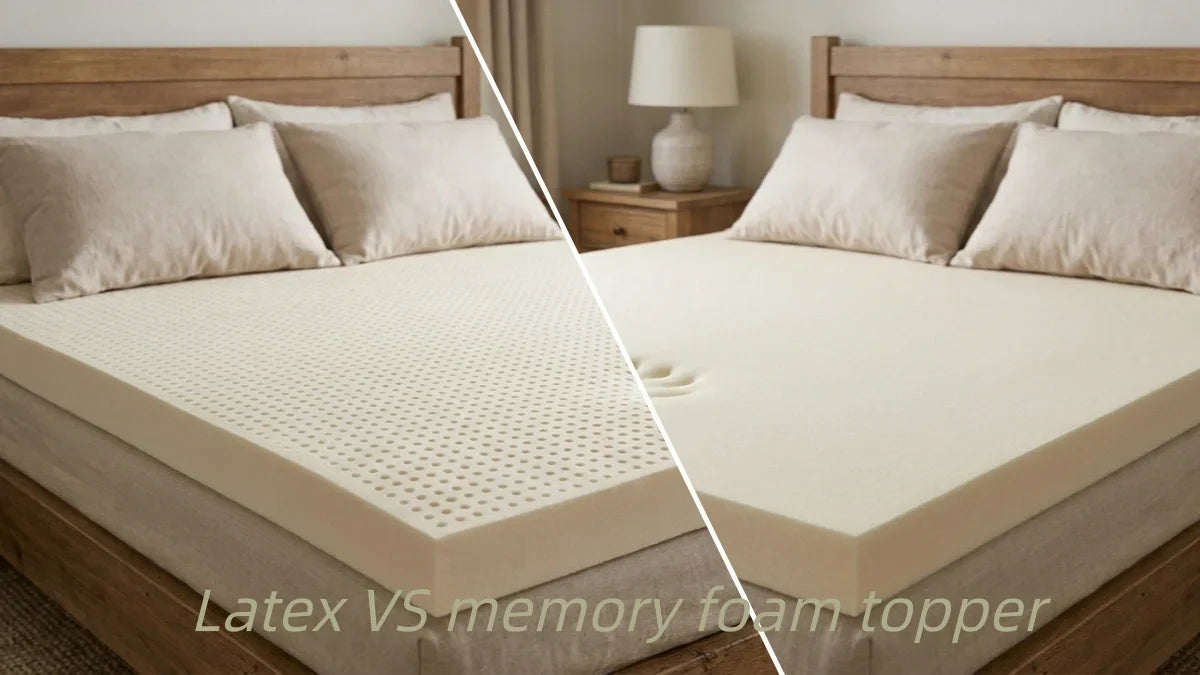
Memory foam (viscoelastic foam) was originally developed by NASA and has become one of the most popular mattress materials in the world. It responds to heat and pressure, slowly conforming to the contours of your body — then returning to its original shape once pressure is removed.

This body-hugging quality makes memory foam exceptional at relieving pressure points, which is why it's beloved by side sleepers and people with joint pain or chronic discomfort.

Pros: Outstanding pressure relief, motion isolation (great for couples), no noise, and good contouring support for the spine.

Cons: Traditional memory foam retains heat, which can cause overheating. It also has a slow response time — you may feel "stuck" when changing positions. Some people dislike the sinking sensation.

Best for: Side sleepers, couples with different sleep schedules, anyone dealing with shoulder, hip, or back pain.

3. Latex Mattresses

Latex is derived from the sap of rubber trees (natural latex) or manufactured synthetically. Latex mattresses offer a distinctive feel: responsive and buoyant — somewhere between the bounce of innerspring and the contouring of memory foam — without the "sinking" sensation.

Natural latex is also hypoallergenic and resistant to dust mites and mold, making it a favorite in health-conscious households. It is one of the most durable mattress materials, often lasting 15–20 years.

There are two main manufacturing processes:

Dunlop latex — denser and firmer; heavier.

Talalay latex — lighter, softer, more consistent; generally more expensive.

Pros: Durable, eco-friendly (natural latex), naturally hypoallergenic, breathable, and responsive.

Cons: Heavy and difficult to move; natural latex mattresses are expensive; some people have latex allergies.

Best for: Eco-conscious shoppers, hot sleepers, people who want pressure relief without the slow-response feel of memory foam.

4. Hybrid Mattresses

As the name suggests, hybrid mattresses combine two or more support systems — most commonly a pocketed coil base topped with foam, latex, or gel layers. The goal is to capture the best qualities of each material: the bounce and airflow of coils plus the contouring comfort of foam or latex.

Modern hybrids have become the go-to choice for shoppers who want versatility. They suit a wide range of sleep positions and body types, and they tend to sleep cooler than all-foam mattresses because the coil layer promotes airflow.

Pros: Balanced feel, good motion isolation, excellent breathability, versatile for different sleep styles.

Cons: Heavier and more expensive than single-material mattresses; quality varies widely between brands.

Best for: Couples with different preferences, hot sleepers who also want pressure relief, and anyone who tried pure foam and found it too hot or too constricting.

5. Gel Foam Mattresses

Gel foam is essentially memory foam infused with gel particles or gel layers. The gel is designed to absorb and dissipate body heat, addressing memory foam's biggest complaint — sleeping hot.

Gel foam mattresses retain all the pressure-relieving and motion-isolating benefits of traditional memory foam while offering a cooler sleep surface. However, some studies suggest the cooling effect diminishes over time as the gel saturates with heat.

Pros: Cooler than traditional memory foam, excellent pressure relief, good motion isolation.

Cons: Still not as cool as latex or innerspring; higher cost than standard memory foam; cooling benefits may fade.

Best for: Hot sleepers who love the feel of memory foam but struggle with temperature regulation.

6. Pillow-Top Mattresses

A pillow-top is not a separate mattress category but rather a construction feature: an extra layer of soft padding — foam, fiberfill, or latex — is sewn onto the top of a mattress, typically an innerspring. The result is a plush, cushioned sleep surface.

Euro-top mattresses are a variation where the extra layer is stitched flush with the mattress edge (rather than sitting above it), giving a cleaner, more tailored look while providing similar softness.

Pros: Immediate plush comfort, added pressure relief over a firm base, luxurious feel.

Cons: The pillow top can compress and develop body impressions over time; can trap heat; not flippable.

Best for: Shoppers who want a softer feel without committing to a fully foam mattress, and those who find traditional innersprings too firm.

7. Airbed Mattresses

Airbed mattresses use air chambers — rather than foam or coils — as their primary support system. A pump (usually built in) allows you to inflate or deflate the mattress to adjust firmness. Premium models (like Sleep Number) even allow each side of the bed to be set to a different firmness level.

Pros: Fully adjustable firmness, ideal for couples with different preferences, can extend useful life by dialing in the right support as needs change.

Cons: High cost, mechanical components can fail, not as widely available, and some people find the air-chamber feel less natural than foam or latex.

Best for: Couples who fundamentally disagree on mattress firmness, and sleepers whose firmness needs change over time (e.g., due to injury or pregnancy).

8. Split Mattresses

A split mattress is exactly what it sounds like: one mattress divided into two (or more) halves, with each half offering a completely independent firmness level. You won't find split mattresses as a standalone category in most stores — instead, split construction is a feature most often paired with adjustable bases and king-size mattresses.

The most common split configurations are:

Split King — two Twin XL mattresses side by side, giving you a full 76 inches of width with a customizable firmness on each side. This is by far the most popular split option.

Split California King — a slightly narrower, longer version of the split king, ideal for taller sleepers who still want independent firmness control.

Split Queen — a less common option combining two Full/Double mattresses, giving each partner more space than a standard Full but with independent firmness.

Split mattresses are most frequently purchased alongside an adjustable base, where each half of the mattress can be raised or lowered independently at the head or foot. This means one partner can watch TV with their head elevated while the other sleeps flat — without compromise.

Pros: Each half can have a completely different firmness level, solving the eternal debate between partners; pairs perfectly with adjustable bases for independent head/foot control; significantly reduces motion transfer since each side is physically separated.

Cons: A visible or tactile seam runs down the center of the mattress, which some sleepers find uncomfortable; finding properly fitting split king sheets can be frustrating and more expensive; typically costs more than a standard mattress of the same quality; moving or rotating the mattress is more cumbersome due to its divided structure.

Best for: Couples with vastly different firmness preferences or sleep styles; anyone using an adjustable base who wants maximum flexibility; individuals with specific medical needs that require a particular sleeping angle.

9. Organic Mattresses

An organic mattress is built using certified organic materials — organic cotton, organic wool, natural latex (GOLS certified), and organic coconut coir — with minimal or no synthetic foams, chemical fire retardants, or petroleum-based adhesives. These mattresses are made with human health and environmental sustainability as primary design goals.

Several key certifications define what "organic" really means in the mattress world:

GOTS (Global Organic Textile Standard) — the gold standard for organic textiles, covering the entire supply chain from raw fiber to finished product.

GOLS (Global Organic Latex Standard) — specifically certifies natural and organic latex, ensuring it contains at least 95% certified organic raw material.

GREENGUARD Gold — certifies low chemical emissions, important for indoor air quality in bedrooms.

OEKO-TEX Standard 100 — tests for harmful substances across all components of the finished mattress.

At the core of most organic mattresses, you'll find natural latex as the primary support layer — it's naturally elastic, incredibly durable, and provides excellent pressure relief without the heat retention of memory foam. Organic wool is layered as a natural fire barrier (replacing chemical retardants) and helps regulate body temperature. The outer cover is typically made from organic cotton, which is soft, breathable, and free from pesticide residues.

Pros: Free from harmful chemicals, synthetic foams, and chemical fire retardants; environmentally sustainable and often biodegradable; extremely low VOC emissions for better indoor air quality; naturally hypoallergenic and resistant to dust mites and mold; many organic mattresses are naturally fire-resistant without added chemicals.

Cons: Premium pricing — organic mattresses typically range from $1,500 to $5,000 or more, significantly more than conventional mattresses; smaller selection since fewer manufacturers produce truly certified organic options; the feel of natural materials differs from conventional mattresses — some sleepers find them firmer or with a different surface texture; organic mattresses tend to be heavier and more difficult to move.

Best for: Anyone with chemical sensitivities, allergies, or skin conditions; families with infants or young children who want a chemical-free sleep environment; environmentally conscious shoppers who prioritize sustainable manufacturing; anyone concerned about indoor air quality in the bedroom.

How to Choose the Right Type for You

With so many options, here's a practical framework to narrow your choice:

Sleep position

Side sleepers generally do best with memory foam, latex, or a soft-to-medium hybrid for pressure relief at the shoulders and hips. Back sleepers need medium-to-firm support to keep the spine neutral — innerspring, latex, or a medium hybrid all work well. Stomach sleepers need a firmer surface to prevent the hips from sinking.

Body weight

Lighter sleepers (under 130 lbs) often find firm mattresses too hard and do better with softer foam or latex. Heavier sleepers (over 230 lbs) benefit from a durable support core — look for thick pocketed-coil hybrids or high-density foam.

Temperature

If you sleep hot, prioritize innerspring, latex, or a coil-based hybrid. Gel foam is a second option if you also need pressure relief.

Budget

Quality innerspring and foam mattresses are available at every price point. Natural latex and premium hybrid models command higher prices but last longer, so the cost per year of use can actually be competitive.

Motion isolation

If you share a bed and your partner's movement wakes you, memory foam or pocketed-coil hybrids are the best options.

Quick Comparison: Mattress Types at a Glance

Type

Feel

Best For

Lifespan

Innerspring

Bouncy, firm

Hot sleepers, combo sleepers

6-8 years

Memory Foam

Contouring, slow-response

Side sleepers, pain relief

8-10 years

Latex

Responsive, buoyant

Eco-conscious, hot sleepers

10-20 years

Hybrid

Balanced

Most sleepers, couples

8-12 years

Gel Foam

Cool memory foam feel

Hot memory foam fans

7-10 years

Pillow-Top

Plush surface

Softness seekers

6-8 years

Airbed

Fully adjustable

Couples, changing needs

8-15 years

Split

Independent firmness per side

Split-firmness couples, adjustable base users

10-15 years

Organic

Firm, responsive, buoyant

Chemical-sensitive, eco-conscious, families

15-20+ years


Final Thoughts

There is no universally "best" mattress type — only the best mattress type for your body, your budget, and the way you sleep. Understanding the core differences between innerspring, memory foam, latex, hybrid, gel foam, pillow-top, airbed, split, and organic mattresses puts you in a far better position to make a choice you’ll be happy with for years to come.

Take your time, use available sleep trials (most reputable brands offer 90–365 nights), and don't be afraid to return or exchange if something doesn't feel right. Your sleep is one of the most important investments you can make in your health — and it starts with the right mattress.

Reading next

king vs california king
Best Mattress for Back Ache

Leave a comment

This site is protected by hCaptcha and the hCaptcha Privacy Policy and Terms of Service apply.