


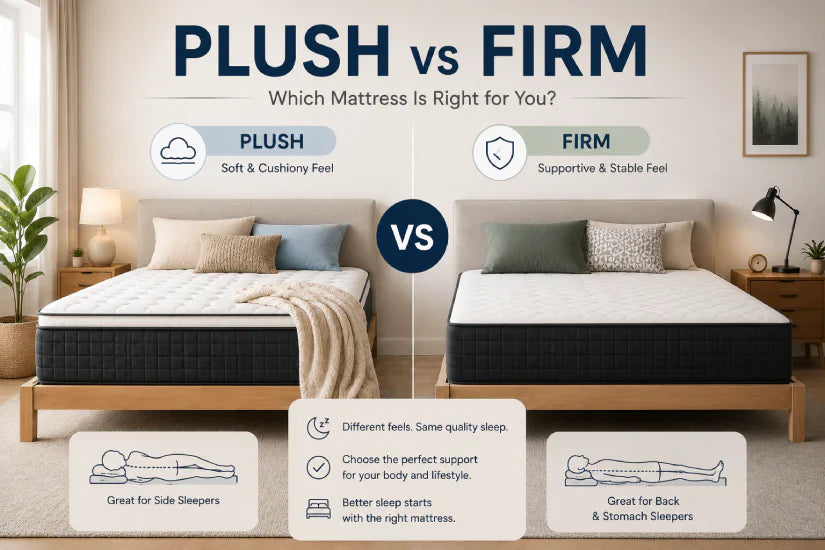
When you’ve found a mattress you like and are ready to pay, you discover that it comes in several firmness levels, including plush, medium, firm, and extra firm. You’re torn between a soft mattress and a firm one. These two are at opposite ends of the firmness spectrum, and choosing the wrong one could leave you tossing and turning for months—or worse, waking up every morning with lower back pain.
I’ve spent years researching sleep and delving into various sleep studies, and one thing is very clear: there is no one-size-fits-all “best” mattress. The right choice depends on your sleeping position, your weight, and whether you have any pain issues. Let me break it down for you so you can make a decision you won’t regret.
Quick Overview: Plush vs Extra Firm at a Glance
|
Feature |
Plush Mattress |
Extra Firm Mattress |
|
Firmness Scale (1-10) |
3 to 5 / 10 |
7 - 10 / 10 |
|
Comfort Layer Thickness |
4+ inches |
1 to 2 inches |
|
Overall Feel |
Cloud-like, body-hugging |
Solid, sleep on top |
|
Best Sleep Position |
Side sleeping |
Stomach and back sleeping |
|
Ideal Body Weight |
Under 130 lbs |
Over 230 lbs |
|
Pressure Relief |
Excellent |
Limited |
|
Spinal Support |
Moderate |
Very strong |
|
Motion Isolation |
Great for couples |
Decent |
|
Temperature |
Can sleep warm |
Sleeps cooler |
|
Durability |
5-7 years |
8-10+ years |
What Exactly Is a Plush Mattress?
Pillow-top mattresses are designed to make you feel as if you’re sinking into a soft, comfortable embrace. The comfort layer in these mattresses is typically four inches thick or more and is made of materials such as memory foam, soft latex, or polyurethane foam. Many luxury mattresses feature a pillow-top or European-style top—an extra layer of cushioning sewn into the surface that provides that initial “ahh” moment of comfort when you lie down.
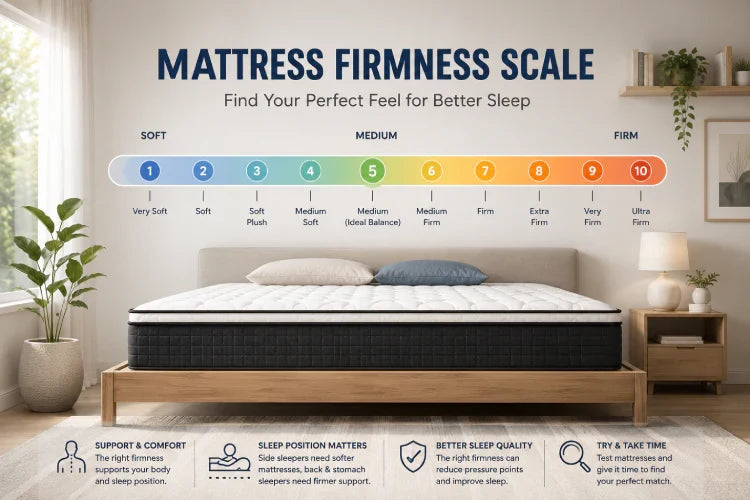
On a standard firmness scale of 1 to 10, luxury mattresses typically range from a 3 to a 5. When you lie on one, your body sinks in noticeably. The foam conforms to the curves of your shoulders, hips, and lower back, distributing your weight over a wider area rather than concentrating it on a few pressure points. This is why side sleepers often prefer soft mattresses—they provide space for their shoulders and hips to sink in, helping to keep the spine relatively straight.
It’s important to note that plush mattresses are not lacking in support. They simply have a thicker comfort layer on top, which makes them feel softer. They also feature support structures, such as pocket springs, at the lower layers.
Cons
Plush mattresses are not perfect. Because you sink into them, they can trap body heat —though newer models with cooling gel infusions and breathable covers have gotten much better at managing this. Softer foams also tend to develop body impressions faster than dense, firm materials, meaning a plush bed might need replacing sooner.
What Is a Firm Mattress?
A firm mattress offers the opposite feeling when you lie on it. Rated 9 or 10 on the firmness scale, these beds offer maximum resistance with minimal sinkage.
For extra firm mattresses, it often has an Indentation Load Deflection (ILD) rating of 34.5 to 38.5 or higher, compared to the much lower ILD values found in plush foams. What this means in plain English: you are not going to sink in. You rest on top of the mattress, not in it.
Heavier individuals — generally those over 230 pounds — need this level of support. A plush mattress simply cannot hold up a larger frame; the person sinks right through the comfort layer and hits the support core, which defeats the entire purpose of having cushioning. Extra firm mattresses prevent that bottoming-out sensation and keep the spine properly aligned.
Cons
The downside? Firm beds can be brutal for side sleepers and lighter individuals. If you weigh less than 130 pounds, you may not generate enough force to compress even the minimal comfort layers. You end up essentially floating on a rigid surface, which concentrates pressure on your shoulders, hips, and knees. That can restrict blood flow and cause numbness or tingling in your arms and legs — not exactly the recipe for restful sleep.
The Real Differences That Matter
Let me get into the nitty-gritty, because the plush vs extra firm debate goes way beyond “soft vs hard.”
Support and Spinal Alignment
Here is something that trips people up: firmness and support are not the same thing. Firmness describes how the top layer feels when you lie on it. Support refers to how well the mattress keeps your spine aligned. A mattress can be soft but still supportive (think high-quality memory foam with a dense base), or firm but unsupportive (like a cheap innerspring with no lumbar reinforcement).
That said, firmer mattresses generally offer better support. They don’t sag easily and prevent heavier parts of the body from sinking in. But here’s the key point: both Chinese and Western sleep studies show that medium-firm mattresses are actually more effective at relieving lower back pain than very firm ones. A study of 268 people with chronic back pain found that those who slept on extremely firm mattresses had the poorest sleep quality. Another study found that patients sleeping on medium-firm mattresses were twice as likely to report symptom improvement compared to those sleeping on firm mattresses.
The takeaway? Firm does not automatically mean better for your back. It depends on your body.
Pressure Relief
Plush mattresses dominate this category. By contouring around your body, they distribute weight across a wider area and reduce pressure on bony prominences. This matters a lot if you have arthritis, fibromyalgia, or any condition where joint sensitivity is an issue. Medical sources note that softer mattresses help disperse body weight, reducing compression on blood vessels and improving circulation during sleep.
Firm mattresses struggle here. Without enough give, your shoulders and hips bear the brunt of your weight, especially if you sleep on your side.
Temperature Regulation
Firm beds sleep cooler, plain and simple. Because you are not enveloped by the mattress, more of your body surface is exposed to airflow. Plush mattresses, with their body-hugging contour, can trap heat — though this is less of an issue with newer cooling technologies like phase-change materials and copper-infused foams.
Motion Transfer
Sharing a bed with a restless partner? Plush mattresses, especially memory foam ones, absorb movement remarkably well. You barely feel your partner tossing and turning. Firm mattresses transmit more motion, though hybrids with pocketed coils do a decent job of minimizing this.
Durability
Firm mattresses typically last longer. Dense support cores and minimal comfort layers mean less material to break down over time. Plush mattresses, with their thick foam layers, are more prone to sagging and body impressions. That said, choosing high-density foams (above 4.0 pounds per cubic foot) can extend a plush mattress’s life to seven or even ten years.
Which firmness mattress should I buy?
Your Sleep Position
This is probably the single most important factor. Here is how it breaks down:
Side sleepers should lean plush. Your shoulders and hips need to sink into the mattress to keep your spine straight. A firm surface will leave your spine curved sideways like a banana, and you will probably wake up with numb arms.
Back sleepers do best in the middle — medium to medium-firm. You want your lower back supported but not flattened. Some back sleepers can handle an extra firm bed if they have a muscular build, but most find it uncomfortable over time.
Stomach sleepers need firm to extra firm. This is non-negotiable. A soft mattress will let your midsection sink, arching your lower back painfully. Extra firm keeps you flat and supported.
Combination sleepers (those who shift positions throughout the night) usually do well with medium-firm, though if you spend significant time on your side, you might prefer something slightly softer.
Your Body Weight
Weight changes how a mattress feels. A 110-pound person and a 250-pound person will experience the same bed very differently.
Under 130 pounds: You need a softer surface because you do not have enough body weight to compress firmer materials. A plush mattress will feel like a medium to you, and a firm bed will feel like concrete.
130 to 230 pounds: You are in the sweet spot where mattress ratings tend to match your perception. Medium-firm is usually ideal.
Over 230 pounds: You need extra firm support. A plush mattress will let you sink too deep, bottoming out on the support layer. Extra firm keeps you properly supported and prevents premature sagging.
Your Health and Pain Profile
If you have lower back pain, the research points toward medium-firm — not extra firm. Studies from Chinese orthopedic sources recommend mattresses that offer strong support with a slightly softer surface layer for people with lumbar disc issues or chronic muscle strain. The rigid surface of an extra-firm bed can actually worsen back pain for some people by eliminating the natural cushioning that lets muscles relax.
If you have arthritis, fibromyalgia, or joint sensitivity, plush is your friend. The gentle cradle reduces pressure on inflamed joints.
If you are a heavier person with back pain, an extra firm mattress might be exactly what you need — but pay attention to how your body responds over the first few weeks.
Signs You Picked the Wrong Firmness
Your body will tell you if you got it wrong. Here is what to watch for:
Your mattress is too soft if:
You wake up with lower back pain that eases as you move around
You feel like you are sleeping in a hole
Rolling over or getting out of bed takes noticeable effort
Your lower back sinks deeply, creating a hammock effect
Your mattress is too firm if:
You wake up with numbness or tingling in your arms or hands
Your shoulders or hips ache in the morning
You feel like you are sleeping on a board rather than in a bed
You toss and turn because pressure points keep you from getting comfortable
What About Couples With Different Needs?
This is one of the most common headaches in mattress shopping. Your partner wants plush; you need extra firm. What do you do?
A medium-firm hybrid mattress is the classic compromise — it offers enough cushioning for side sleepers while providing solid support for back and stomach sleepers. If that does not work, consider a split-king setup where each side of the bed has a different firmness level. Yes, it costs more, but you both get what your body needs.
Another budget-friendly option: buy a firm mattress and add a plush mattress topper (two to three inches of memory foam or down). This gives you a soft surface with firm support underneath, and if your preferences change, you just swap the topper instead of replacing the whole mattress.
The Bottom Line
The plush vs firm debate does not have a winner because the right answer is different for everyone. Here is the simplest way to think about it:
Go plush if you are a side sleeper, weigh under 130 pounds, or deal with joint pain and pressure sensitivity. The cushioning will cradle your body and keep your spine aligned in lateral positions.
Go firm if you are a stomach sleeper, weigh over 200 pounds, or sleep hot and want maximum durability. The solid surface will keep your spine flat and prevent the sinking that leads to back pain.
And if you are somewhere in the middle — an average-weight back sleeper without major pain issues — a medium-firm mattress is likely your best bet. Research consistently shows it is the most universally comfortable option.
Whatever you choose, take advantage of sleep trials. Lie on the mattress in your usual sleep position for at least ten minutes in the store, and if you are buying online, make sure there is a return window of at least 30 nights. Your body needs time to adjust, and a quick five-minute test in a showroom simply is not enough to know if a mattress is right for you.
Remember, the best mattress is not the most expensive one or the one with the best reviews. It is the one that lets you fall asleep quickly, stay asleep through the night, and wake up feeling rested without pain. Find that, and you have found your match.

Leave a comment
This site is protected by hCaptcha and the hCaptcha Privacy Policy and Terms of Service apply.