


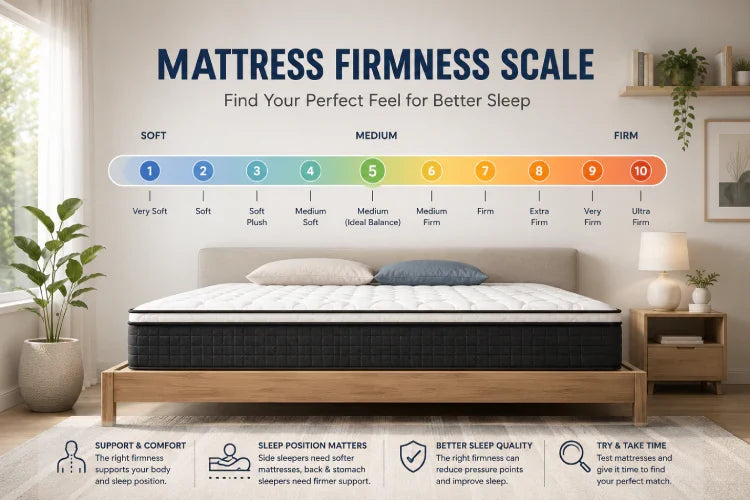
When shopping for a mattress, you’ll encounter terms like “medium firm” and “soft,” as well as numerical ratings ranging from 1 to 10. The mattress firmness scale was created to simplify this process—but only if you know how to use it. This guide will explain in detail what each number means, describe how your sleeping position and weight affect your best choice, and help you confidently select a mattress that’s both comfortable and supportive.
What Is the Mattress Firmness Scale?
The mattress firmness scale is a 1-to-10 rating system that measures how soft or hard a mattress feels. A 1 is the softest surface possible, while a 10 is the firmest. Most mattresses today fall between 4 and 8.
There is no universal industry standard for these ratings. A "6" from one brand may feel different from a "6" from another. Understanding the general categories — and how they interact with your body — is what truly matters. The most popular mattress firmness is medium, according to Naplab Derek Hales. Most of the mattress brands' firmness ranges from 6 to 10.
The 1-10 Firmness Scale Breakdown
|
Rating |
Category |
How It Feels |
|
1-2 |
Extra Soft |
Extreme sinkage with deep contouring. Rarely sold — most sleepers lack adequate support at this level. |
|
3-4 |
Soft |
Noticeable sinkage with a plush, hugging feel. Popular among lightweight side sleepers. |
|
5-6 |
Medium |
Balanced feel with moderate contouring. The most versatile range on the market. |
|
6.5-7 |
Medium-Firm |
Minimal sinkage with gentle contouring. The most recommended firmness for the average adult. |
|
7.5-10 |
Firm / Extra Firm |
Very little to no sinkage. You sleep on top of the surface. Best for stomach sleepers and heavier individuals. |
The medium-firm sweet spot of 6.5/10 is the most popular choice — it balances comfort and support for the widest range of sleepers.
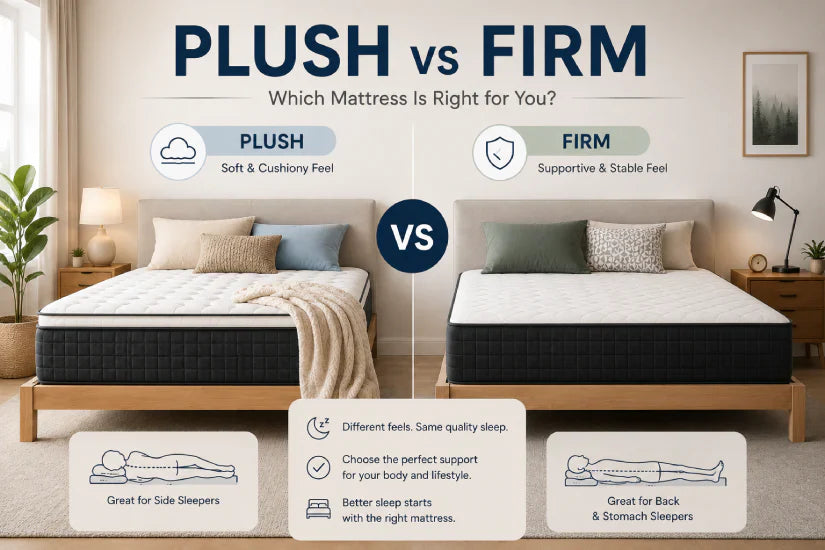
Related: Plush vs Firm Mattress: Which One Actually Fits Your Body?
Firmness vs. Support: They Are Not the Same
Firmness refers to the surface feel—that is, how soft or firm the mattress feels upon first contact. Support refers to the mattress’s ability to maintain neutral spinal alignment, which depends on its core (springs or high-density foam). A mattress can be both soft and supportive, or it can be firm yet lack support. Our goal is to find a mattress that offers both.
What are the factors that affect the firmness choice?
- Age: As you get older, you may develop certain conditions, such as obstructive sleep apnea and nocturia, which can affect your sleep. Even natural changes in your circadian rhythm can make it difficult for you to fall asleep.
- Sleep position: Generally speaking, side sleepers prefer softer mattresses (to conform to the curves of their sides and maintain the spine’s natural curvature). Both stomach sleepers and back sleepers prefer firmer mattresses.
- Body Weight: Lighter sleepers typically choose softer mattresses to ensure proper pressure relief. For heavier sleepers, firmer mattresses provide adequate support and prevent them from sinking into the mattress.
How does aging change the firmness choice?
Aging can affect our health. You may develop conditions such as obstructive sleep apnea and nocturia, or more serious conditions like osteoarthritis and Parkinson’s disease.
For people with obstructive sleep apnea, soft or medium-firm mattresses are more suitable, as they need to sleep on their side to avoid breathing difficulties.
For people with nocturia, a medium or firm mattress is better, so you can get up whenever you want.
For people with osteoarthritis, sleeping on a mattress that’s too soft or too hard can make hip, shoulder, and back pain even worse. So, you should choose the right firm mattress for you before you buy one.
For people with Parkinson’s, a firm mattress is better. A firmer mattress makes it easier for patients to get up and turn over.
Read How to Choose the Best Mattress for Seniors for more details.
How Your Sleep Position Determines the Right Firmness
Your sleeping position is the single most important factor because each position distributes weight differently and creates unique pressure points.
Side Sleepers — Soft to Medium (4-6)
Side sleepers place concentrated pressure on shoulders and hips. Too firm a mattress creates painful pressure points and spinal misalignment. A softer surface (4-6) lets these areas sink in for relief while keeping the spine straight.
Back Sleepers — Medium to Medium-Firm (5-7)
Back sleepers need a surface that supports the spine’s natural curve. Medium to medium-firm mattresses (5-7) cushion the lumbar region while maintaining structural support.
Stomach Sleepers — Medium-Firm to Firm (7-9)
Stomach sleepers risk lower back strain because gravity pulls the midsection down. A firm surface (7-9) keeps hips lifted and the spine neutral. Soft mattresses let hips sink too far, creating morning stiffness.
Combination Sleepers — Medium to Medium-Firm (5-7)
If you switch positions, aim for around 6.5/10. It provides softness for side sleeping, support for back sleeping, and acceptable resistance for stomach sleeping.
How Body Weight Changes Firmness Perception
Your weight dramatically changes how firm a mattress feels. Heavier people compress comfort layers more, making the same mattress feel softer. A 6/10 mattress might feel like an 8 to a lightweight person but closer to a 4 or 5 to someone heavier.
|
Sleep Position |
Lightweight (<130 lbs) |
Average (130-230 lbs) |
Heavyweight (>230 lbs) |
|
Side Sleeper |
4-6 |
5-6 |
5-7 |
|
Back Sleeper |
5-6.5 |
6-7.5 |
6.5-8 |
|
Stomach Sleeper |
6-7.5 |
7-8 |
8-10 |
|
Combination |
5-6.5 |
5-7 |
7-8 |
Rule of thumb: Lightweight sleepers should go one level softer. Heavier sleepers should go one to two levels firmer.
How Mattress Material Affects Firmness Feel
The same firmness rating can feel different depending on construction:
Memory Foam Mattress
Deep contouring makes memory foam feel softer than its rating suggests. Excellent for pressure relief — ideal for side sleepers and joint pain.
Hybrid Mattress
Pocketed coils with foam or latex deliver the most consistent ratings. Great for couples with different preferences.
Latex Mattress
Buoyant and responsive, latex feels firmer at the same rating. Naturally cooling and highly durable.
Innerspring Mattress
Steel coils with thinner comfort layers feel firmer overall. Excellent airflow but less pressure relief than foam alternatives.
Soft vs. Medium vs. Firm at a Glance
|
Soft (4-5) |
Medium (6-7) |
Firm (8-9) |
|
Best for: Side sleepers, lightweight individuals Watch out: Poor for back/stomach sleepers; may sag sooner; can sleep hot |
Best for: Most sleepers, couples, combination sleepers Watch out: May be too firm for lightweight side sleepers; too soft for heavy stomach sleepers |
Best for: Stomach sleepers, heavyweight individuals Watch out: Poor pressure relief for side sleepers; limited selection |
Firmness for Pain Relief
If you have chronic pain, the mattress firmness scale becomes critical. The myth that "firmer is always better for back pain" is false — the right firmness depends on your position and weight. For lower back pain, match firmness to your position first, then look for zoned lumbar support. Side sleepers with shoulder pain should lean softer (4-5) for extra cushioning. Those with hip pain benefit from medium mattresses with quality comfort layers. Always consult your healthcare provider before making medical-based mattress decisions.
How to Test Mattress Firmness Before Buying
Generous online sleep trials make evaluating firmness easier than ever. Here is how to test with confidence:
Use sleep trials: Most online brands offer 100-night risk-free trials. Give your body 2-4 weeks to adjust before deciding.
Read third-party reviews: Independent sites test mattresses objectively. Cross-reference multiple sources.
Test in-store wisely: Spend 10-15 minutes in your primary sleeping position. A 30-second test reveals almost nothing about long-term comfort.
Match your pillow: Softer mattresses pair with lower-profile pillows; firmer ones need higher-loft pillows for neck alignment.
Frequently Asked Questions
What is the most popular mattress firmness?
Medium-firm, around 6.5/10, suits the widest range of sleepers, including couples.
How do I know if my mattress is too firm?
Signs include numb or tingling arms, shoulder and hip pressure points, and morning stiffness. Side sleepers are most affected.
How do I know if my mattress is too soft?
The classic sign is lower back pain from your hips sinking too deeply. Stomach sleepers are especially vulnerable.
Do firmness ratings change over time?
Yes. All mattresses soften during break-in. Quality mattresses are designed so this stabilizes without losing support.
Can I adjust firmness after purchase?
Yes. A mattress topper is the most affordable fix — add softness to a firm mattress or firmness to a soft one. Some mattresses also offer flippable or dual-firmness designs.
Find Your Perfect Match on the Mattress Firmness Scale
Choosing the right firmness is the most important decision when buying a mattress. Understanding how the mattress firmness scale interacts with your sleep position, body weight, and material preferences gives you the confidence to make the right choice.
Quick recap for your search:
Side sleepers: Soft to medium (4-6).
Back sleepers: Medium to medium-firm (5-7).
Stomach sleepers: Medium-firm to firm (7-9).
Combination sleepers: Universal medium-firm sweet spot (6-7).
Light body weight: Go one level softer than the general recommendation.
Heavy body weight: Go one to two levels firmer than the general recommendation.
Ready to find your perfect mattress? Browse our collection of premium mattresses, thoughtfully designed across multiple firmness options to suit every sleep style. Every purchase includes a risk-free sleep trial, so you can test your choice in the comfort of your own home. Your best night’s sleep is just one decision away.

Leave a comment
This site is protected by hCaptcha and the hCaptcha Privacy Policy and Terms of Service apply.