



Suppose your lower back hurts after sleeping? We understand how frustrating that can be. Based on material from top health resources such as Sleep Foundation, Medical News Today, and Healthline, there are a few common reasons: health conditions (degenerative disc disease or fibromyalgia), limited mobility, pregnancy, sleep position, physical exertion, and a bad mattress.
As a mattress manufacturer, we at Sleepmax understand how mattress firmness, materials, and support systems impact your lumbar health. In this article, we will discuss how your mattress can cause lower back pain, how to tell if your bed is the problem, and how to choose a mattress that offers better support.
Can a Mattress Cause Back Pain?
Yes, your mattress can make your lower back hurt, particularly if it’s lost proper support and comfort. A mattress is not always the sole cause of back pain, but a poor-quality one can compromise your spinal alignment and increase the pressure on your lower back during the night.
Your mattress should hold your body up and keep your spine aligned while you sleep. If it is not supportive enough, some parts of your body may sink too deeply, while other areas may not receive enough cushioning. This imbalance causes stiffness, soreness, and pain in the morning when you wake up.
Signs Your Mattress May Be Causing Back Pain
Your mattress may be contributing to your lower back pain if you notice:
- You frequently wake up with a sore or stiff lower back that improves after moving around.
- Your mattress falls into one or both of these categories: sagging or permanent body impressions.
- You sleep better on another bed.
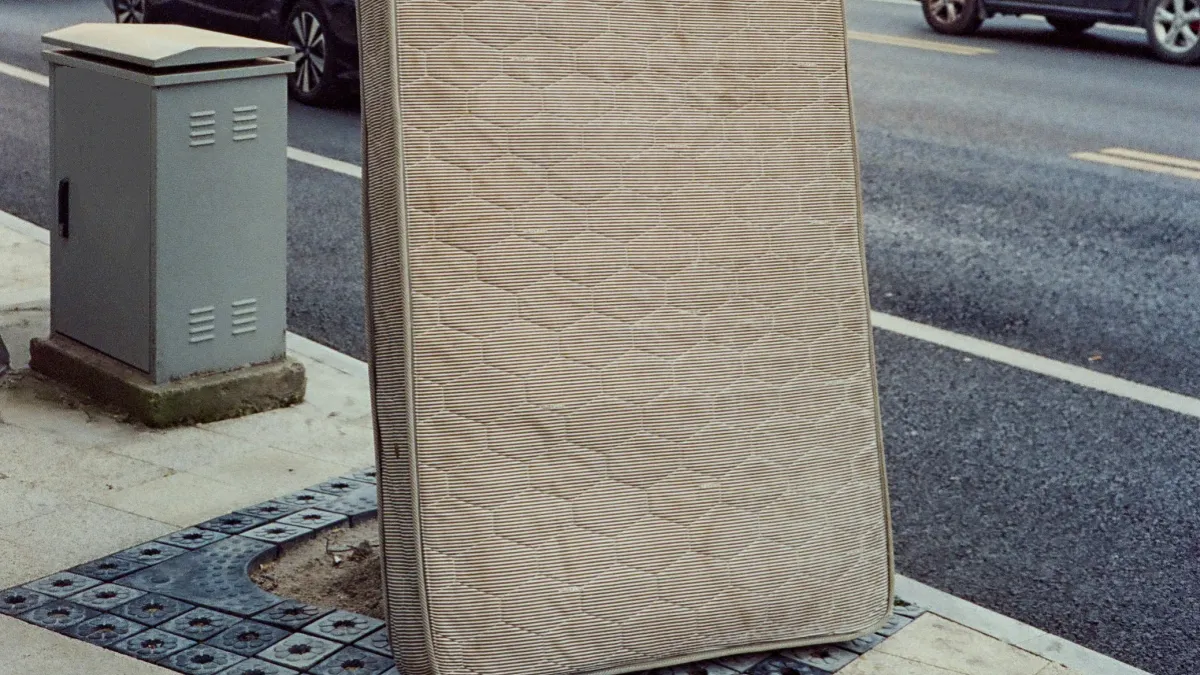
- Your mattress is past its prime, like 10+ years old.
- Your bed is too firm or too soft for your sleeping style.
If these signs sound familiar, then your mattress could hurt your sleep quality and your comfort overall. Selecting a mattress with the appropriate level of firmness and support can contribute to improved spinal alignment and alleviate morning discomfort.
Firm or Soft Mattress for Back Pain?
A soft mattress may feel cozy initially as it offers more padding, but excess softness could interfere with support. When your hips sink too far into the mattress, it may cause your spine to lose its natural alignment, which can put strain on your lower back. This is particularly true for people who sleep on their stomach and for people who require extra support in their hip and lower back region.

A firm mattress can offer excellent support and work well for some back sleepers. But when it comes to lower back pain, it isn’t necessarily the best. When a mattress is too firm, it can place too much pressure on parts of your body such as your shoulders and hips, especially if you sleep on your side. This discomfort may keep your muscles from fully relaxing and can play a part in lower back pain when you wake up.
What type of mattress is best for back pain?
Medium-firm mattresses. It is firm enough to keep your spine properly aligned yet soft enough to contour to your body and alleviate pressure points.
A medium-firm hybrid mattress from Sleepmax is designed with a honeycomb-inspired pocket spring system for full-surface support. It adapts to your body, reduces motion transfer, and supports every sleep position. Together with a cooling-to-the-touch cover, it is a fantastic choice for hot sleepers.
Quick Self-Test: Is Your Bed Killing Your Lower Back?
Lie on your back in your normal sleeping position and try sliding your hand underneath the curve of your lower back.
- If there is a large gap: Your mattress may be too firm and may not provide enough contouring support for your body.
- If your lower back feels pressed tightly into the mattress: Your mattress may be too soft and may allow your hips to sink too deeply.
Ideally, your mattress should support the natural curve of your spine without leaving excessive space or creating pressure.
How to Sleep With Lower Back Pain
Side Sleeping With Proper Support
Side sleeping is generally recommended for people with lower back pain as it promotes a more natural position for the spine. However, your mattress should provide enough cushioning around your shoulders and hips while still supporting your lower body.

For better alignment, try placing a pillow between your knees. This can help keep your hips level and reduce twisting pressure on your lower back.
Sleeping on Your Back
Sleeping on your back is not necessarily bad for lower back pain. In fact, it can help distribute your body weight evenly and support a neutral spinal position when your mattress provides proper support.
To reduce pressure on your lower back, place a pillow underneath your knees. This helps maintain the natural curve of your spine and may reduce tension in the lumbar area.
Avoiding Stomach Sleeping
Stomach sleeping may increase stress on your lower back because your hips can sink into the mattress while your spine moves out of alignment. It can also require your neck to remain turned to one side for extended periods.
If stomach sleeping is your preferred position, choosing a supportive mattress and placing a thin pillow under your pelvis may help reduce strain.
Get A Good Mattress for Back Problems from Sleepmax
Having a sore back from sleeping can be attributed to many causes, but your mattress has a lot to do with how well your body is supported while sleeping. A mattress that is too soft or too firm, or has become worn out, can lead to poor spinal alignment and discomfort in the morning. A hybrid medium firm mattress can support the natural curves of your body and alleviate any strain on your lower back.
As a mattress manufacturer, Sleepmax designs and produces hybrid mattresses that offer support with soft cushioning accompanied by a cooling cover to deliver a good sleep experience:
- Honeycomb-inspired Hive spring system for balanced support
- Cooling-to-the-touch cover for a comfortable sleeping experience
- High-density foam for edge-to-edge support and durability
- Gel-infused foam for pressure relief
- Patented memory foam for a more adaptive feel
If your current mattress has you waking up achy and stiff, then try out Sleepmax, take our 365-day trial, and find out if it could be right for you!
FAQ
Is a firm mattress good for back pain?
A firm mattress is not always the best choice for lower back pain. A mattress that is too hard may create pressure points and feel uncomfortable, especially for side sleepers. In many cases, a medium-firm mattress offers a better balance of support, comfort, and pressure relief.
What type of mattress is best for back pain?
The best mattress for back pain is one that supports proper spinal alignment while reducing pressure on sensitive areas. Medium-firm hybrid mattresses are often a popular choice because they combine responsive coil support with comfortable foam layers, providing both stability and cushioning.
Is sleeping on your back bad for lower back pain?
No, sleeping on your back is not necessarily bad for lower back pain. In fact, it can help maintain a neutral spinal position when your mattress provides adequate support. A pillow under your knees can also relieve pressure on your lower back.
Do hybrid mattresses help with back pain?
Hybrid mattresses are designed to support people who suffer from back pain by combining the support of innerspring coils with the pressure relief of comfort layers. Their balanced design can help promote spinal alignment while providing cushioning for areas such as the shoulders and hips.

Leave a comment
This site is protected by hCaptcha and the hCaptcha Privacy Policy and Terms of Service apply.