


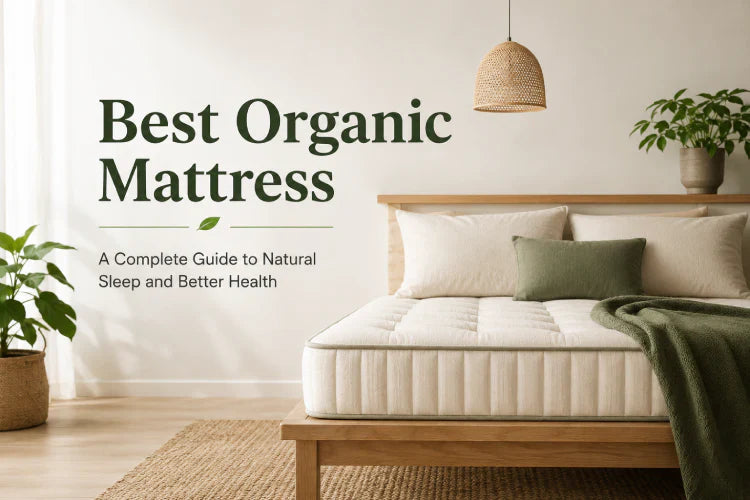
Here's the deal—I spent the first five years of my career testing conventional mattresses, and let me tell you, what I found underneath those pretty covers used to keep me up at night. Most mainstream mattresses are basically chemistry experiments wrapped in fabric. They've got polyurethane foam, chemical flame retardants, and all sorts of synthetic materials that off-gas VOCs while you're catching those Z's.
The thing is, we spend like a third of our lives on these things. People spend more time researching which phone to buy than which mattress will be breathing right next to their face for the next decade. That cheap foam topper I bought for my studio apartment back in 2015? Woke up with headaches for months before I figured out what was going on.
VOCs aren't just some fringe concern. They're measurable, they're real, and linked to respiratory issues and hormone disruption. For families with kids or anyone dealing with allergies and sensitivities, this stuff matters way more than most marketing would have you believe.
What's the Difference Between "Natural" and "Organic" Mattresses?
No clue why mattress companies get away with using these terms interchangeably, but they really shouldn't. I've seen countless customers get burned by this exact confusion.
"Natural" is basically marketing speak with zero accountability. There's no federal definition, nobody's auditing it, and brands throw it around like confetti. That mattress labeled "all-natural" could contain petroleum-based foam for all anyone knows.
"Organic," on the other hand, actually means something—when it's properly certified. We're talking independent third-party verification at every single step, from the farm where the cotton was grown all the way to the factory where the mattress was assembled. Supply chain audits, annual inspections, the whole nine yards.
Bottom line: if a mattress claims to be organic but can't show you specific certifications with verifiable license numbers, you're basically taking their word for it. And in this industry? That's a gamble I wouldn't take.
What Exactly Does GOTS Certification Mean?
GOTS stands for Global Organic Textile Standard, and honestly, it's the closest thing we've got to a gold standard in this space. The USDA recognizes it as valid for selling textiles as organic in the States.
Here's what really matters about GOTS, and it's something most buyers miss: it certifies the finished product, not just individual layers. A mattress gets the GOTS seal only when the complete assembly has passed inspection. Not when the cotton filling has some paperwork, not when the latex core got tested in isolation—the whole damn mattress.
I've been in this industry long enough to remember when brands would brag about having organic cotton fill while the rest of the mattress was held together with chemical adhesives and synthetic foam. That's exactly the kind of loophole GOTS was designed to close.
The requirements are extensive: minimum 95% certified organic fiber content by weight, complete supply chain traceability, annual independent audits at every facility, no polyurethane foam or memory foam, no chemical flame retardants, no solvent-based adhesives, mandatory wastewater treatment, and fair labor practices. Version 8.0 of GOTS, effective March 2027, is tightening things up with additional chemical restrictions including PFAS prohibitions.
What Is GOLS Certification and Why Is It Not Enough?
GOLS—Global Organic Latex Standard—is administered by Control Union Certifications, and it applies specifically to natural latex products. Sounds great, right? Here's the catch nobody talks about in mattress advertisements.
GOLS operates at the material level. It verifies your latex composition, sure. But it doesn't audit the finished mattress assembly. It doesn't check what else is in there.
I can't tell you how many times I've seen brands market their latex mattresses as "GOLS certified" while conveniently forgetting to mention they're also stuffed with polyurethane foam and treated with chemical flame retardants. Technically legal. Totally misleading.
So what's the right approach? You need both: GOLS for your latex verification and GOTS finished-product certification for the complete mattress. One without the other leaves you with gaps bigger than my college roommate's knowledge of cleaning supplies.
What Materials Actually Make Up a Quality Organic Mattress?
Organic Latex: More Than Just a Marketing Word
Natural latex comes from rubber tree sap, and it's genuinely impressive stuff. Inherently resistant to dust mites, mildew, and mold without any chemical treatment. No off-gassing like petroleum-based foams. The molecular structure gives you responsive support that contours to your body while maintaining proper spinal alignment.
Dunlop Latex is the denser, firmer option. The manufacturing process is simpler and requires less energy. It gives you that solid foundation feel—perfect for support cores. I've got a 6'2" friend who's 210 pounds sleeping on pure Dunlop and he says it's like his back finally stopped screaming at him.
Talalay Latex goes through a more complex process involving vacuum sealing and flash freezing. This creates a lighter material with more consistent cell structure. Better pressure relief, softer feel, typically used for comfort layers. The highest quality organic mattresses combine both—a denser Dunlop core with a softer Talalay comfort layer on top.
Here's a spec I look for: 93-95%+ natural latex content. Anything lower and you're wondering why you're paying organic prices for compromised materials.
Organic Cotton: Breathable Without the Chemical Drama
GOTS-certified organic cotton has to be grown without synthetic pesticides or fertilizers, processed without chlorine bleach, and verified at every stage from farm through fabric production.
The environmental math is compelling. Studies show organic cotton farming uses about 71% less water and 62% less energy compared to conventional cotton cultivation. For mattress covers and quilting layers, you get excellent breathability and moisture-wicking properties that help regulate body temperature throughout the night.
I remember testing cotton samples side by side—organic versus conventional—and even just handling them, you could feel the difference in the fiber quality. The organic stuff just feels... cleaner.
Organic Wool: Nature's Answer to Flame Retardants
This is where things get really interesting. Organic wool fibers contain natural lanolin that provides inherent flame resistance. That means mattresses can meet federal fire safety standards without chemical flame retardants—which matter when you consider that many conventional chemical retardants have been linked to endocrine disruption and developmental issues in children.
My sister's kid has pretty severe allergies, and switching to an organic wool-containing mattress was genuinely life-changing for them. Within a few weeks, the chronic congestion that they'd just accepted as normal cleared up completely.
Beyond fire safety, wool offers excellent temperature regulation. It wicks sweat away during warm nights and provides insulation when it's cooler. It naturally repels dust mites and other allergens.
Which Certifications Actually Matter for Your Mattress?
The Non-Negotiables
GOTS (Global Organic Textile Standard) – Finished Product Certification
This is your baseline. Every legitimate GOTS certification appears in the public GOTS database with a valid license number. When I'm evaluating a mattress, this is the first thing I check.
GOLS (Global Organic Latex Standard)
Essential for latex components when paired with GOTS. But insufficient standing alone. The latex could be 95% organic while the rest of the mattress is held together with questionable chemistry.
OEKO-TEX Standard 100 Class I
This tests every component against the strictest human-ecological criteria—the same classification required for baby products. Formaldehyde, phthalates, heavy metals, pesticide residues. All verified absent.
Strong Secondary Certifications
GREENGUARD Gold certifies low chemical emissions. If you're dealing with chemical sensitivities or have a nursery, this one's particularly important.
MADE SAFE screens products against thousands of harmful substances including carcinogens and endocrine disruptors.
EWG Verified requires full ingredient transparency with publicly accessible product ingredient listings.
Certifications That Will Fool You If You're Not Careful
CertiPUR-US gets misused constantly. Here's what it actually does: verifies that polyurethane foam is manufactured without ozone depleters, PBDE flame retardants, mercury, lead, formaldehyde, and phthalates.
But here's what it doesn't do: verify organic sourcing or certify the finished mattress. A mattress marketed as organic based solely on CertiPUR-US is missing the point entirely. You're still sleeping on foam—just foam that was made with fewer nasty extras. There's nothing organic about it.
How Do You Spot Misleading Mattress Marketing?
Here's where I channel my inner detective. The organic mattress market has more marketing gimmicks than a late-night infomercial.
Watch Out For These Warning Signs
I once had a customer bring in a mattress brochure that literally said "organically inspired" on the cover. Organically inspired! That's like saying you're "celebrity-inspired" after getting a haircut similar to someone's you saw in a magazine once. Zero actual standards met.
Questions You Should Be Asking
Is Paying More for an Organic Mattress Actually Worth It?
I'll be honest—organic mattresses aren't cheap. You're typically looking at $1,500 to $4,000+ depending on size and certification level. A quality queen-size organic latex mattress will run you maybe $2,100 on average.
But here's the thing nobody tells you: conventional mattresses last about 7-10 years. High-quality certified organic latex mattresses? We're talking 15-25 years with proper care. That organic mattress might actually cost you less over its lifetime than buying two or three conventional mattresses.
Plus, there's the sleep quality angle. Research consistently shows improved sleep hygiene leads to better energy levels, mood regulation, hormone function, and immune response. For individuals with chemical sensitivities, the reduced chemical exposure can meaningfully impact daily life.
From an environmental perspective, organic farming practices exclude synthetic pesticides and fertilizers, supporting healthier soil ecosystems, reduced water contamination, and lower carbon footprints.
The Bottom Line on Finding the Best Organic Mattress
Here's my professional take: finding the best organic mattress comes down to understanding what certifications actually verify and matching those standards to your priorities.
For maximum chemical safety and environmental integrity, you want GOTS finished-product certification combined with OEKO-TEX Standard 100 Class I. That's your power duo—comprehensive verification covering both organic content and harmful substance testing.
If you're dealing with allergies or sensitivities, add GREENGUARD Gold for emissions testing. The most rigorous mattresses carry six or more simultaneous certifications, each testing different substances through different methodologies.
But here's the most important thing: verify everything before you buy. Every legitimate certification can be confirmed through public databases—the GOTS database, OEKO-TEX label check tool, UL SPOT database for GREENGUARD. Brands confident in their certifications will provide license numbers without hesitation.
Reluctance to verify? That's a massive red flag.
A mattress purchase affects your daily health for years or decades. The best organic mattress isn't just a sleeping surface—it's an investment in cleaner indoor air, reduced chemical exposure, and support for ethical manufacturing. Take the time to understand certifications and verify claims. Your future self will thank you for it.

Leave a comment
This site is protected by hCaptcha and the hCaptcha Privacy Policy and Terms of Service apply.