


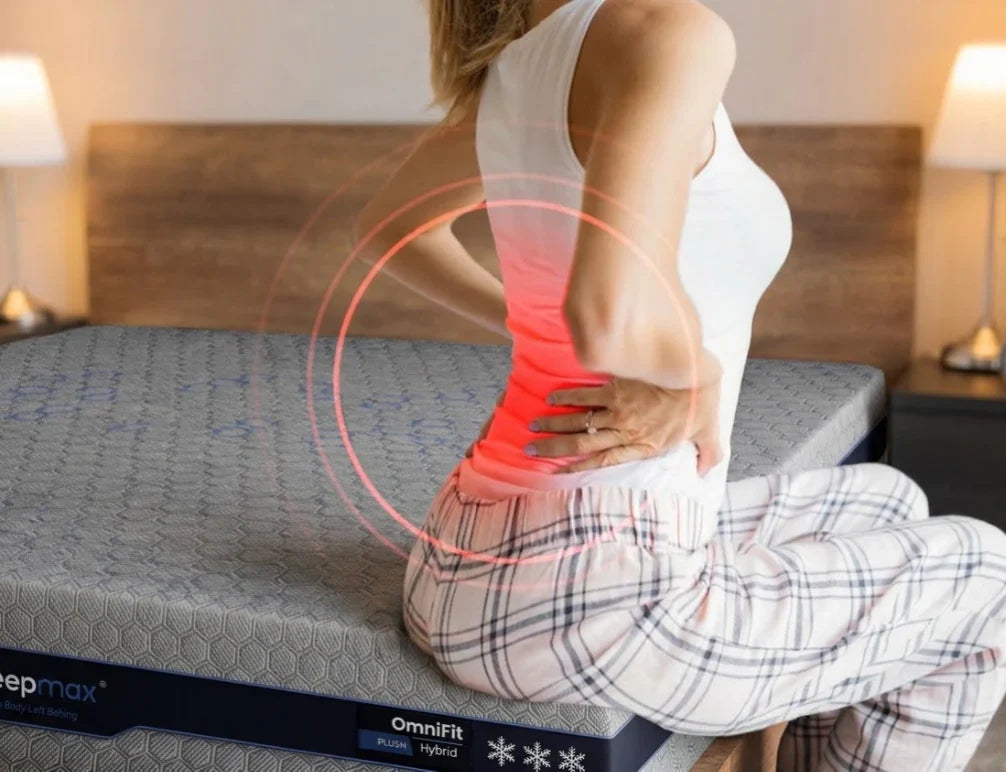
Waking up with a sore back is truly a terrible experience. You might find yourself tossing and turning all night, and that the mattress could be the main reason behind it. You might even feel more rigid in your muscles in the morning than it was when you went to bed. A proper mattress recommendation for your condition will be the key to feeling much better. This article will teach you 2026 how to choose the right mattress for backaches.

Relationship Between Mattress and Back Pain
Let's have a discussion about the importance of mattresses. A mattress should maintain a straight and healthy position of your spine the whole night. Your spine can be thought of as a bridge. If the supports under it are weak or bent, the bridge will sag and hurt. Your mattress is that support for your body.
Too soft of a mattress causes your hips and shoulders to sink too deeply into it. This also misaligns your spine. A mattress that is too firm will create pressure spots. Moreover, it fails to support the natural curvature of your lower back. The best mattress should, therefore, match your body's needs and your weight.
The process of choosing the best mattress for back pain is very personal. There are three factors upon which it depends. You should first select the right shape. Secondly, the best type for your needs should be determined. Lastly, you have to take into account how you sleep. The current guiding material will teach you how to examine each one of the factors. You may even opt for the kind of mattress that would make you sleep like a baby and not experience any pain in the morning.
How to choose the suitable mattress for you
Prior to exploring the mattress options, a clear understanding of your needs is required. Answer these simple queries to create a "Sleep Profile." The sleep profile is your way to acquiring information that will throw you off to the right mattress.
Step 1: Find Your Pain Spots and Body Weight
First things first, which part of your back is usually experiencing discomfort? Is the pain mostly the lower back area? This might be affecting the spine bird's-eye curve. Are the problems located in the upper or the middle back? Generally, discomfort in the lower back means you require added support under your hips.
Next, the most relevant one is about your body weight. Weight plays the main part in the amount of support you should get. We can distinguish three classes of weight:
-
Light Weight (less than 130 lbs): People who are light should opt for a softer mattress. This permits them to sink inside enough to feel at ease. Besides, they will not feel like they are sleeping on a hard board.
-
Average Weight (130-230 lbs): Most people fall into this category. The most appropriate choice here is a medium-firm mattress. It ensures great support and cushioning.
-
Heavier Weight (over 230 lbs): A heavy person requires a firmer and sturdier mattress. This will prevent too much sinking and, thus, will keep the spine straight.
Step 2: Know How You Sleep
Aside from weight, sleep position is also as crucial as exhaustively explained. Each position has its own mattress requirements.
-
Side Sleepers: The right choice for you is a mattress that overloads your shoulders and hips. A surface that is too firm will inevitably cause sore spots and tension. The top layers should be soft so that the mattress for side sleepers helps relieve back pain.
-
Back Sleepers: Your primary goal is to keep the natural "S" curve of your spine. You need a mattress that will support your lower back properly. It is most important not to allow your hips to sink too deeply.
-
Stomach Sleepers: This position, in reality, is not good for your neck and lower back. You need to choose a mattress that is firmer to keep your hips from bending. This, consequently, poses your spine from undue stress.
-
Combination Sleepers: If you are the one who keeps rolling during the night, you need a bouncy mattress. It has to be the one which allows easy change of position without making you feel stuck.
Step 3: Moisture Check
Would you usually wake up hot and sweaty? If this is the case, then you are a "hot sleeper." The cause is the materials that lock in body heat. The traditional memory foam is one of them, but newer technology solves the issue. Its mattresses are usually hybrid and latex as they support airflow which keeps people cool.
Your Personal Sleep Profile
Now, let's put it all together. You can form a simple phrase which is going to describe your needs. For instance: "I am average weight, sleep on my back, have lower back pain, and sleep hot." This straightforward profile will help you as you try to evaluate various options.
What Works Best for Back Pain?
Once you have developed your sleep profile, you can explore mattress types. Each has their pros and cons when it comes to back pain. According to expert guidance on what type of mattress is best for back pain, certain materials are more effective in terms of support.
Hybrid Mattress: A Perfect Medium Between the Two
Usually, you get the best of both worlds with a Hybrid Mattress. Just like a traditional mattress, it has a support core made of spring coils. And, on top, it has thick comfort layers made of foam or latex.
This combination is what makes a Hybrid Mattress perfect for back pain. The coils provide strong, long-lasting support that keeps your spine straight. The foam layers cradle your body and ease pressure points. The open space between the coils also creates good airflow. Hence, hybrids are a good choice for hot sleepers.
-
Good Points: Includes both support and comfort for all sleep positions, breathable, practical for most people.
-
Bad Points: Heavy and expensive compared to other types.
The Hugging Comfort: Memory Foam
Memory foam is known for molding to your body. This "hugging" feel gives great pressure relief. This can help sore joints.
But be careful with memory foam. If it's too soft, it can let your hips sink too far. This leads to poor spine alignment and more back pain. Modern memory foams often have gel or copper added to help with cooling.
-
Good Points: Great pressure relief, blocks motion well.
-
Bad Points: Can trap heat, risk of sinking too much on soft models.
The Classic Support: Innerspring
Innerspring mattresses are the old design. They use steel coils for support. They are usually firm, bouncy, and sleep cool because air flows well.
The main problem for back pain is that they often lack pressure relief. A simple innerspring mattress may not cushion enough for side sleepers. It may not help those with sharp pressure points.
-
Good Points: Very breathable, strong support, often cheap.
-
Bad Points: Can lack pressure relief, may transfer motion more.
The Bouncy and Strong: Latex
Latex mattresses come from rubber tree sap or fake latex. They offer a unique feel that cushions and bounces back. You feel like you sleep "on" the mattress, not "in" it.
Latex lasts long, breathes well, and fights allergies. It gives good support and pressure relief. This makes it a solid choice for back pain.
-
Good Points: Bouncy and long-lasting, naturally cool.
-
Bad Points: Can cost a lot, has a bouncy feel that isn't for everyone.
What is the Perfect Firmness for back pain
For years, people thought extra-firm mattresses were best for back pain. We now know this is wrong. For most people, a rock-hard surface can make pain worse. It creates pressure on hips and shoulders.
Recent studies show that medium-firm mattresses work best for most people with back pain. On a 1-to-10 firmness scale, this is usually a 6 or 7. Ten is the firmest. This level supports the spine while cushioning pressure points.
But the perfect firmness for you still depends on your sleep profile. Use this table as a guide:
|
Sleep Position |
Lighter Weight (<130 lbs) |
Average Weight (130-230 lbs) |
Heavier Weight (>230 lbs) |
|---|---|---|---|
|
Side Sleepers |
Medium-Soft (4-5) |
Medium (5-6) |
Medium-Firm (6-7) |
|
Back Sleepers |
Medium (5-6) |
Medium-Firm (6-7) |
Firm (7-8) |
|
Stomach Sleepers |
Medium-Firm (6) |
Firm (7-8) |
Firm (8) |
A Great Example: The Sleepmax Hybrid Mattress
Using all this info can feel like too much. Let's look at a real example: the Sleepmax Hybrid mattress. This mattress is popular in 2026. Its design shows how different features work together to fight back pain.
How the Sleepmax Hybrid Fights Back Pain
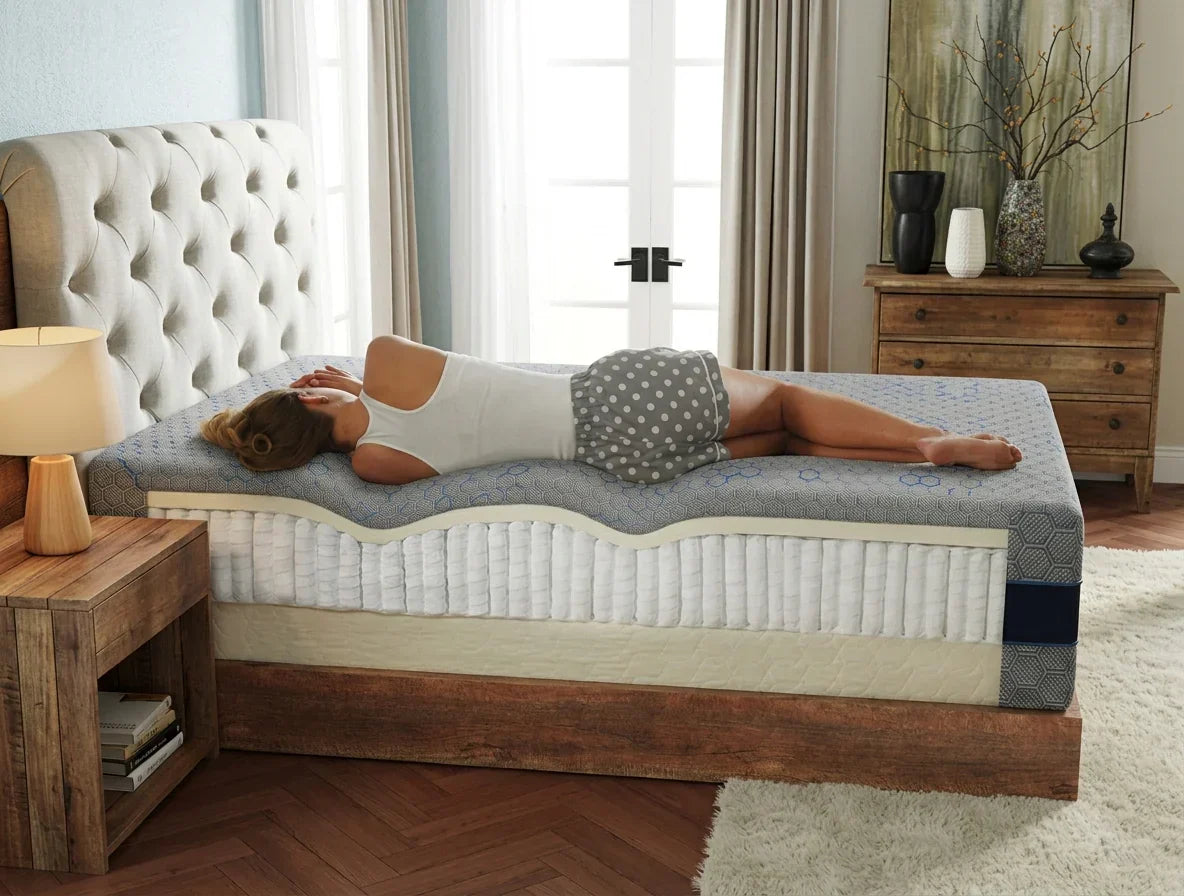
The Sleepmax is a Hybrid Mattress. As we talked about, this is a great starting point. It mixes supportive coils with molding foam. This design aims to give the best balance of push-back support and hugging comfort.
One key feature is zoned support. This means the coils in the center third are firmer. This gives extra lift for your hips and lower back. This area is key for keeping your spine straight. The coils under the shoulders are softer. This lets side sleepers sink in just enough to ease pressure.
The top comfort layers cushion the body without making you feel stuck. This makes it easier to change positions. This matters for people who move around at night.
Who the Sleepmax Works Best For
During our review, the Sleepmax Hybrid worked great for many types of sleepers. We found its medium-firm feel worked well for back and combination sleepers. It worked best for average-to-heavier weight ranges. The zoned support was clearly noticeable. It stopped the common "hammock effect" where hips sag.
Its edge support was also very strong. This means you can sit or sleep on the edge without feeling like you'll slide off. This adds to the usable space. For anyone whose sleep profile calls for a balanced, supportive, and bouncy bed, the Sleepmax Hybrid is great to consider. It is one of the best hybrid mattress options for those focused on back pain relief.
Beyond the Mattress: 3 More Keys to Pain-Free Sleep
Finding the best mattress for back pain is a big step. But it's not the only one. To really improve your sleep, think about these other factors. Even with one of these expert-tested mattresses for back pain, your habits matter. A good mattress choice should be part of a bigger plan based on careful, objective, data-driven tests.
-
1. Your Pillow Matters: Your pillow's job is to keep your neck lined up with your spine. A pillow that's too high or flat can cause neck and upper back pain. Side sleepers need a thicker pillow. Back and stomach sleepers need a thinner one.
-
2. Sleep in Better Positions: Try not to sleep on your stomach. The best positions are on your back with a pillow under your knees. Or on your side with a pillow between your knees. Both help take strain off your lower back.
-
3. Know When to See a Doctor: A mattress can give great comfort and support. But it is not a medical cure. If your back pain is bad, lasts all day, or comes from an injury, see a doctor or physical therapist.

Leave a comment
This site is protected by hCaptcha and the hCaptcha Privacy Policy and Terms of Service apply.