




Whether you're moving into a new home, upgrading your sleep space, or just trying to decode the overwhelming array of options at a bedding store, understanding what bedding actually is — and what it includes — is the first step toward building your perfect sleep environment.
In this guide, we break down the definition of bedding, walk through every type of bedding layer, compare the most popular materials, and give you a clear, practical framework for choosing the right bedding for your sleep style, climate, and budget.
What Is Bedding?

Bedding — sometimes called bed linen or bed clothes — refers to all the textiles and accessories placed on top of a mattress to provide comfort, warmth, and protection. In its simplest form, bedding includes sheets, pillowcases, blankets, and duvets. In a broader sense, it also covers mattress protectors, bed skirts, shams, and decorative throws.
Think of bedding as the layering system that sits between you and your mattress. Each layer has a specific function: some regulate temperature, others protect your mattress, and some are purely for aesthetics. Together, they define the look and feel of your bed.
Good bedding does more than look nice. Research consistently links sleep quality to the sleep environment — and the textures, warmth, and breathability of your bedding play a direct role in how quickly you fall asleep, how deeply you rest, and how refreshed you feel in the morning.
The Main Components of a Bedding Set
A complete bedding setup typically consists of several key layers, each serving a distinct purpose. Here is a breakdown of the most important elements:
|
Bedding Component |
Purpose & Description |
|
Mattress Protector |
A waterproof or breathable cover that wraps around your mattress to guard against spills, dust mites, allergens, and general wear. An essential first layer. |
|
Fitted Sheet |
Wraps snugly around the mattress with elasticated corners. Sits directly on the mattress (or over the protector) and is the layer your body touches most. |
|
Flat Sheet |
A large rectangular sheet placed on top of the fitted sheet. Adds a layer of softness and helps keep blankets and duvets cleaner for longer. |
|
Pillowcase |
Covers the pillow you sleep on. Should match or complement your sheets. Available in standard, queen, and king sizes. |
|
Duvet / Comforter |
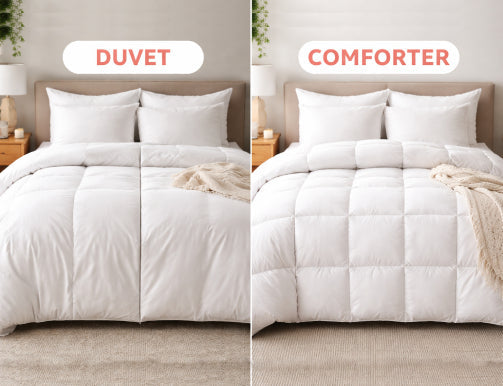
The main warmth layer. A duvet is a soft bag filled with down, feathers, or synthetic fibers, usually used with a removable cover. A comforter is similar but sewn shut and often used without a cover. |
|
Duvet Cover |
A removable sleeve that encases your duvet. Protects the duvet and allows for easy washing. Think of it as a pillowcase for your duvet. |
|
Blanket |
A woven or knitted textile layer used for additional warmth. Can be used alone or under a duvet. Common materials include wool, cotton, and fleece. |
|
Quilt |
A thinner, stitched alternative to a duvet. Quilts typically have three layers — a top fabric, batting, and a backing — sewn together in decorative patterns. |
|
Bed Skirt |
A decorative panel that drapes around the base of the bed frame down to the floor. Hides the box spring or bed frame legs. |
|
Shams & Pillow Covers |
Decorative pillow covers used to enhance the visual presentation of the bed. Not meant for sleeping on. |
|
Throw / Bedspread |
A lightweight, often decorative layer draped over the bed. Adds color and texture while protecting bedding underneath. |
Types of Bedding: A Deeper Look
1. Sheets
Sheets are the foundation of any bedding setup. The quality of your sheets is largely determined by two factors: the material they are made from and their thread count.
Thread count (TC) refers to the number of threads woven per square inch of fabric. The general sweet spot recommended by sleep experts and textile specialists is between 200 and 400. Sheets in this range offer a good balance of softness, breathability, and durability. Sheets with thread counts above 400 can feel slightly heavier and are not necessarily higher quality — some manufacturers inflate the numbers by counting each ply of thread individually.
2. Duvets and Comforters
The duvet vs. comforter distinction trips up a lot of shoppers. Here is the key difference: a duvet is a plain insert that is always used inside a removable duvet cover. A comforter is an all-in-one piece that is decorative on its own and does not require a cover (though you can add one for protection).
Both are filled with either natural materials (down feathers, wool, silk) or synthetic alternatives (microfiber, polyester fiberfill). Natural fills tend to be warmer, lighter, and more breathable but cost more. Synthetic fills are hypoallergenic, easier to wash, and budget-friendly.
For have a comprehensive knowledge of duvets and comforters, you can read this article-
Duvet vs Comforter: What’s the Difference & Which One Is Right for You?
3. Blankets and Quilts
Blankets are versatile. They can be used as the sole top layer in warmer months or stacked under a duvet for extra warmth in winter. Wool blankets are prized for their natural temperature-regulating properties. Cotton blankets are lightweight and breathable. Fleece and microfiber blankets are soft, affordable, and quick-drying.
Quilts are a great middle-ground option. They are thinner and lighter than duvets, making them ideal for spring and fall or for sleepers who tend to overheat. The traditional patchwork or stitched pattern also gives quilts strong decorative appeal.
4. Pillows and Pillowcases
Pillows are technically part of your bedding system. The right pillow supports your head and neck alignment based on your sleep position — back sleepers need a medium loft, side sleepers benefit from a firmer, higher pillow, and stomach sleepers should opt for a very thin, soft pillow.
Pillowcases protect pillows from oils, sweat, and allergens. Silk or satin pillowcases are increasingly popular for their skin and hair benefits. Cotton percale is a crisp, breathable classic.
Bedding Materials Compared
The fabric your bedding is made from is arguably the most important factor in determining how comfortable you will be night after night. Here is a quick comparison of the most common options:
|
Material |
Key Benefits |
Best For |
|
Cotton (Percale) |
Crisp, cool, breathable, durable |
Hot sleepers, warm climates |
|
Cotton (Sateen) |
Silky smooth, lustrous finish, soft |
Those who prefer a luxurious feel |
|
Linen |
Highly breathable, gets softer with use, moisture-wicking |
Hot sleepers, summer bedding |
|
Bamboo / Bamboo-Derived |
Exceptionally soft, hypoallergenic, eco-friendly |
Sensitive skin, eco-conscious buyers |
|
Microfiber |
Budget-friendly, wrinkle-resistant, easy care |
Low-maintenance households |
|
Silk |
Temperature-regulating, smooth, skin-friendly |
Luxury seekers, skin and hair care |
|
Wool |
Natural insulation, moisture-wicking, naturally fire-resistant |
Cold climates, winter bedding |
|
Flannel |
Soft, warm, cozy texture |
Cold weather, winter bedding |
How to Choose the Right Bedding: 5 Key Factors
Now that you understand the components and materials, here is a practical framework for choosing bedding that actually works for your lifestyle.
1. Consider Your Sleep Temperature
Are you a hot sleeper? Do you wake up sweaty or kick the covers off? If so, prioritize breathability. Linen, percale cotton, and bamboo-derived fabrics are all excellent choices. Avoid heavy sateen weaves or thick synthetic fills in your duvet.
If you tend to feel cold at night, look for sheets with a slightly higher thread count for added weight, and invest in a duvet with a higher fill power or tog rating. Wool blankets are also a superb natural insulator.
2. Think About Allergies and Sensitivities
If you suffer from dust mite allergies, pet dander sensitivity, or eczema, your bedding choices can significantly impact your symptoms. Look for:
Hypoallergenic duvet inserts (down alternative rather than real down)
Tightly woven fabrics that are harder for allergens to penetrate
Organic or OEKO-TEX certified materials free from harsh chemical treatments
A quality mattress protector that is allergen-barrier rated
3. Match Your Maintenance Habits
Be realistic about how often you will wash your bedding. Sheets should ideally be washed once a week. Duvet covers every one to two weeks. Duvets and blankets a few times a year.
If you prefer low-maintenance bedding, choose machine-washable microfiber or cotton blends that are wrinkle-resistant. If you do not mind a bit of ironing, cotton percale is unbeatable for that crisp, hotel-fresh feel.
4. Size It Right
Always match your bedding to your mattress size — twin, full, queen, or king. Pay special attention to fitted sheet pocket depth. Standard fitted sheets typically fit mattresses up to 12 inches deep. If your mattress is 14 inches or deeper (common with modern hybrid and foam mattresses), you will need deep-pocket or extra-deep-pocket sheets to avoid the dreaded pop-off-the-corner problem.
5. Invest in Quality Where It Counts
Bedding is one area of home investment that pays dividends every single day. You spend roughly one-third of your life in bed. A high-quality set of sheets or a well-made duvet insert lasts far longer than a cheap alternative and delivers a noticeably better sleep experience.
That said, you do not have to spend a fortune. The best strategy is to invest in good-quality sheets and a reliable mattress protector (the layers closest to your body) and be more flexible with decorative elements like throws and shams.
How Often Should You Replace Your Bedding?
Even the best bedding has a shelf life. Here is a general guide:
|
Bedding Item |
Recommended Replacement Frequency |
|
Sheets & Pillowcases |
Every 2-3 years (sooner if pilling, thinning, or discoloration appears) |
|
Pillows |
Every 1-2 years (fold test: if a pillow does not spring back, it's time to replace) |
|
Duvet / Comforter |
Every 5-10 years depending on quality and care |
|
Mattress Protector |
Every 1-2 years or when waterproofing diminishes |
|
Blankets / Quilts |
Every 5+ years with regular washing |
Bedding Care Tips to Make Your Investment Last
Wash sheets in warm water (not hot) to prevent shrinkage and color fading.
Tumble dry on a low or medium heat setting — high heat damages fibers over time.
Use a mild, fragrance-free detergent if you have sensitive skin.
Avoid fabric softener on microfiber sheets — it can clog the fibers and reduce softness.
Air out your duvet regularly and spot-clean small stains promptly.
Rotate through two sets of sheets so each set gets a rest between washings.
Store extra bedding in a breathable cotton bag, not a plastic container, to prevent moisture buildup.
The Connection Between Bedding and Mattress Performance
Here is something many shoppers overlook: your bedding can either enhance or undermine the performance of your mattress. If you have invested in a high-quality mattress — particularly one designed for temperature regulation or pressure relief — it is important to pair it with bedding that supports those same qualities.
For example, a mattress engineered for cooling will have its benefits partially cancelled out if you top it with a thick, non-breathable synthetic duvet and low-thread-count polyester sheets. Conversely, pairing a supportive foam mattress with breathable linen sheets and a lightweight bamboo duvet will amplify the comfort and thermoregulation your mattress was designed to deliver.
Think of your mattress and bedding as a system, not separate purchases. Choose them together whenever possible.
Final Thoughts: Build Your Ideal Sleep System
Bedding is not just about aesthetics or thread count competitions. It is a functional system that works in harmony with your mattress to create the sleep environment your body needs to rest, recover, and recharge.
By understanding what bedding is — its components, materials, sizing requirements, and care needs — you are now equipped to make choices that will genuinely improve your sleep quality night after night.
Start with the basics: a good mattress protector, quality fitted and flat sheets, and a duvet suited to your sleep temperature. Layer thoughtfully from there. Your sleep — and your mornings — will thank you.

Leave a comment
This site is protected by hCaptcha and the hCaptcha Privacy Policy and Terms of Service apply.