


Introduction
You spend roughly one-third of your life sleeping. That is nearly 25 years spent in bed over a typical lifetime. Given how much time you spend on your mattress, ensuring it provides proper support and comfort is essential for your health and well-being. Yet many people hold onto their mattresses far longer than recommended, sacrificing sleep quality without realizing it.
If you have been asking yourself "how often should you replace your mattress?" you are not alone. This comprehensive guide will walk you through everything you need to know about mattress lifespan, the warning signs that indicate it is time for a replacement, and practical tips to help you get the most out of your current mattress.

What Is the Average Mattress Lifespan?
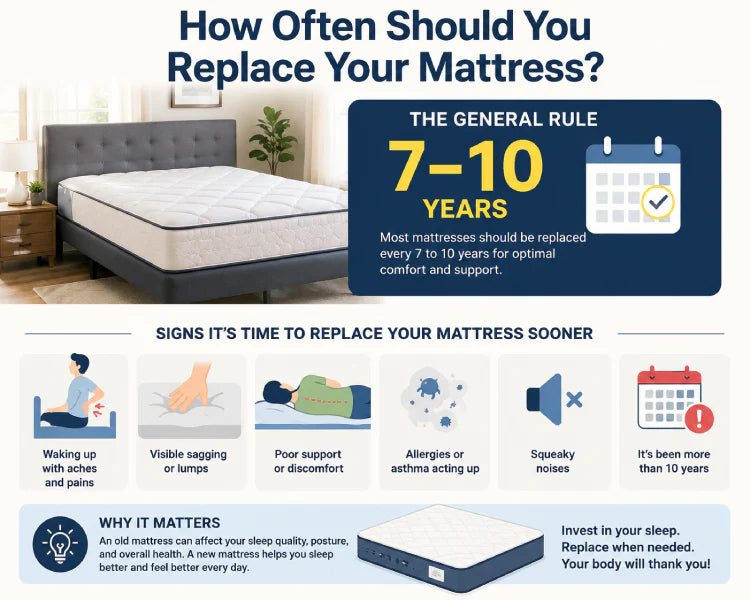
The general recommendation from sleep experts is to replace your mattress every 6 to 10 years. However, the exact lifespan depends heavily on the type of mattress, its construction quality, and how well it has been maintained over the years.
According to research published by Sleep Foundation, most mattresses perform optimally for 6 to 8 years before showing significant signs of wear. However, premium mattresses made with high-quality materials can often last 10 years or longer with proper care.
Mattress Lifespan by Type
Different mattress materials degrade at different rates. Here is a breakdown of average lifespans by mattress type:
|
Mattress Type |
Average Lifespan |
Durability Rating |
|
Innerspring Mattress |
5-6 years |
Moderate |
|
Polyurethane Foam |
6-7 years |
Moderate |
|
Hybrid Mattress |
6-8 years |
Good |
|
Memory Foam |
7-10 years |
Good to Excellent |
|
Latex Mattress |
7-9 years |
Excellent |
|
Natural Latex |
10-15 years |
Exceptional |
Natural latex mattresses are the most durable option, often lasting 10 to 15 years with proper maintenance. In contrast, traditional innerspring mattresses tend to have the shortest lifespan, typically needing replacement within 5 to 6 years.
8 Signs You Need to Replace Your Mattress
Sometimes your mattress tells you it is time for a change. Watch for these common warning signs:
1. Visible Sagging or Indentations
If you notice permanent dips or valleys where you regularly sleep, your mattress has lost its structural integrity. A mattress that sags significantly cannot properly support your spine, leading to poor sleep posture and morning discomfort.
2. Waking Up with Aches and Pains
One of the most telling signs of a worn-out mattress is waking up with stiffness, soreness, or pain in your back, neck, shoulders, or hips. When your mattress no longer provides adequate support, your muscles work harder during sleep to compensate, resulting in morning aches.
3. Poor Sleep Quality
If you find yourself tossing and turning more than usual, or if you consistently feel unrested despite getting enough hours of sleep, your mattress could be the culprit. Studies show that replacing an old mattress with a new one can significantly improve sleep quality and reduce back pain.
4. You Sleep Better Elsewhere
If you consistently sleep better at a hotel, a friend's house, or anywhere other than your own bed, it is a clear signal that your mattress is no longer meeting your needs. This is one of the most reliable indicators that it is time for a replacement.
5. Increased Allergy Symptoms
Over time, mattresses accumulate dust mites, dead skin cells, mold spores, and other allergens. If you notice unexplained sneezing, runny nose, itchy eyes, or worsening asthma symptoms upon waking, your mattress may be harboring irritants that affect your health.
6. Unusual Noises When Moving
Squeaking, creaking, or groaning sounds when you shift position are common issues with aging innerspring mattresses. These noises indicate that the internal coils have worn out or are no longer properly cushioned. While adding a mattress topper might help temporarily, persistent noises usually signal the need for a new mattress.
7. Noticeable Stains or Odors
Visible discoloration, stubborn stains from sweat, spills, or bodily fluids, and persistent odors that do not disappear even after cleaning indicate that your mattress has absorbed more than just time. These stains and smells can harbor bacteria and allergens that compromise your sleep environment.
8. Your Mattress Is Over 8 Years Old
Even if your mattress appears fine on the surface, if it has been in use for more than 8 years, it is worth evaluating its condition. Most mattresses degrade gradually, and you may not notice the decline until you sleep on a new one and experience the difference.
Factors That Affect How Long Your Mattress Lasts
Several variables influence how quickly your mattress deteriorates. Understanding these factors can help you make your mattress last longer:
Material Quality
Higher-density foams, natural latex, and individually wrapped coils typically outlast cheaper alternatives. When purchasing a new mattress, look for high-density memory foam (5+ pounds per cubic foot) or individually pocketed coils for better durability.
Body Weight and Usage
Heavier individuals put more stress on mattress materials, causing faster wear in the core and surface layers. Similarly, couples who share a bed experience more wear than single sleepers because the mattress absorbs more movement and weight over time.
Maintenance and Care
Regular maintenance significantly extends mattress life. This includes rotating the mattress every 3 months (if recommended by the manufacturer), using a quality mattress protector, and keeping the mattress clean and dry.
Sleeping with Children or Pets
Additional bodies, whether children or pets, accelerate wear and tear. Jumping on the bed, more frequent spills, and increased moisture from pet dander all contribute to faster mattress degradation.
Tips to Extend Your Mattress Life
While every mattress eventually needs replacing, these practices can help you maximize its lifespan:
Use a Mattress Protector: A waterproof, breathable protector shields against sweat, spills, dust, and allergens, keeping the mattress core clean and dry.
Rotate Regularly: Turn your mattress 180 degrees every 3 to 6 months to distribute wear evenly across the surface.
Clean Annually: Vacuum your mattress every few months and spot-clean any stains promptly to prevent buildup.
Use a Proper Foundation: Ensure your bed frame or foundation provides adequate support. An improper base can void warranties and cause premature sagging.
Avoid Jumping: Discourage children and pets from jumping on the bed to prevent damage to internal springs and structure.
Keep It Dry: Moisture is the enemy of mattress longevity. Ensure good bedroom ventilation and address any spills or stains immediately.
When Is the Best Time to Buy a New Mattress?
If you have decided it is time for a new mattress, timing your purchase wisely can save you significant money. The best deals typically occur during major holiday weekends:
Presidents Day (February): Traditional start of mattress sale season
Memorial Day (late May): One of the biggest mattress sale events
Labor Day (September): Another major promotional period
Black Friday/Cyber Monday (November): Often features the deepest discounts of the year
A quality queen-size mattress typically ranges from $1,000 to $1,800 depending on materials and features. Investing in a durable mattress made with high-quality components can save money in the long run by reducing the frequency of replacements.
Is Replacing Your Mattress Worth It?
Absolutely. Research published by the Sleep Research Consortium found that participants who replaced their mattresses experienced measurable improvements in sleep quality, reduced back pain, and decreased stress levels. Given that you spend roughly 8 hours per day in bed, investing in a supportive, comfortable mattress is one of the best investments you can make in your health.
Poor sleep affects everything from mood and productivity to immune function and chronic disease risk. A mattress that properly supports your body can help you fall asleep faster, stay asleep longer, and wake up feeling refreshed.
Conclusion
So, how often should you replace your mattress? While the general rule is every 6 to 10 years, your specific timeline depends on the mattress type, usage patterns, and maintenance habits. Watch for the warning signs discussed above, and do not hesitate to invest in a new mattress when yours has reached the end of its useful life.
Quality sleep is not a luxury; it is a necessity for optimal health and well-being. By understanding when and why to replace your mattress, you can ensure that every night provides the restorative rest your body needs to thrive.
Ready to find your perfect mattress? Browse our collection of premium mattresses designed for every sleep style and budget. Your best night is waiting.


Leave a comment
This site is protected by hCaptcha and the hCaptcha Privacy Policy and Terms of Service apply.