



I still remember that Tuesday morning in 2018. I was at a trade show in Las Vegas—ISMatlantic or one of those furniture expos—when an older gentleman stopped by our booth. He looked exhausted, like he hadn't slept in days.
"Are you the mattress people?" he asked, his voice carrying that particular kind of frustration you hear from someone who's tried everything.
I nodded.
"My doctor keeps telling me to get a new mattress. I've spent probably six thousand dollars in the last five years on different beds. Memory foam, hybrid, even one of those expensive latex ones. Nothing works. My hips hurt, my hands are stiff in the morning, and I'm starting to wonder if this is just how it's going to be for the rest of my life."
That conversation changed how I thought about my job. See, I'd spent years obsessing over coil counts, foam densities, and edge support. But this guy wasn't buying a mattress—he was buying a night's sleep without pain. And he was desperate.
That was six years ago, and I've since helped thousands of arthritis sufferers find their way to better sleep. Let me share what I've learned.
If you're reading this, you're probably dealing with similar challenges. Maybe you're waking up with stiff joints, or you've noticed that certain positions make your pain worse. You might be wondering if a new mattress could actually help, or if you're just wasting money like that guy at the trade show thought he was.
Here's the thing: a good mattress for arthritis isn't about luxury or brand names. It's about understanding how joint inflammation interacts with pressure points, support systems, and sleep positioning. And honestly? Most of what passes for "arthritis-friendly" marketing is just that—marketing.
Let me walk you through what actually matters.
Understanding Arthritis and Its Impact on Sleep
Before we talk about mattresses, let's get on the same page about what arthritis actually does to your sleep. Because understanding the problem is half the solution.
Types of Arthritis That Affect Sleep
Osteoarthritis is the most common culprit. It happens when the protective cartilage in your joints wears down over time. By the way, if you're over 50 and experiencing joint stiffness in the morning that improves within 30 minutes of getting up—yeah, that's probably OA. The pain tends to get worse with activity and better with rest, which sounds counterintuitive when we're talking about sleep. But here's the kicker: lying still for hours can actually stiffen those worn joints even more.
Rheumatoid arthritis is an autoimmune condition where your body attacks joint linings. This one tends to be more symmetrical—if both knees hurt, that's a red flag. Morning stiffness with RA can last an hour or longer, and the inflammation can literally wake you up at night. I had a customer tell me she sets her alarm for 3 AM just to take her anti-inflammatory medication before the pain peaks. Heartbreaking stuff.
Psoriatic arthritis and gout are other common types, each with their own sleep challenges. Gout, for instance, notoriously attacks the big toe joint and can make even the weight of a bedsheet unbearable.
Why Arthritis Patients Struggle to Sleep
Here's what nobody talks about enough: it's not just about pain. It's about a vicious cycle.
When you don't sleep well, your body's inflammatory response gets worse. Studies show that poor sleep increases inflammatory markers like C-reactive protein. More inflammation means more pain. More pain means worse sleep. And around and around we go.
The other issue? Position. When your joints hurt, you naturally shift positions more frequently. But shifting wakes you up—even if you don't fully remember it. So you're stuck between a rock and a hard place: stay still and hurt, or move and fragment your sleep.
This is why finding the right mattress isn't a luxury for arthritis sufferers. It's foundational.
What Arthritis Patients Actually Need in a Mattress
Alright, let's get into the meat of this. After thirteen years in this industry and countless conversations with customers dealing with joint pain, here's what I've found actually matters:
Pressure Relief: The Non-Negotiable
If I could only tell you one thing, it would be this: pressure distribution is everything.
When you lie on a mattress, your body weight isn't distributed evenly. Your shoulders, hips, and heels create pressure points. In a healthy person, this is uncomfortable but manageable. When you have arthritis? Those pressure points translate directly to pain.
Memory foam excels here because it conforms to your body shape, spreading that pressure across a larger surface area. I'm talking about true memory foam though—minimum 4 pounds per cubic foot density. (Lower density stuff? It'll bottom out in a year or two, leaving you right where you started.)
What about pressure relief in practice? When I'm testing a mattress for arthritis suitability, I look at how the material handles hip and shoulder sinking. Your hip needs to align with your shoulder, otherwise your spine twists all night. That twisted position doesn't just cause back pain—it can worsen arthritis symptoms in your hips, knees, and even your neck.
Support vs. Firmness: A Critical Distinction
Here's where customers get confused all the time, and honestly, where many sales associates do a disservice.
Support refers to how well a mattress keeps your spine in neutral alignment. Firmness refers to how the surface feels when you first lie down.
They're related but not the same.
A mattress can feel medium-firm but provide excellent support. It can feel rock-hard and still leave your spine twisted. For arthritis sufferers, I cannot stress this enough: never buy a mattress based solely on how it feels when you first lie on it in the showroom.
In the store, you're lying there for maybe five minutes. That's not enough time for the materials to respond to your body temperature and weight. Memory foam needs 20-30 minutes to fully conform. What feels perfect in the showroom might feel like a slab of concrete after a week of actual use.
Support also means pushback. When you lie on a good support system, the material pushes up against your body weight to keep your spine aligned. This is why many arthritis sufferers actually need a firmer mattress than they think—their instinct is to go soft because it feels cushy, but that softness often means no pushback, which means their joints sink into misalignment.
Temperature Regulation: The Overlooked Factor
Inflammation generates heat. Arthritic joints are often warmer than the surrounding tissue. And here's something the industry doesn't talk about enough: memory foam traps heat.
Traditional memory foam is dense and doesn't breathe well. When you're lying on it for hours, body heat builds up. For most people, this is just uncomfortable. For arthritis sufferers, that trapped heat can increase inflammation and make morning stiffness worse.
This is where newer material technologies come in. Gel-infused memory foam was one solution, though honestly, the cooling effect often fades within 30-90 days as the phase-change materials degrade.
Copper-infused foams are having a moment right now. Copper has natural anti-inflammatory properties—some studies suggest it can reduce inflammation markers. But (and this is a big but) the copper content in most mattresses is so minimal that you're not getting meaningful therapeutic benefit. It's mostly marketing.
What actually works for temperature? Open-cell foams breathe better than traditional memory foam. Latex naturally dissipates heat better than foam. Hybrid designs with pocketed coils create more airflow throughout the mattress.
At Sleepmax, we've developed a proprietary support foam with an open-cell structure that maintains temperature neutrality better than traditional memory foam while still providing the pressure relief arthritis sufferers need. But more on that later.
Motion Isolation: Because Partners Move
This one's often overlooked in arthritis discussions, but it's crucial. When your sleep is already fragmented and light, you don't need your partner's tossing and turning to wake you up.
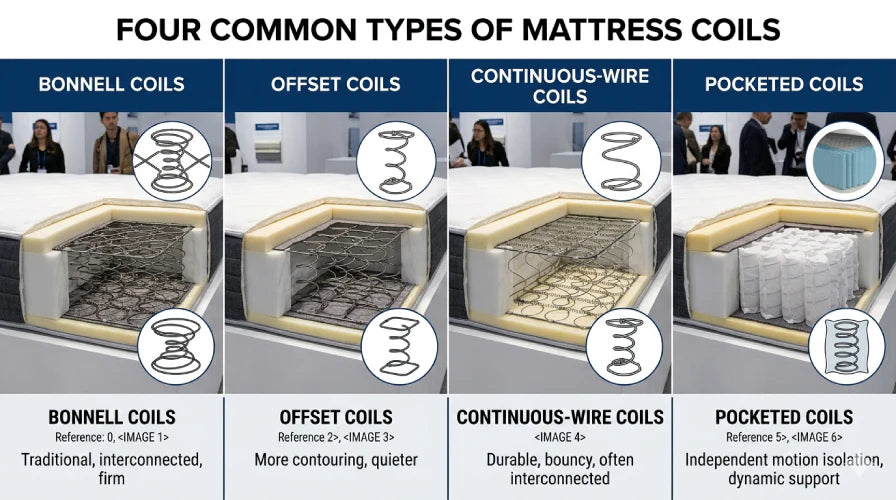
Memory foam excels at motion isolation. Traditional innerspring mattresses transfer motion readily—if your partner shifts weight, you'll feel it across the bed. Pocketed coil hybrids can offer decent motion isolation while maintaining support, but it's a trade-off.
If you're sleeping with a partner and one of you has arthritis, I'd actually recommend testing a mattress together. The arthritis sufferer needs pressure relief and support, but the partner shouldn't sacrifice their own sleep quality. It's a balancing act.
Mattress Types Compared for Arthritis
Let me break down the main categories and how they stack up for arthritis sufferers:
All-Memory Foam Mattresses
Pros: Excellent pressure relief, superior motion isolation, generally affordable, wide availability.
Cons: Heat retention (traditional foam), potential off-gassing smell, some lower-quality foams degrade quickly.
Verdict: A solid choice for most arthritis sufferers, especially those with hip, shoulder, or lower back arthritis. Look for minimum 4 lb/ft³ density in comfort layers.
I remember visiting a foam factory in China back in 2015. The owner showed me their "premium" line versus their standard line. The difference in density was visible even to my untrained eye—the premium foam was denser, more uniform, and had that slow-recovery feel that actually works. The standard line? You'd bottom out within months. Moral of the story: don't assume all memory foam is created equal.
Hybrid Mattresses (Foam + Coils)
Pros: Good support from coil system, pressure relief from foam layers, better temperature regulation than all-foam, durable.
Cons: More expensive, motion transfer varies by coil quality, heavier to move.
Verdict: Excellent for arthritis sufferers who need both pressure relief AND robust support. Particularly good for larger body types or those with back/joint pain that requires firmer support.
The pocketed coil systems (where each coil is wrapped individually) are significantly better for arthritis than traditional Bonnell coils. Individual wrapping means each coil responds to pressure independently, creating more targeted support and less motion transfer.
One thing I've learned: watch out for gimmicky coil counts. Anything over 1,000 coils in a queen is mostly marketing—the difference in actual performance between 800 and 2,000 coils is negligible, but the price jump can be substantial. Focus on coil gauge (thickness) and whether they're properly tempered (heat-treated to retain shape).
Latex Mattresses
Pros: Natural material, excellent durability, good temperature regulation, hypoallergenic, provides both pressure relief and support.
Cons: Expensive, firm feel isn't for everyone, can be heavy, some people are sensitive to the natural latex smell.
Verdict: A premium option that works well for arthritis, particularly for those with chemical sensitivities or who prefer a more responsive feel. However, you're often paying a significant premium for the "natural" label.
Here's the latex truth: not all latex is equal. Natural latex (from rubber trees) is expensive. Synthetic latex (made from petroleum byproducts) is cheaper but doesn't perform as well. Many mattresses marketed as "natural latex" are actually blends. Look for certifications like GOLS (Global Organic Latex Standard) if the natural aspect matters to you.
Talalay versus Dunlop processing also matters. Talalay tends to be softer and more consistent; Dunlop is denser and firmer. For arthritis pressure relief, Talalay is usually the better choice, though it commands a price premium.
Innerspring Mattresses (Traditional)
Pros: Widely available, familiar feel, good for those who prefer a bouncier surface, generally affordable.
Cons: Poor pressure relief for joints, significant motion transfer, less durable than foam/latex options.
Verdict: Generally not recommended for arthritis sufferers unless combined with a very thick comfort topper. The coil system alone doesn't provide adequate pressure relief for arthritic joints.
I genuinely wish this weren't the case—innersprings have their place, and some people simply sleep better on them. But from a pure arthritis-sleep perspective, they're not the right tool for the job.
Matching Mattress Type to Your Specific Arthritis
Different arthritis types have different needs. Here's my practical guide:
Hip Arthritis
Your hips are your primary concern here. When you sleep on your side, your top hip wants to sink into the mattress. If it sinks too far, your spine twists, and that directly stresses the hip joint.
Recommended: Medium-firm to firm memory foam or hybrid with adequate hip support. Look for mattresses specifically designed for hip alignment. A zoned support system (firmer in the hip area) can be particularly helpful.
Avoid: Soft, plush mattresses that let your hip collapse. Also avoid mattresses with thick pillow-tops that compress unevenly.
Knee and Leg Arthritis
If your knees are the problem, you're dealing with a support issue more than a pressure issue. When you lie on your back, your legs need support that keeps your knees slightly elevated (not flat, not overly bent).
Recommended: Memory foam mattresses that allow your legs to sink in evenly, or hybrids with good conforming foam layers. Some arthritis sufferers benefit from a pillow under their knees for additional support—the right mattress should reduce or eliminate this need.
Avoid: Very firm mattresses that force your knees into a completely flat position, which can increase pressure on arthritic joints.
Hand and Wrist Arthritis
This might seem unrelated to mattress choice, but hear me out. If you're gripping the mattress edges to reposition yourself during the night, that's stress on your hands. If you're propping yourself up on your wrists to change position, that's direct joint strain.
Recommended: Mattresses with good edge support (so you can use the edge for leverage without compressing), responsive materials that make repositioning easier, and medium firmness that doesn't require excessive effort to move on.
Avoid: Mattresses that trap you in position—those that require significant effort to shift. Memory foam that's too dense can create this problem.
Rheumatoid Arthritis (Systemic)
RA is tricky because it's systemic. You might have good days and bad days, and the inflammation varies. You need a mattress flexible enough to work across different pain levels.
Recommended: Memory foam or hybrid that offers consistent support regardless of your daily pain level. The conforming nature of memory foam means the mattress adjusts to you, not the other way around. Also prioritize temperature regulation—RA inflammation often creates heat.
Avoid: Firm, unforgiving mattresses. On your bad days, you'll need the pressure relief. Also avoid mattresses that require a break-in period; with RA, you need comfort immediately.
My Practical Buying Advice
After all these years, here are the non-negotiables I'd tell a family member:
1. Test the mattress properly
Lie on it for at least 15-20 minutes. Bring your own pillow. Wear comfortable clothes. Try your typical sleep position. If you sleep on your side (common with hip arthritis), actually turn onto your side and stay there for a few minutes.
2. Check the foam density
This is the single biggest indicator of quality memory foam. Look for:
Ask the salesperson for the spec sheet. If they can't provide it, walk away.
3. Verify the return policy and trial period
Look for at least a 100-night trial. Most legitimate mattress companies offer this. Anything less than 30 nights is suspicious—you need time to experience morning pain levels, not just initial comfort.
4. Understand the warranty
Mattress warranties are notoriously full of fine print. Look for:
5. Don't overthink coil counts
As I mentioned, anything over 800-1000 coils in a queen is marketing fluff. The quality of the coil (gauge, tempering, design) matters more than quantity.
6. Consider your partner
If you're sharing the bed, your mattress choice affects both of you. A mattress that's perfect for your arthritis but miserable for your partner isn't a solution.
7. Factor in your foundation
A great mattress on a sagging foundation is still a bad sleep. Make sure your box spring or platform supports the mattress properly. This is especially true for hybrids, which can void warranties if used with inadequate foundations.
What Sleepmax Offers
At Sleepmax, we've specifically designed our mattresses with arthritis sufferers in mind. Our proprietary foam blend combines high-density memory foam (4.2 lbs/ft³ in the comfort layer) with a responsive support foam that maintains spinal alignment without the "stuck" feeling some all-foam mattresses create.
The open-cell structure of our foam addresses the temperature concerns I mentioned earlier—many customers with inflammatory conditions report improved temperature comfort compared to traditional memory foam.
We also offer a 120-night trial with full refund, because we know arthritis is complex. What works for one person might not work for another, and you need time to really evaluate whether the mattress is helping your specific situation.
But I want to be clear: we're not the only good option. Any mattress that meets the criteria I've outlined—proper density, adequate support, good pressure relief—can help. Don't get sold on brand names alone.
Final Thoughts
I think about that guy at the Las Vegas trade show often. I wish I could tell him what I know now: the problem wasn't that mattresses couldn't help him. The problem was that he was looking for the perfect mattress when he needed to understand what his body actually needed.
Arthritis is a complex condition, and sleep is equally complex. A mattress is a tool—one that can make a real difference—but it's not a cure. Don't expect any mattress to eliminate your pain entirely. Do expect it to reduce unnecessary strain on your joints, minimize sleep disruption, and give your body a better chance to rest and recover.
The right mattress won't fix your arthritis. But it might give you back something equally valuable: a night where you wake up feeling almost human.
If you're serious about making a change, my advice is simple: take your time, do your homework, and don't let anyone rush you. A good mattress is an investment in your daily quality of life. You deserve to get it right.
Questions? Drop them in the comments. I read every single one, and I respond when I can.
Sleep well.


Leave a comment
This site is protected by hCaptcha and the hCaptcha Privacy Policy and Terms of Service apply.